
In this article
You know the feeling.
Something inside you says, “Pay attention.”
Then your mind immediately begins building an entire courtroom case against it.
Maybe you meet someone and something feels off, even though you cannot explain why.
Maybe an opportunity looks perfect on paper but you hesitate every time you think about saying yes.
Or maybe you feel strongly pulled toward something that makes very little logical sense.
So how do you tell the difference between intuition, fear, wishful thinking, and overthinking?
That is where things get interesting.
Intuition Is Often Quiet
Intuition does not always arrive as a dramatic spiritual moment.
Sometimes it is incredibly subtle.
A pause.
A feeling.
A sentence that appears in your mind.
A sense of knowing without immediately knowing why.
Fear and intuition can both feel quiet or intense. How a feeling sounds is not proof that it is accurate. Treat the first reaction as something to explore, then check what you actually know.
For example:
Intuition may say, “Something about this situation feels wrong.”
Fear may continue with, “And if you make the wrong decision everything will fall apart and you will regret it forever.”
The first signal may deserve attention.
The story that follows may simply be your mind trying to create certainty.
Why We Ignore Our Intuition
People ignore intuition for many reasons.
Sometimes the intuitive answer is inconvenient.
You may sense that a relationship is no longer working when you desperately want it to work.
You may know you need a change even though change feels risky.
You may feel that an opportunity is wrong for you even when everyone around you thinks you should take it.
Intuition can challenge the life we have carefully planned.
That is why the mind often argues back.
Intuition and Anxiety Can Feel Similar
Both can create physical sensations and strong thoughts.
The difference is often in the quality of the experience.
Anxious thinking tends to repeat.
It circles around possibilities.
It searches endlessly for reassurance.
Intuition often feels simpler.
It may not be comfortable, but there is usually a certain clarity underneath it.
One useful question is:
Does this feeling become clearer when I calm down, or louder when I become more afraid?
Give yourself time before acting on an intense feeling.
You do not have to make every decision immediately.
Give Yourself Time
If possible, give yourself twenty-four hours before making an important decision.
Do not obsessively analyze it during that time.
Go for a walk.
Sleep.
Do something completely unrelated.
Then return to the question.
Notice what remains.
A feeling that stays consistent is still not proof. Use the pause to identify what information you need and what can be checked.
Use Tarot to Explore the Feeling
Tarot can help you examine intuition without blindly following it.
Try asking:
What am I sensing about this situation?
What fear might be influencing me?
What information am I overlooking?
What would I choose if I trusted myself?
What would I choose if I were not afraid?
What practical information do I still need?
This creates a much more balanced reading than simply asking:
“Is my intuition right?”
Tarot Cards Connected With Intuition
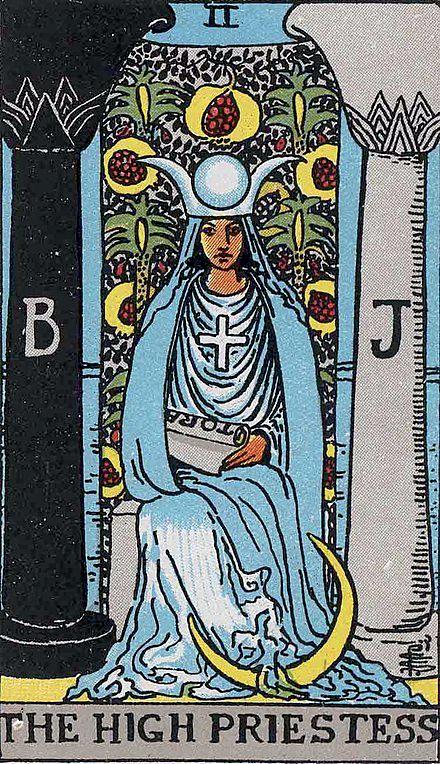
The High Priestess is the card most strongly associated with intuition, inner knowing, mystery, and information that has not yet fully surfaced.
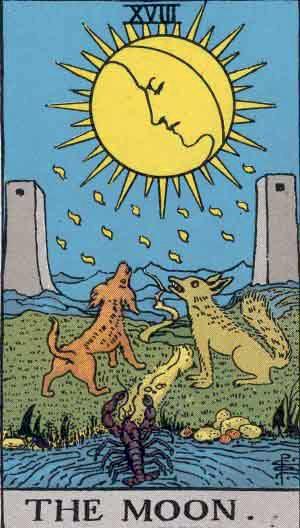
The Moon can also point toward intuition, but it comes with an important reminder.
Not everything is clear yet.
The Moon can represent dreams, instinct, uncertainty, projection, and fear.
The Queen of Cups often reflects emotional intelligence and sensitivity.
The Hermit can suggest withdrawing from other people's opinions long enough to hear your own thoughts.
The Two of Swords may appear when you already sense the answer but are struggling to make a decision.
Intuition Still Needs Reality
Trusting your intuition does not mean ignoring facts.
If you are making a major decision about money, health, work, legal issues, or safety, gather real information too.
Intuition can tell you where to look.
Evidence can help you decide what to do.
The strongest decisions often use both.
Ask Yourself This
When you cannot stop debating something, try writing two sentences.
“My mind says...”
“My intuition says...”
Do not edit your answers.
You may notice immediately that the voices sound very different.
Your mind may give you twenty reasons.
Your intuition may give you five words.
Sometimes that contrast tells you more than you expected.
Final Thoughts
Learning to trust your intuition is not about becoming certain about everything.
It is about learning your own internal language.
Over time, you begin to recognize the difference between a fear spiral, a hopeful fantasy, and that quieter feeling that simply keeps returning.
You do not need to obey every feeling.
But you can learn to listen before dismissing it.
Explore the cards
Learn with Angela
Give your practice a little structure
Explore Learn to Read Tarot and the Manifest With Tarot journal for guided study, card practice and written reflection.
Explore the workbook and journal