
In this article
Some experiences are difficult to describe.
You may suddenly feel that something is significant.
You may have a vivid dream.
A strange coincidence may catch your attention.
You may feel unusually connected to a person, place, or moment.
You may simply have a strong sense that you need to pay attention.
People interpret experiences like these in very different ways.
Some call them spiritual experiences.
Some call them intuition.
Others see them as coincidence, emotion, or the mind recognizing patterns.
You do not necessarily have to choose one explanation immediately.
Sometimes the most useful approach is curiosity.
What Is a Spiritual Experience?
A spiritual experience is usually described as a moment that creates a sense of connection, meaning, transcendence, or expanded awareness.
It can happen during meditation.
Prayer.
Nature.
Music.
Grief.
Love.
Travel.
A tarot reading.
A major life transition.
Or during an ordinary moment that suddenly feels extraordinary.
What Does Intuition Feel Like?
Intuition is often described as a quick sense of knowing without consciously working through every piece of information.
It may appear as:
A strong impression.
A sudden thought.
A feeling of hesitation.
A sense that something fits.
A sense that something does not.
Our minds process far more information than we consciously notice.
Sometimes what feels mysterious may be the result of subtle cues being processed very quickly.
That does not make the experience meaningless.
Notice the Quality of the Feeling
Ask yourself:
Does this experience feel calm or chaotic?
Does it become clearer with time?
Am I seeking reassurance or receiving insight?
Am I afraid?
Am I hoping intensely for a particular answer?
Your emotional state can influence interpretation.
For example, if you desperately want a relationship to work, you may notice every coincidence connected to that person.
That does not mean your feelings are fake.
It simply means desire can shape attention.
Look for Patterns, Not One Moment
One unusual moment can be interesting.
Repeated patterns deserve more attention.
If you continue having the same intuitive impression across different situations and emotional states, it may be worth exploring.
Write it down.
Then return later.
Memory changes easily.
A journal gives you something concrete to compare.
Use Tarot as a Reflection Tool
Instead of asking:
“Was this definitely a spiritual sign?”
try asking:
What did this experience bring up in me?
What meaning am I giving it?
What might I be overlooking?
What practical information should I consider?
What am I hoping this experience means?
What is the healthiest way to respond?
These questions create space for both spiritual interpretation and critical thinking.
Tarot Cards Connected With Spiritual Awareness
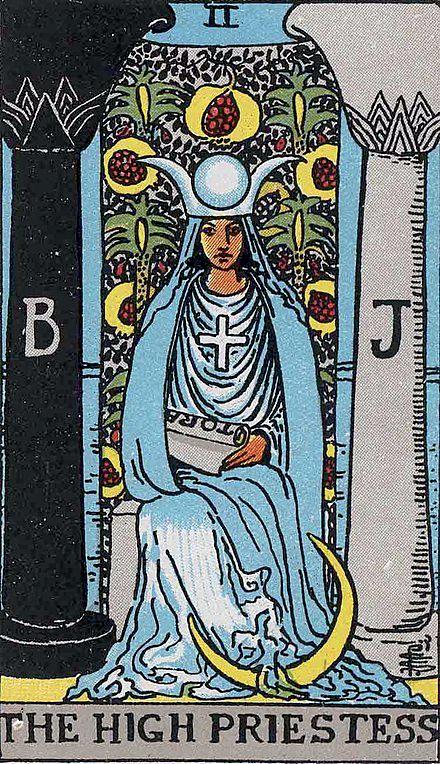
The High Priestess represents intuition and knowledge that has not yet become fully conscious.
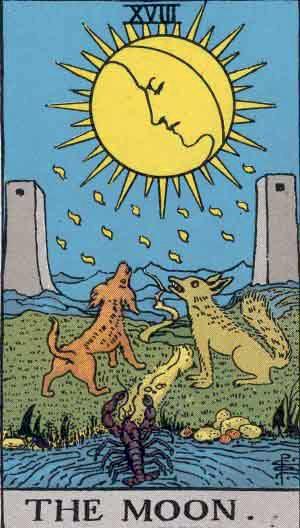
The Moon represents uncertainty, emotion, imagination, and perception.
The Star can represent spiritual openness and renewed meaning.
Judgement often represents awakening or a significant realization.
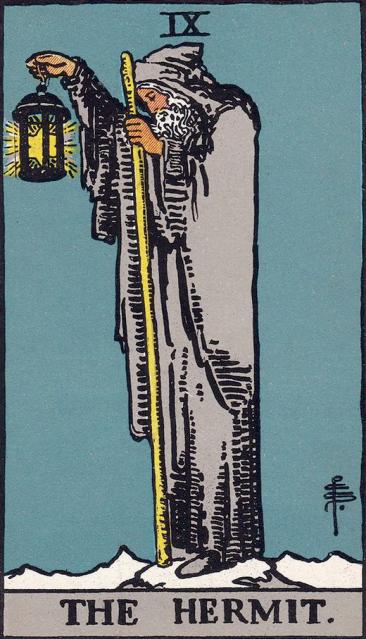
The Hermit represents inward searching.
The Ace of Swords can represent sudden clarity.
Be Careful With Absolute Interpretations
A coincidence does not automatically mean the universe has ordered you to do something.
A dream does not necessarily predict the future.
A tarot card does not replace practical information.
And a strong feeling about another person does not tell you what that person thinks.
Spiritual reflection becomes much healthier when curiosity remains stronger than certainty.
Final Thoughts
You do not always need to immediately explain every unusual experience.
Some moments can remain mysterious.
You can notice them.
Write them down.
Reflect.
Explore what they mean to you.
Sometimes understanding comes later.
And sometimes the experience itself matters more than finding the perfect label for it.
Explore the cards
Learn with Angela
Give your practice a little structure
Explore Learn to Read Tarot and the Manifest With Tarot journal for guided study, card practice and written reflection.
Explore the workbook and journal