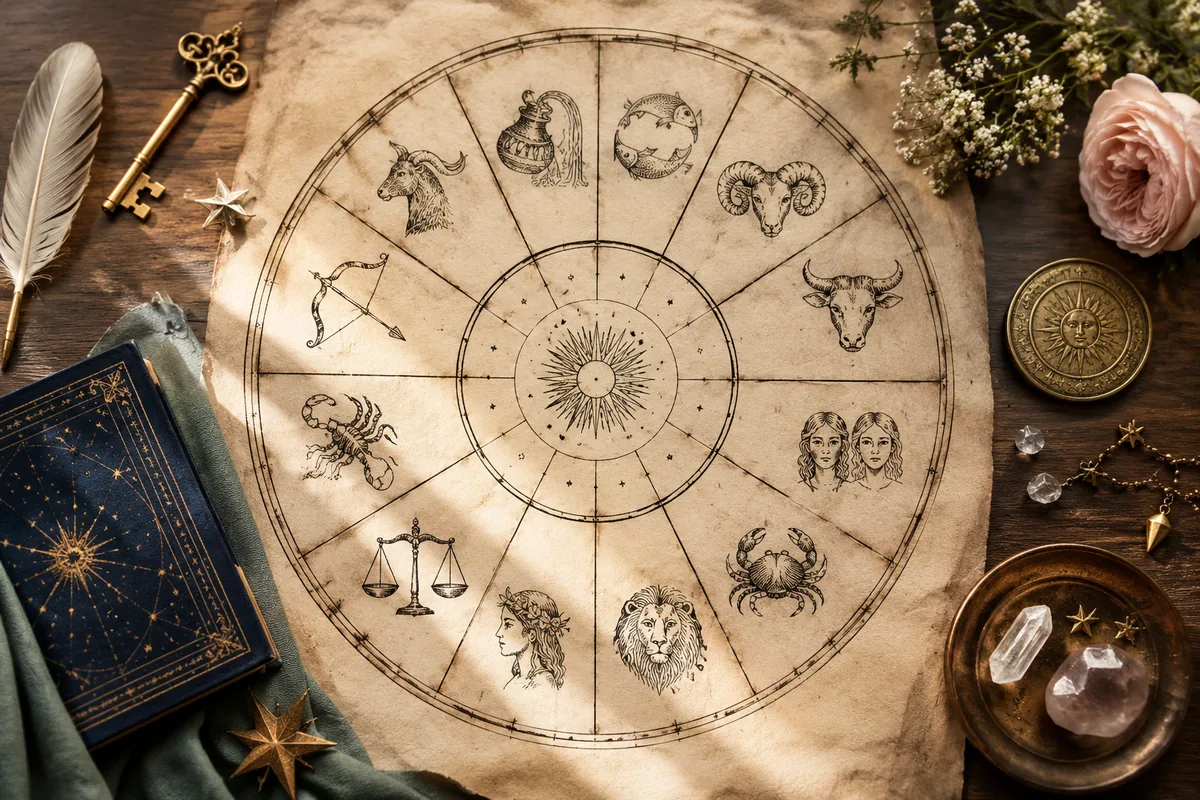
The houses answer one practical question: where does a planet act? A sign describes style, a planet describes the function and a house shows the area of life where the pattern becomes visible.
The twelve houses are not twelve separate predictions. Together they form a map of experience.
1st house: self and approach
The first house begins at the Ascendant. It describes physical presence, first response, identity in motion and the way a person enters new situations. Planets here become highly visible in the personality.
2nd house: money, resources and values
The second house describes personal resources, earning, possessions, self-worth and what creates stability. It is not only about income. It also shows what a person considers worth protecting and developing.
3rd house: learning and communication
The third house covers thinking habits, early learning, writing, speaking, siblings, local movement and the exchange of everyday information. Planets here often want expression and regular mental activity.
4th house: home and roots
The fourth house sits at the base of the chart. It describes home, family patterns, ancestry, private life and the inner foundation. Planets near the Imum Coeli can be deeply personal and less visible from the outside.
5th house: creativity, romance and joy
The fifth house describes self-expression, pleasure, play, dating, creative work and the desire to make something personally meaningful. It can speak to romance, but not the whole structure of long-term partnership.
6th house: work, routines and care
The sixth house concerns daily work, skills, service, habits and the systems that support ordinary life. It can describe health routines symbolically, but it should not be used to diagnose illness.
7th house: partnership and agreement
The seventh house begins at the Descendant. It describes committed partnership, one-to-one bonds, contracts and the qualities encountered through relationship. Read the sign, its ruler and any planets in the house.
8th house: intimacy and shared resources
The eighth house describes trust, vulnerability, shared money, inheritance, debt, psychological depth and the transformations created through deep exchange. It is not simply a house of crisis.
9th house: belief, study and wider horizons
The ninth house covers higher learning, philosophy, spiritual frameworks, publishing, long-distance travel and the search for meaning. Planets here often need a larger perspective.
10th house: career and visibility
The tenth house and Midheaven describe vocation, reputation, public contribution, authority and the direction a person is recognized for developing. Career interpretation also includes the second and sixth houses.
11th house: community and future hopes
The eleventh house describes friendship, groups, networks, collective participation and hopes for the future. It shows how personal gifts connect with a wider community.
12th house: inner life and retreat
The twelfth house concerns solitude, rest, unconscious patterns, endings, spiritual reflection and what operates away from public view. Planets here need time and privacy for their expression to become understood.
The four angular houses
The first, fourth, seventh and tenth houses begin at the four chart angles. They form two central axes: self and partnership, private foundation and public direction. Planets close to these angles often become especially strong.
How to read a planet in a house
Build one sentence. Mars describes assertion and action. Virgo describes a precise, improving style. The sixth house describes daily work and routines. Mars in Virgo in the sixth may direct energy into problem-solving, skill and active maintenance of everyday systems.
How house rulers connect the chart
Read the sign on a house cusp, then find that sign’s ruling planet. If Taurus is on the seventh house, Venus rules partnership. If Venus sits in the eleventh house, relationships may connect with friendship, community or shared future hopes.
What an empty house means
An empty house is not a missing life area. It simply contains no natal planets. Read the sign on its cusp, its ruler and any current transits moving through it. Everyone still experiences all twelve houses.
Whole Sign and quadrant houses
Different house systems can place planets near cusps differently. Whole Sign houses assign one full sign to each house. Systems such as Placidus use calculated cusps that can divide signs across houses. Choose one method, stay consistent and note when a planet is close enough to a cusp that both contexts deserve consideration.
Continue with the seventh house guide, Sun in the tenth house and the complete chart analysis method.
Continue with how to read empty houses and what a stellium concentrates.
Astrology supports symbolic reflection. House placements do not guarantee events or replace professional advice.
Pinterest birth chart library
Save 6 different guides
Each image contains a separate chart-reading method or cheat sheet worth returning to.
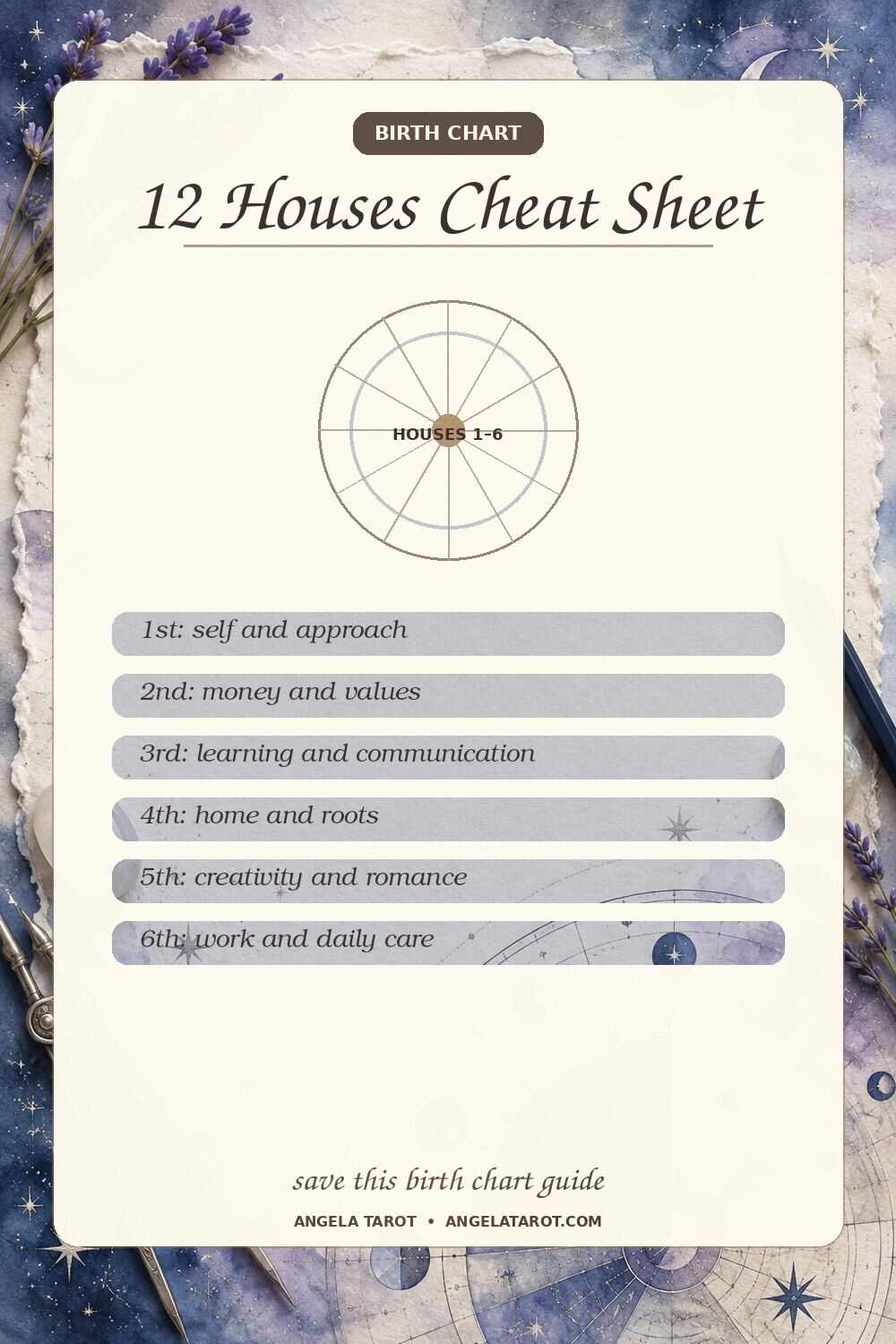
12 Houses Cheat Sheet
Save this guide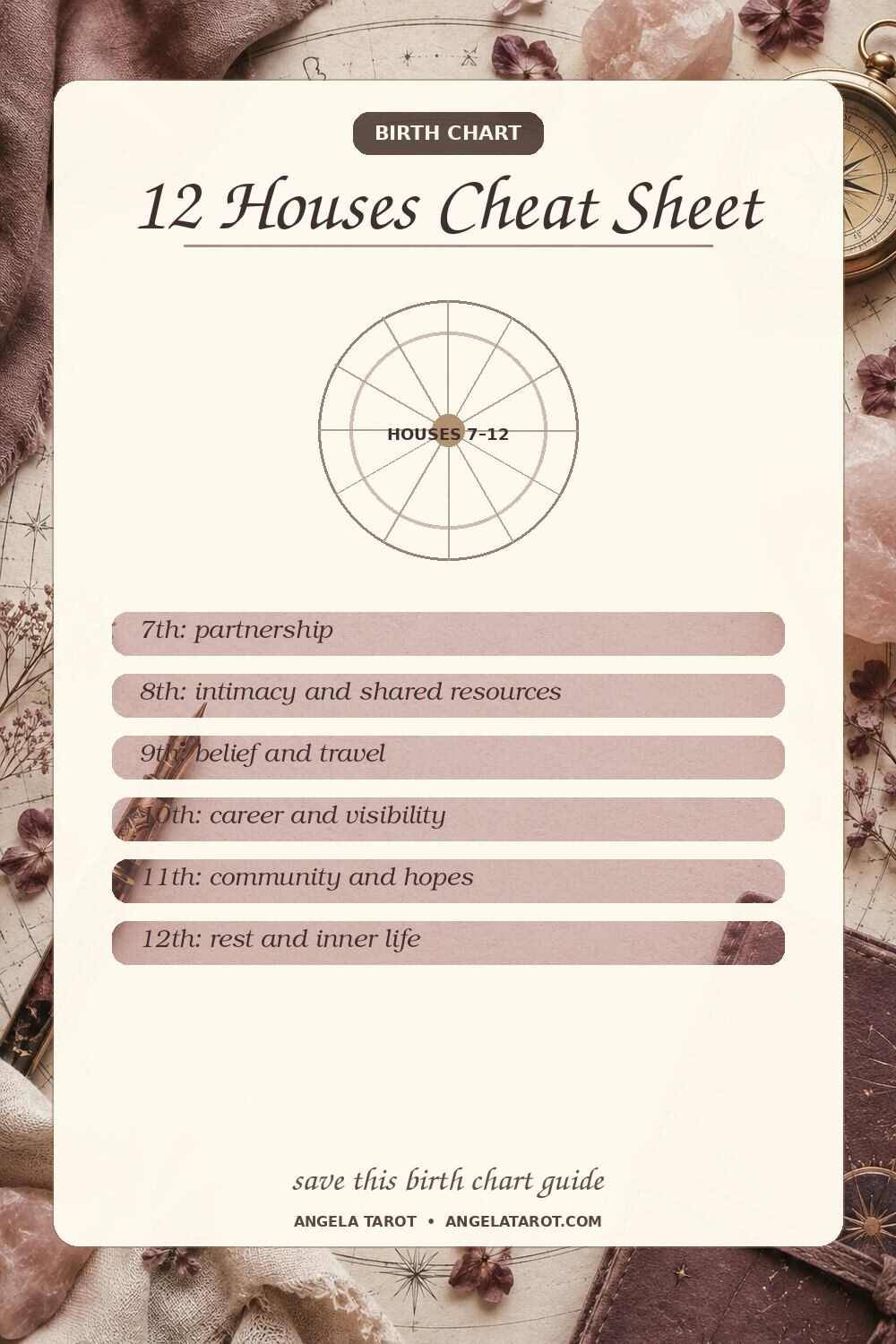
12 Houses Cheat Sheet
Save this guide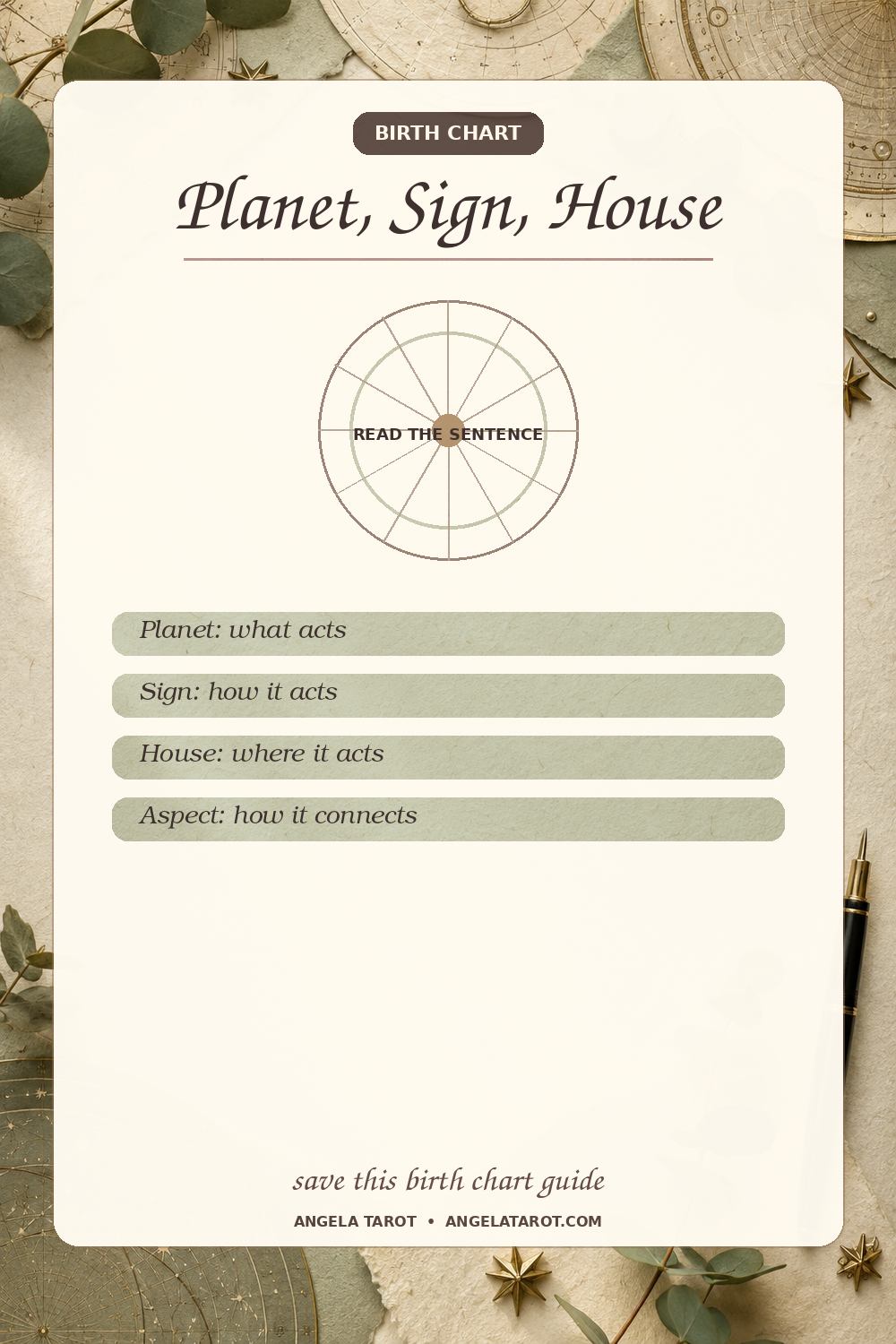
Planet, Sign, House
Save this guide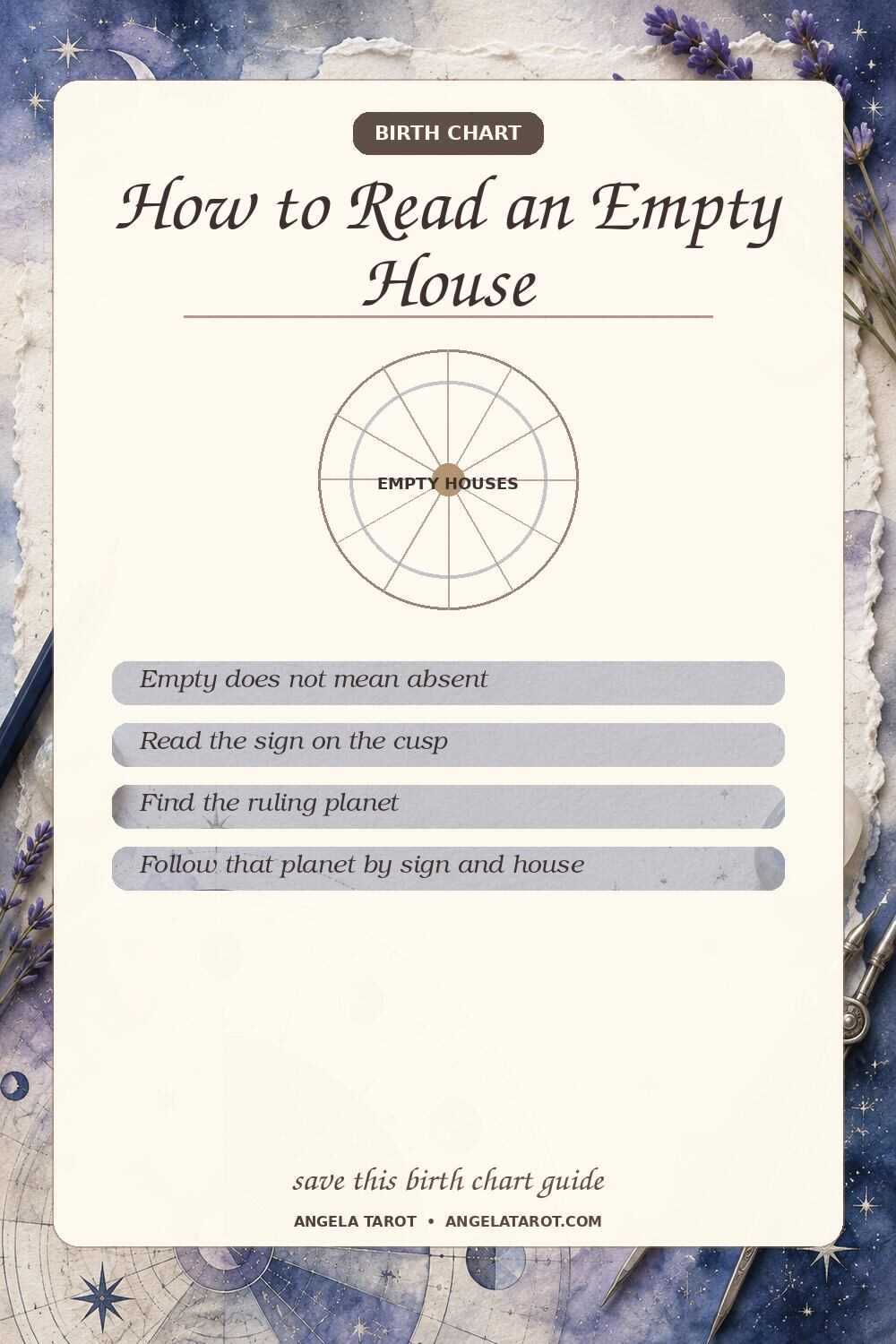
How to Read an Empty House
Save this guide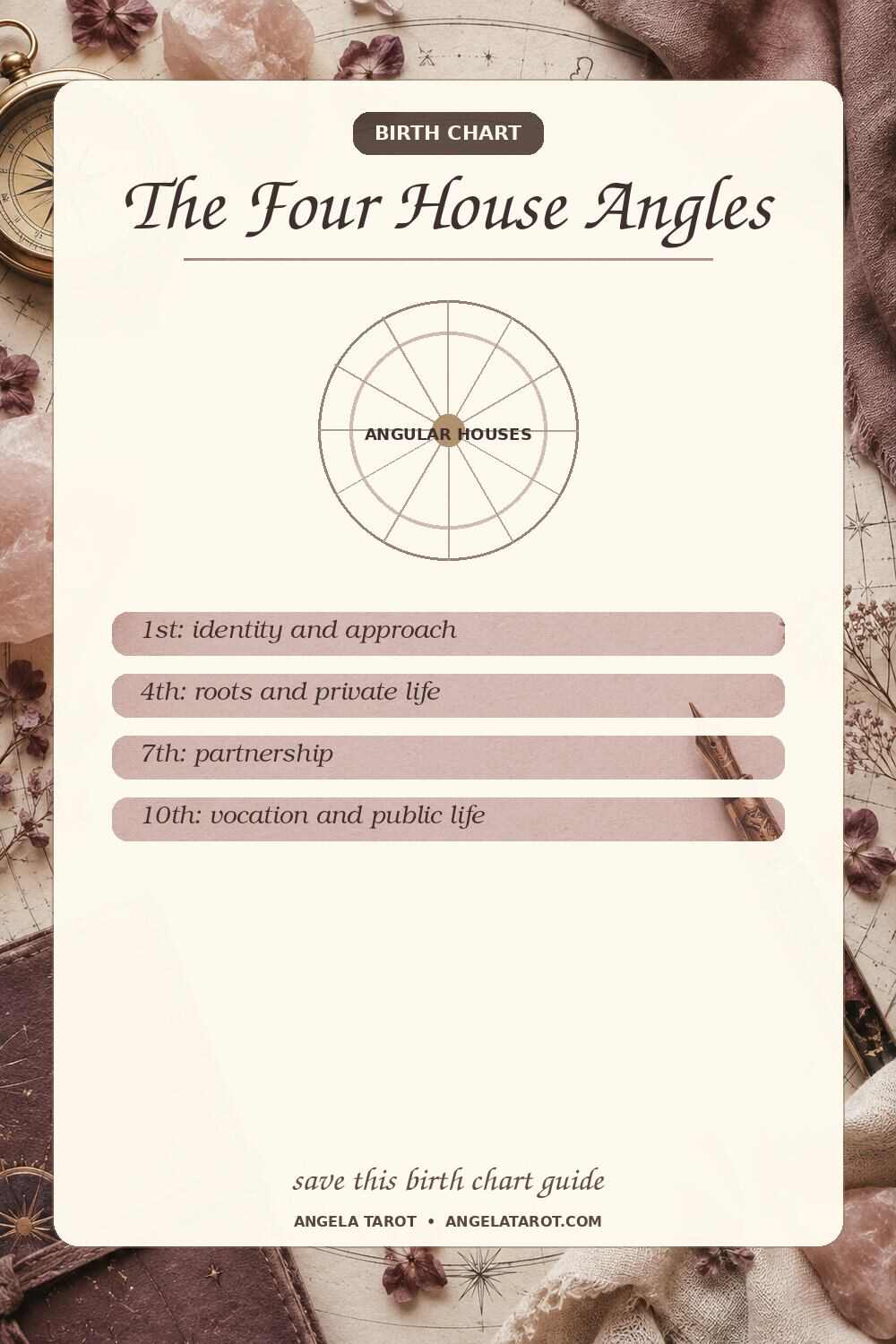
The Four House Angles
Save this guide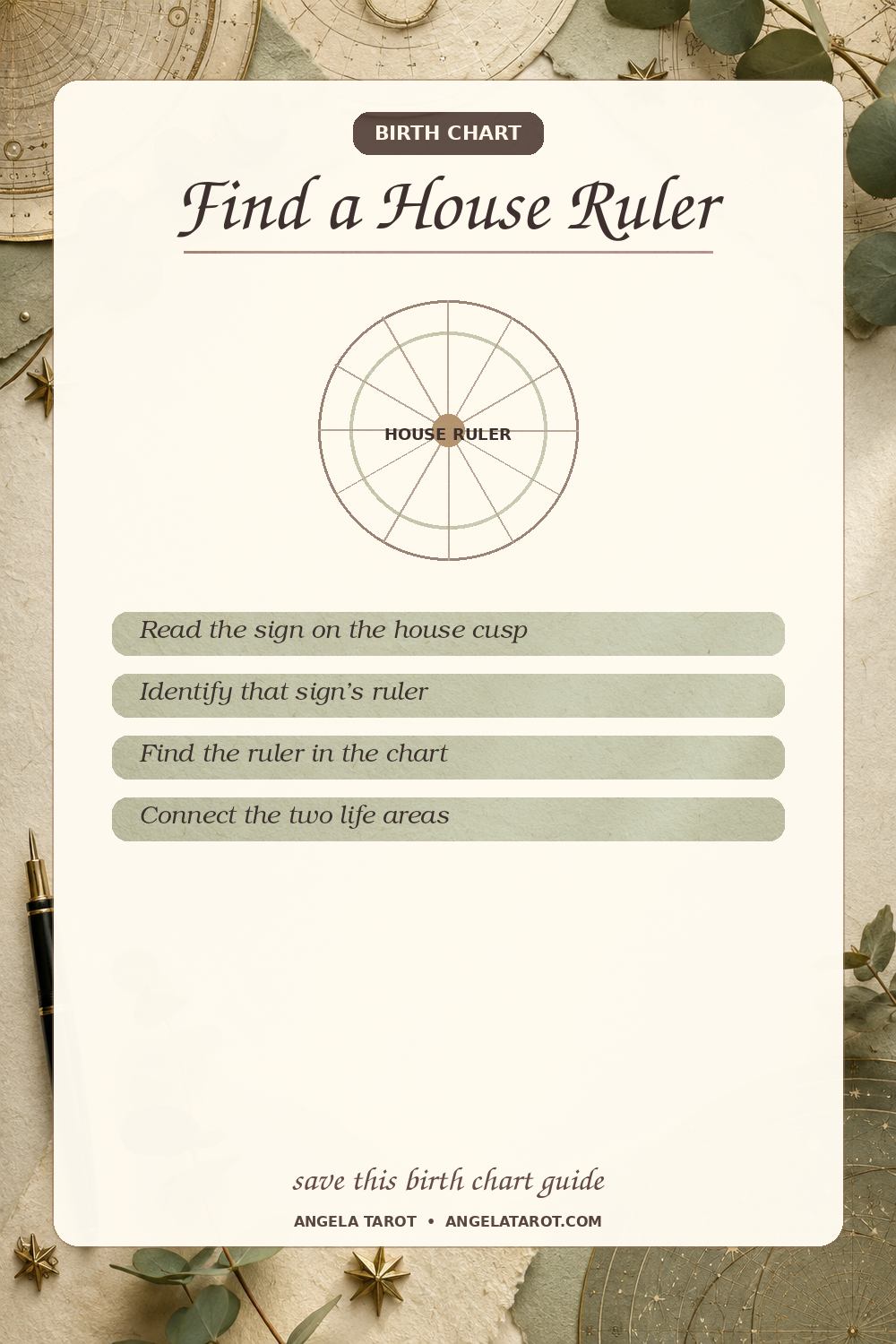
Find a House Ruler
Save this guideExplore your own birth chart
A personal analysis can connect the placements, houses and aspects that shape your individual chart.
Explore birth chart readingsQuick answers
What do the 12 houses represent?
The houses represent life areas, including identity, money, communication, home, creativity, work, partnership, intimacy, belief, career, community and inner life.
Are houses the same as zodiac signs?
No. Signs describe style and houses describe life area. The first house is not automatically Aries in an individual natal chart.
What does an empty house mean?
It does not mean nothing happens there. Read the sign on the cusp and the placement of its ruling planet.
Which houses are most important?
The angular houses, first, fourth, seventh and tenth, are structurally important. Houses containing the Sun, Moon, chart ruler or several planets also carry emphasis.
Can a planet be in a different house depending on the system?
Yes. House systems can place a planet near a cusp differently. Use one system consistently and compare only when the placement is close to a boundary.