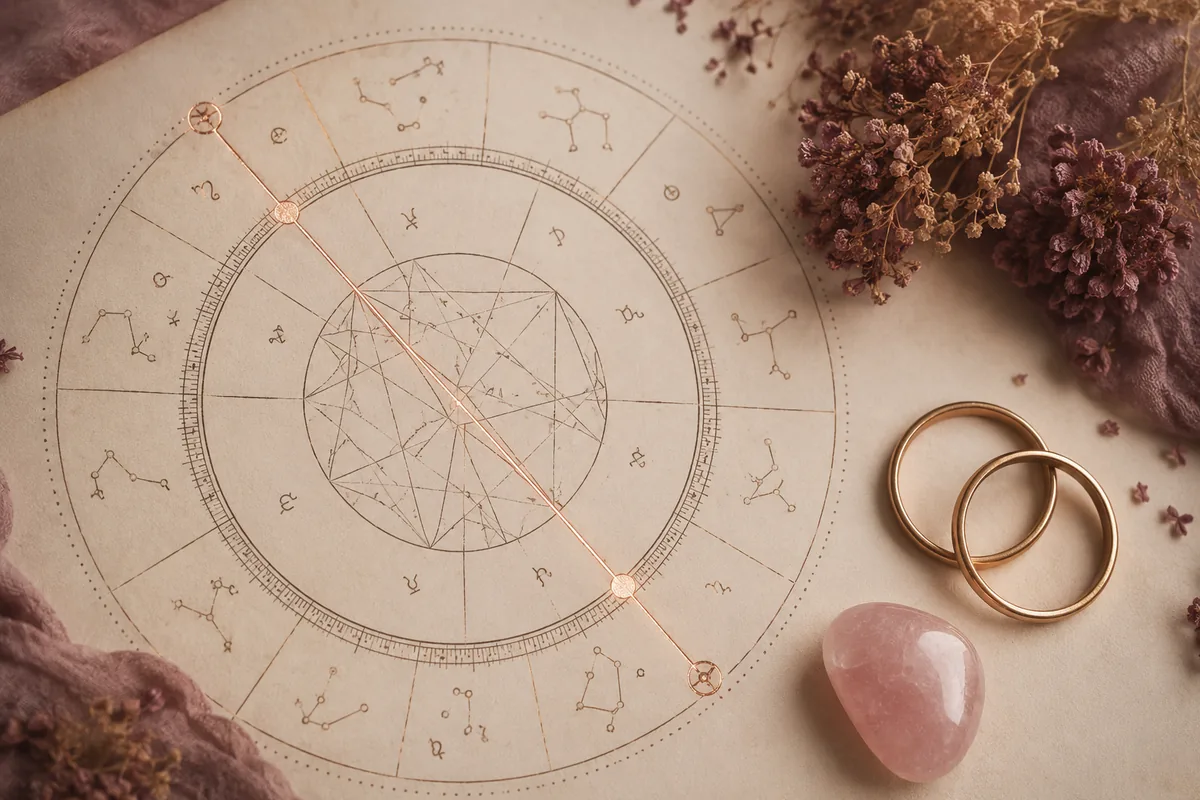
The seventh house is the part of the chart most closely connected with committed partnership, but it is often reduced to a list of future-spouse traits. Its deeper purpose is to show how you enter one-to-one bonds, what you meet through others and what partnership asks you to develop.
Start with the Descendant sign
The Descendant is the sign opposite the Ascendant. It opens the seventh house and describes qualities that become important through close relationship.
Aries on the Descendant may bring directness, initiative and the need for honest movement. Libra may emphasize cooperation, fairness and shared decision-making. Capricorn may emphasize reliability, maturity and long-term structure.
The 1st and 7th house axis
The Ascendant and Descendant form one relationship axis. The first house describes the way you act from your own center. The seventh describes what becomes visible through exchange, partnership and contrast. A strong reading keeps both sides present.
For example, Aries Rising may move independently while Libra on the Descendant develops cooperation and shared decision-making. Cancer Rising may protect the private self while Capricorn on the Descendant asks for reliability and structure. Partnership does not replace the Ascendant. It teaches how self-direction and mutual responsibility can work together.
Find the ruler of the 7th house
After identifying the Descendant sign, find its ruling planet. Read that planet by sign, house and aspects. This is often more specific than the Descendant sign alone.
If Gemini is on the seventh house, Mercury rules partnership. Mercury in the ninth house may connect relationship with learning, travel, belief or different cultural backgrounds. Mercury square Neptune may add imagination and deep sensitivity, while also requiring clearer communication.
Read planets in the 7th house
Planets in the seventh become part of the partnership field. Venus may seek harmony, affection and shared values. Mars can bring desire, directness and active negotiation. Jupiter can expand life through partnership. Saturn can emphasize responsibility, boundaries and relationships that become stronger through time and effort.
A planet does not automatically describe the partner. It may describe your own relationship behavior, the energy repeatedly activated in partnership or a quality projected until it is recognized within yourself.
Read aspects to the ruler
Aspects show how easily the seventh-house ruler connects with other needs. A trine between the ruler and the Moon may support emotional understanding. A square to Mars may bring strong chemistry and conflict around pace or assertion. A Saturn conjunction may emphasize seriousness, loyalty, caution or fear of choosing incorrectly.
The 5th, 7th and 8th houses
The fifth house describes dating, romance, pleasure and creative attraction. The seventh describes partnership and agreement. The eighth describes trust, shared resources, vulnerability and deep intimacy. A complete love reading keeps these functions separate before connecting them.
What an empty 7th house means
An empty seventh house does not mean a life without partnership. Read the Descendant sign, its ruler and aspects to that ruler. Many people with empty seventh houses have central and lasting relationships.
Common ruler examples
7th-house ruler in the 4th: partnership may connect strongly with home, family and the need to create a private foundation.
7th-house ruler in the 10th: relationships may influence public direction, career or long-term goals.
7th-house ruler in the 11th: friendship, community and shared future hopes may support partnership.
7th-house ruler in the 12th: relationship patterns may need privacy, spiritual depth and conscious work with what is difficult to name.
Can the chart describe marriage?
Astrologers look for repeated partnership themes rather than one placement. The seventh-house ruler, Venus, Moon, Saturn, relevant aspects and timing cycles can all contribute. None guarantees marriage, divorce or one fixed partner.
Marriage is also a legal, cultural and personal choice. A strong seventh house can describe a life shaped by clients, collaboration, contracts or other one-to-one bonds.
How to use the 7th house in a real reading
- Describe the Descendant sign without turning it into a stereotype.
- Read the ruler by sign, house and aspects.
- Add planets in the seventh.
- Compare the fifth and eighth houses.
- Look for the same theme in Venus, Mars or the Moon.
- Connect the symbolism with actual relationship history.
Continue with Venus in the seventh house, Moon in the seventh house and the complete love indicators guide.
Astrology can describe relationship patterns and needs. It cannot guarantee marriage, identify one destined partner or replace communication and informed choice.
Pinterest birth chart library
Save 6 different guides
Each image contains a separate chart-reading method or cheat sheet worth returning to.
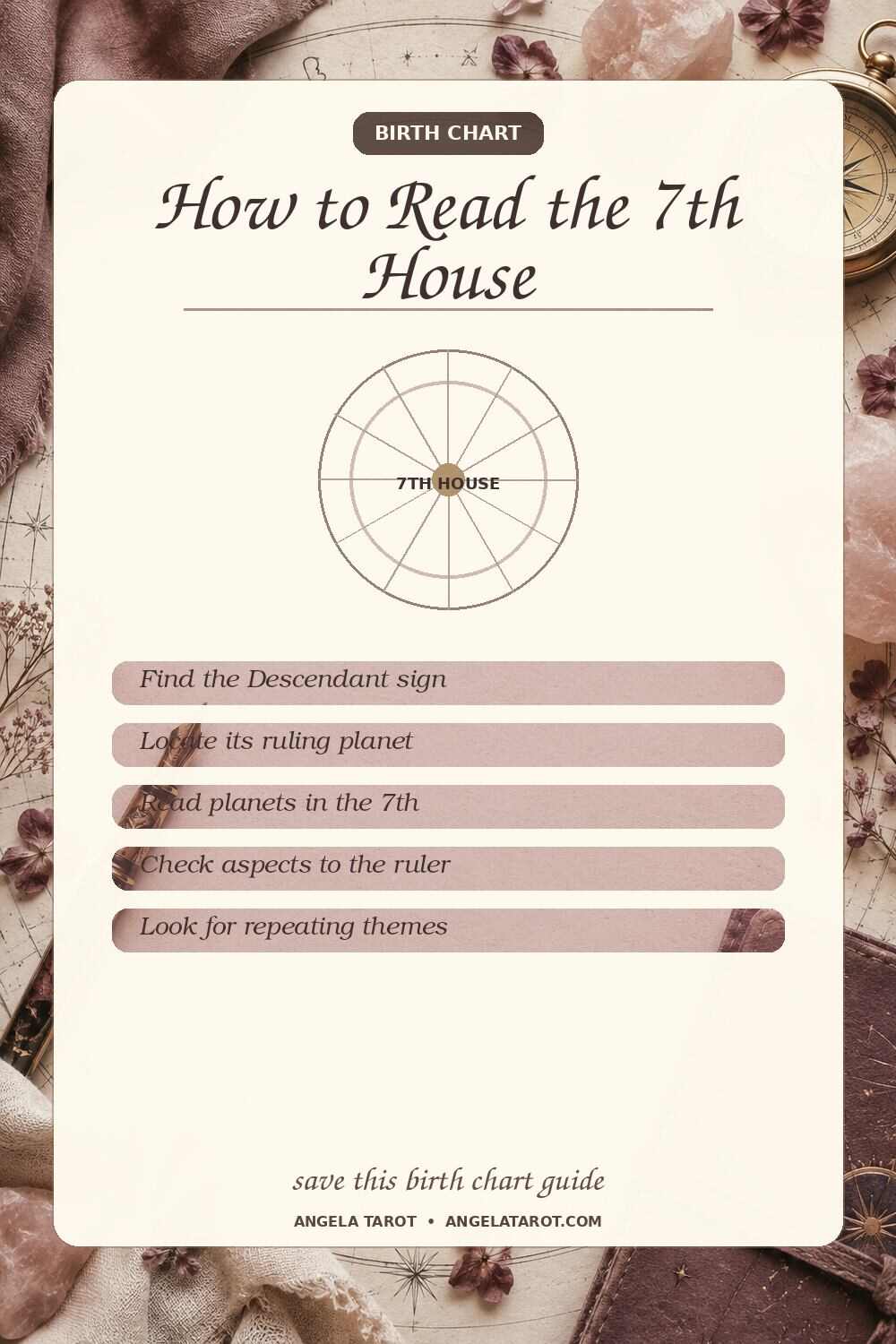
How to Read the 7th House
Save this guide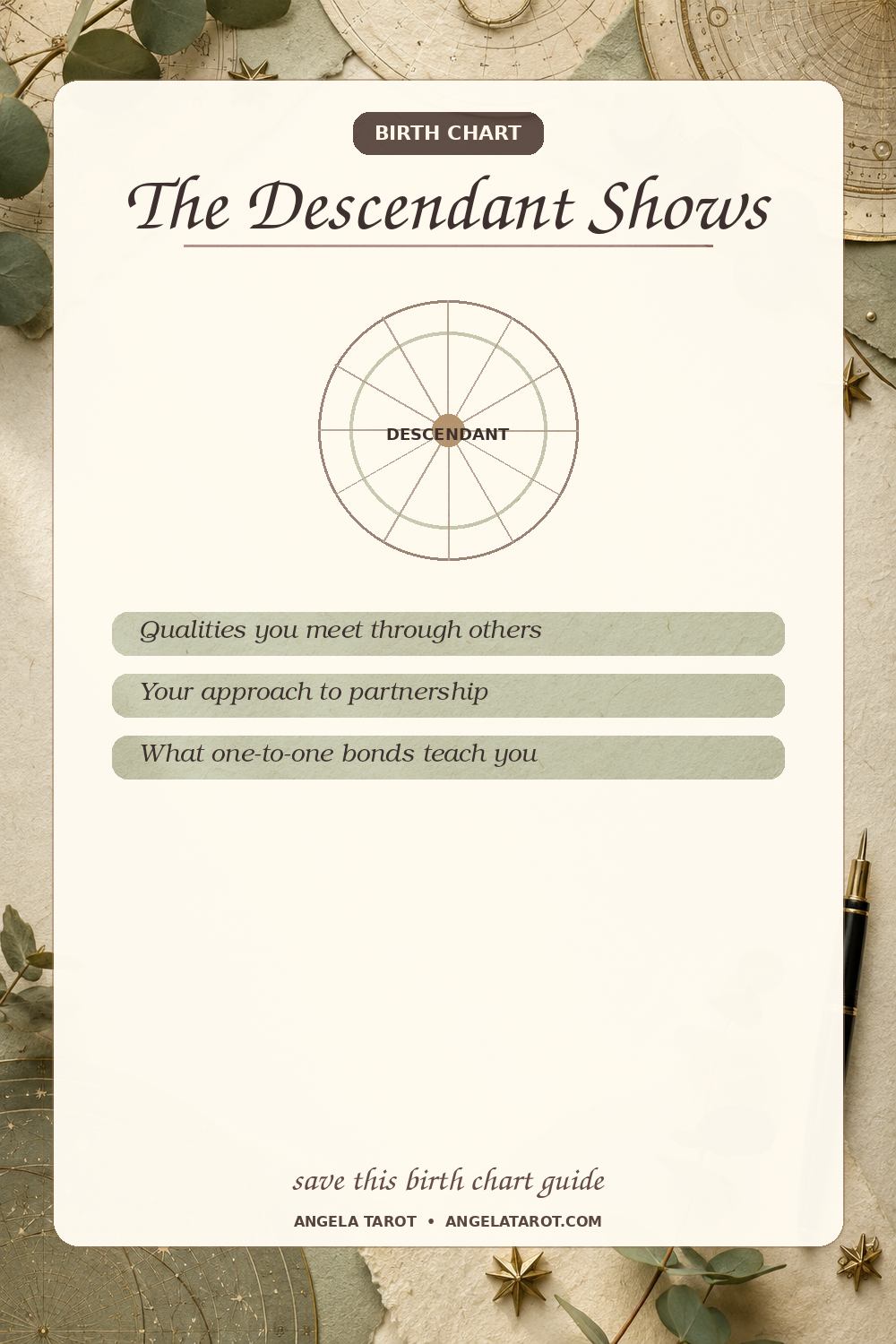
The Descendant Shows
Save this guide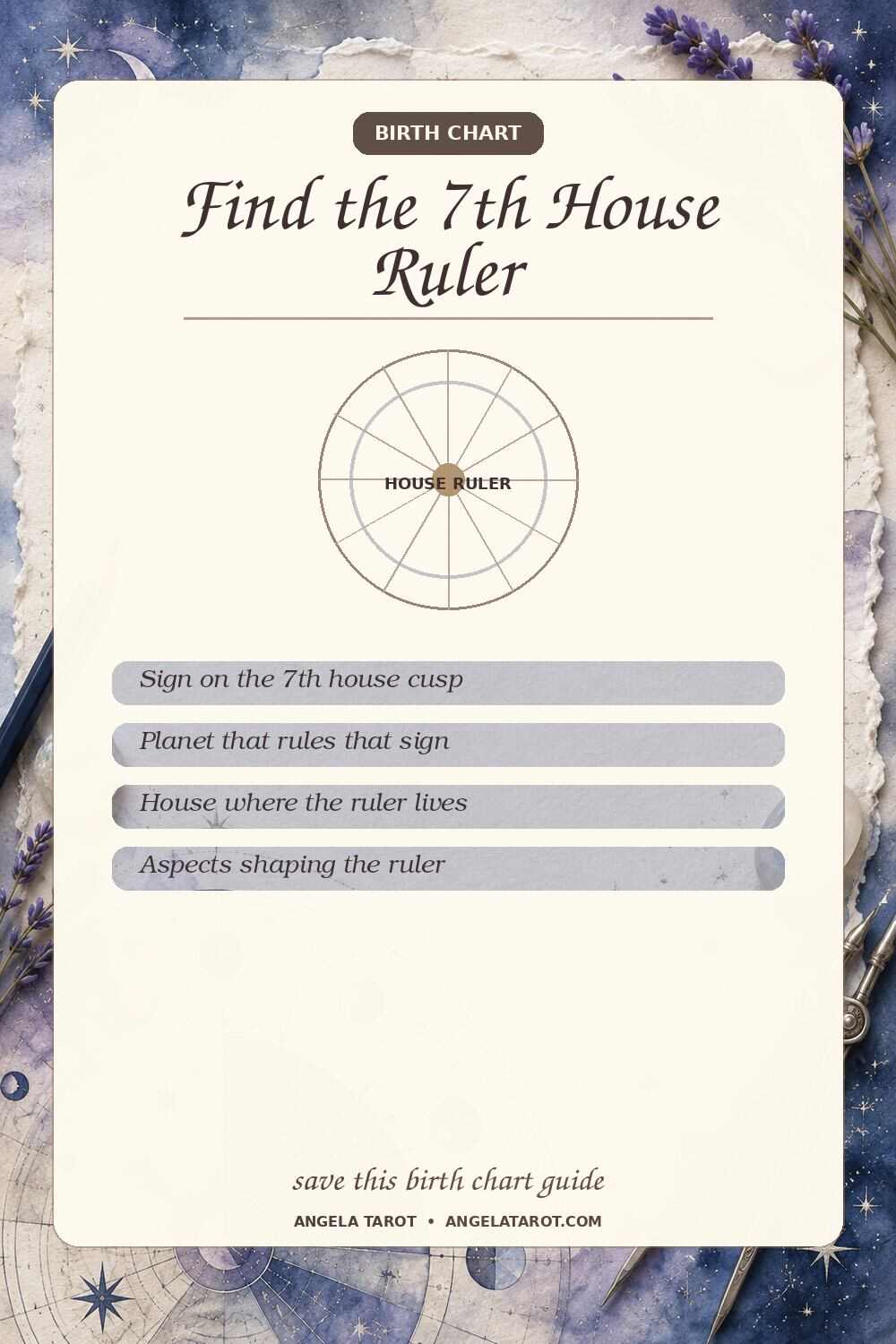
Find the 7th House Ruler
Save this guide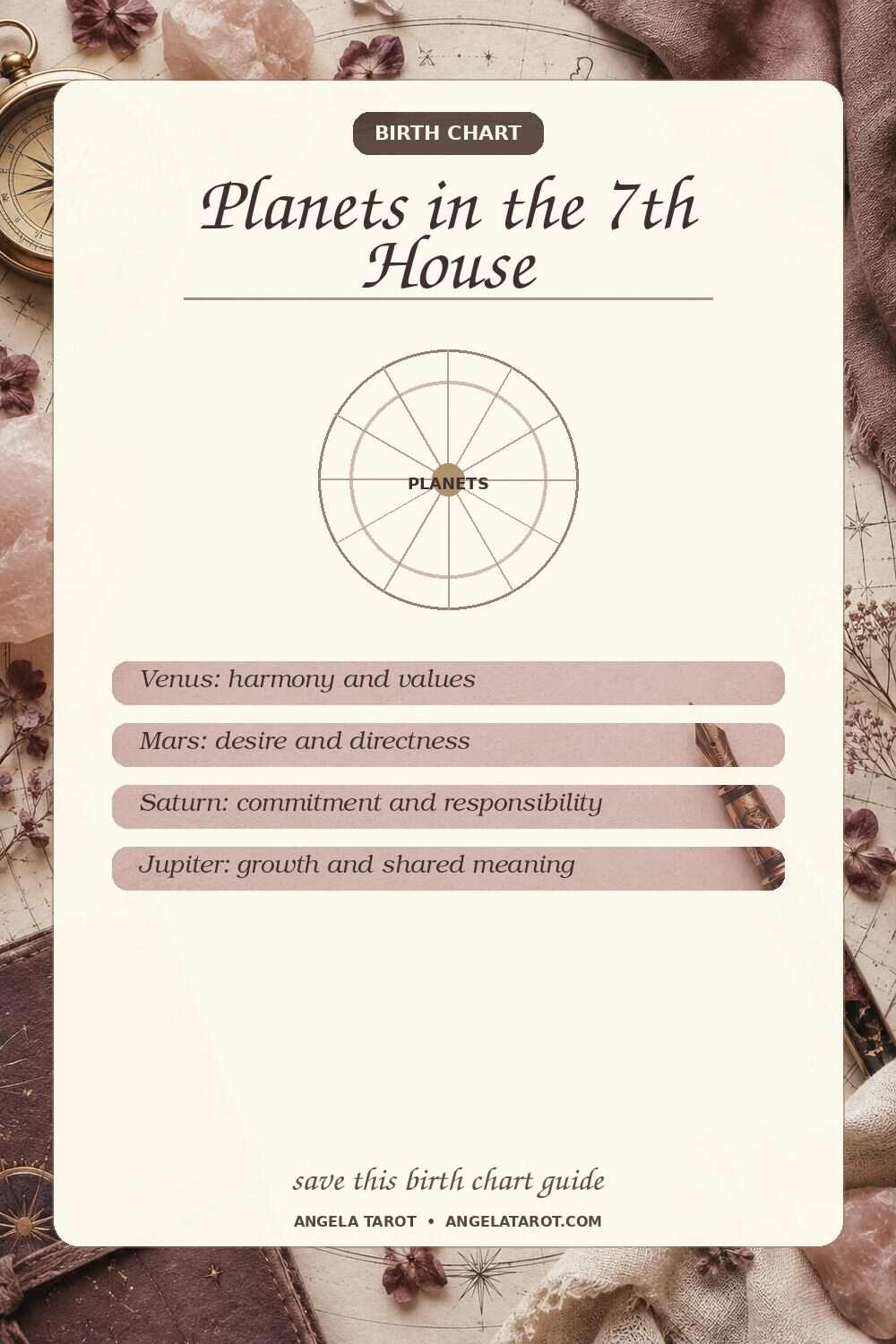
Planets in the 7th House
Save this guide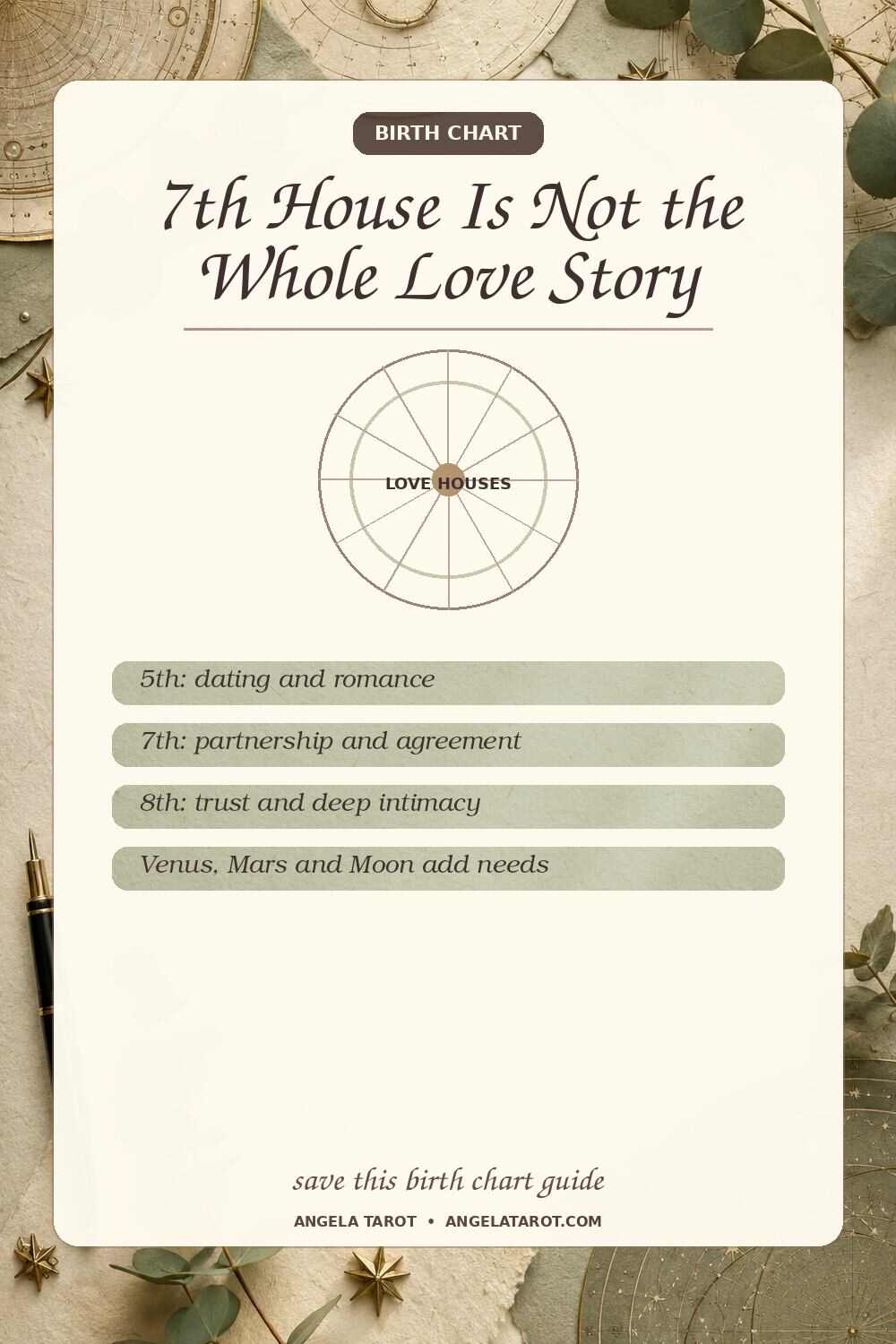
7th House Is Not the Whole Love Story
Save this guide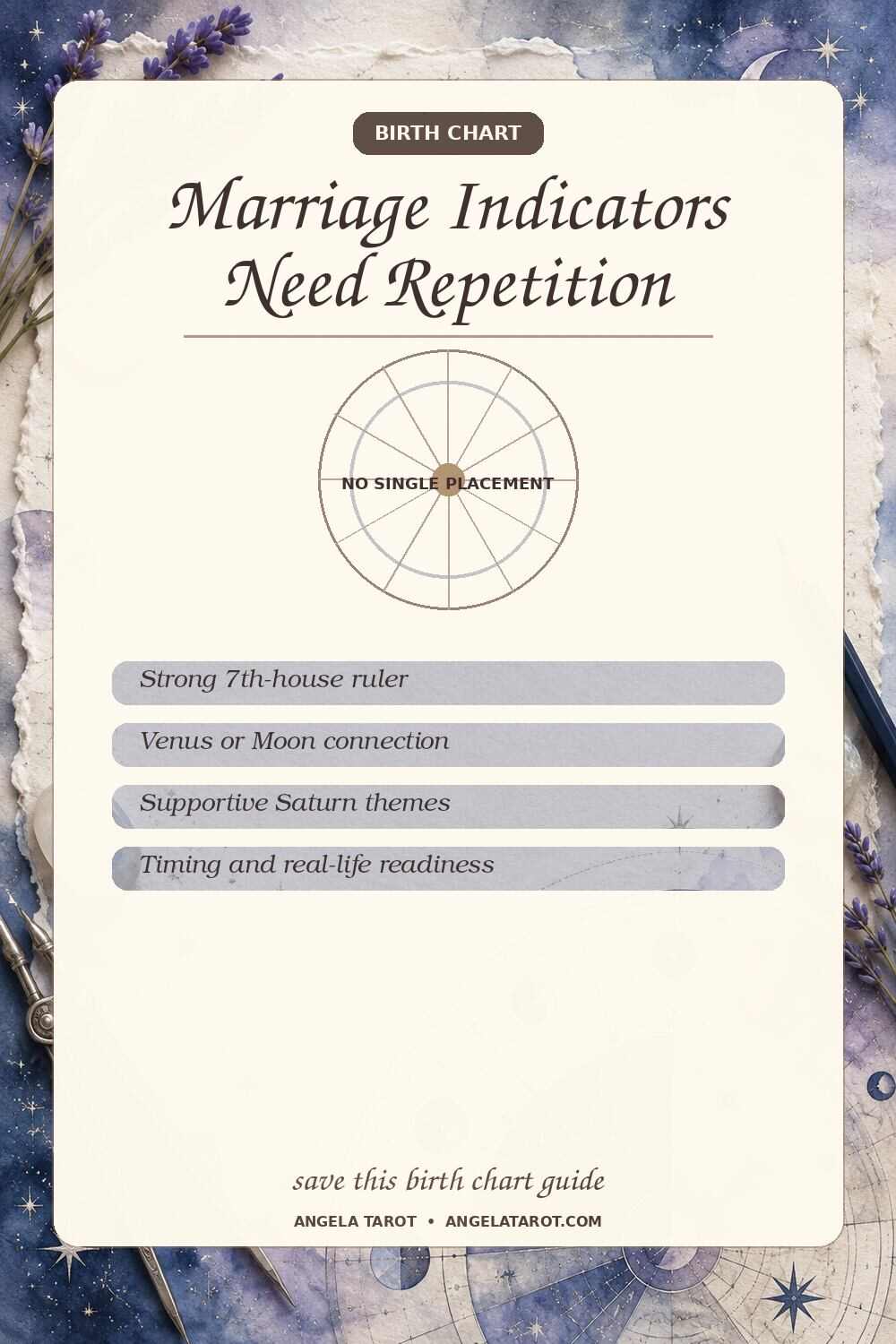
Marriage Indicators Need Repetition
Save this guideExplore your own birth chart
A personal analysis can connect the placements, houses and aspects that shape your individual chart.
Explore birth chart readingsQuick answers
What does the 7th house represent?
The seventh house represents committed partnership, one-to-one relationships, agreements and qualities encountered through close bonds.
Does an empty 7th house mean no marriage?
No. Read the sign on the Descendant and the placement of its ruling planet.
Which planet rules marriage in astrology?
No single planet rules every marriage outcome. Venus, the Moon, Saturn, the seventh house and its ruler all add different information.
Do planets in the 7th house describe a future spouse?
They can describe recurring partnership themes and qualities met through others, but not one guaranteed person.
Can the 7th house show when I will marry?
The natal chart alone does not provide one certain date. Timing work studies transits and progressions alongside real circumstances and choice.