Learning tarot becomes easier when you stop trying to memorize every possible meaning at once. A card is never read in isolation from the question, position and cards around it.
These fifteen tips create a repeatable process. They help you begin the reading, connect the message and know when to close the deck.
A simple beginner reading process
- Write one question.
- Choose three clear positions.
- Describe each image.
- Read card and position together.
- Connect the cards in one sentence.
- Finish with one action or journal prompt.
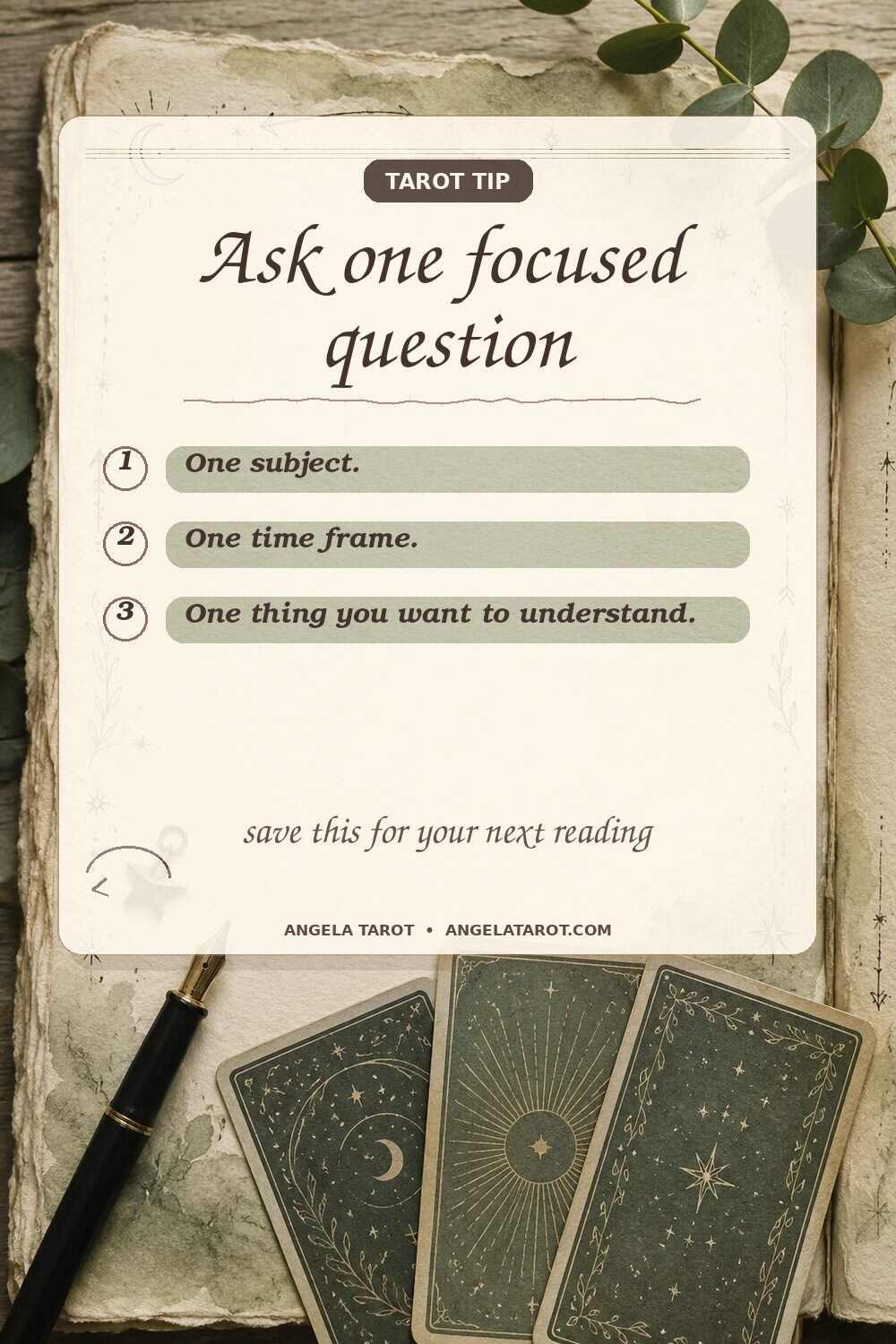
1. Ask one focused question
A focused question gives the spread a boundary. “What should I understand about communication in this relationship?” is easier to read than “Tell me everything about my love life.”
Try it: Write the question in one sentence before shuffling.
2. Choose the spread before drawing
Positions give each card a separate job. Deciding the layout afterward makes it easier to move meanings toward the answer you hoped to receive.
Try it: Use three positions when you are learning: situation, challenge and advice.
3. Start with fewer cards
Three to five cards usually contain enough contrast for a complete answer. Large spreads are useful only when the question genuinely contains many parts.
Try it: Stop when every written position has a card.
4. Describe the image before naming the meaning
Colors, posture, direction, weather and distance create a personal entry into the card. This keeps the guidebook from becoming the only voice in the reading.
Try it: Write three things you can literally see.
5. Read every card through its position
The Tower as a challenge is different from The Tower as advice. Position narrows the meaning and prevents one keyword from taking over the spread.
Try it: Say the position and card together, such as “The Tower as the next step.”
6. Connect the cards
A reading becomes useful when the cards interact. Look for contrast, continuation and cause. Ask what changed between the first image and the last.
Try it: Write one sentence that includes all the cards.
7. Decide how you will use reversals
You can read reversals, ignore them or use them only for blocked and internalized energy. Consistency matters more than choosing the most complicated method.
Try it: Choose your reversal rule before shuffling.
8. Notice Major and Minor Arcana balance
Several Major Arcana cards can show that the question belongs to a wider life chapter. Minor cards often reveal daily behavior and practical conditions.
Try it: Do not treat Major as automatically good or more predictive.
9. Use suits as a second layer
Suits show the field of experience. Cups relate to emotion, Swords to thought and communication, Wands to will and creativity, Pentacles to work, resources and embodiment.
Try it: Count the suits only after reading the positions.
10. Use numbers to find development
Aces begin, Twos divide or connect, Threes develop and Tens complete a cycle. The number gives movement to the suit.
Try it: Compare repeated numbers across different suits.
11. Read Court cards through context
A Court card is not always a literal person. It may show an attitude, maturity level, communication style or role that the moment requires.
Try it: Look for a real person only when the question and surrounding cards support it.
12. Do not repeat the same question immediately
A second reading often measures your reaction to the first more than a changed situation. Allow new information, action or time before asking again.
Try it: Write what you disliked about the first answer instead of reshuffling.
13. Limit clarification cards
One clear clarifier can focus a difficult card. Several unplanned clarifiers create another spread without defined positions.
Try it: Name exactly what is unclear before drawing.
14. End with an action
An interpretation becomes easier to remember when it leads to a conversation, boundary, journal prompt or practical task.
Try it: Choose one action small enough to complete.
15. Review your readings
Follow-up builds skill faster than collecting more keywords. It teaches you how cards actually speak in your own practice.
Try it: Return later and mark what was literal, emotional and symbolic.
A complete beginner example
Imagine asking, “What will help me feel more confident in my work this week?” You choose Situation, Challenge and Advice, then draw Eight of Pentacles, Seven of Cups and Queen of Swords.
Eight of Pentacles shows that confidence is already being built through practice and repeated effort. Seven of Cups as the challenge points to too many options, comparison or imagined directions competing for attention. Queen of Swords as advice asks for a clear standard and a direct decision about what deserves focus.
The connected sentence becomes: consistent skill is developing, but scattered possibilities weaken confidence, so choose one clear priority and work with it directly. The final action could be finishing one defined task before researching another path.
Build your personal tarot vocabulary
Keep the original interpretation beside the later follow-up. If Queen of Swords repeatedly appears when you set a boundary or make a firm decision, that lived context becomes part of your relationship with the card. Personal vocabulary should expand the traditional meaning, not erase it.
Do not measure progress by how many keywords you can recite. Measure it by whether you can explain why a card means something in this question, this position and this combination.
What to learn after the basics
Once three-card readings feel natural, begin noticing suit balance, number progression and visual direction. These patterns help the cards speak together without requiring a larger spread.
Use the 15 easy three-card layouts for practice. The guide to reading cards together is the next step when individual meanings already feel familiar.
Continue with clearer tarot questions and the five-lens reversal method.
If you want these methods gathered into one structured study path, explore the complete tarot workbook and guided journal.
Tarot can support learning and reflection. It cannot establish private facts, guarantee outcomes or replace professional guidance.
Pinterest tip library
Save 6 different tips
Each image contains a separate technique or checklist and saves this article as its source.
Ask one focused question
Save this Pin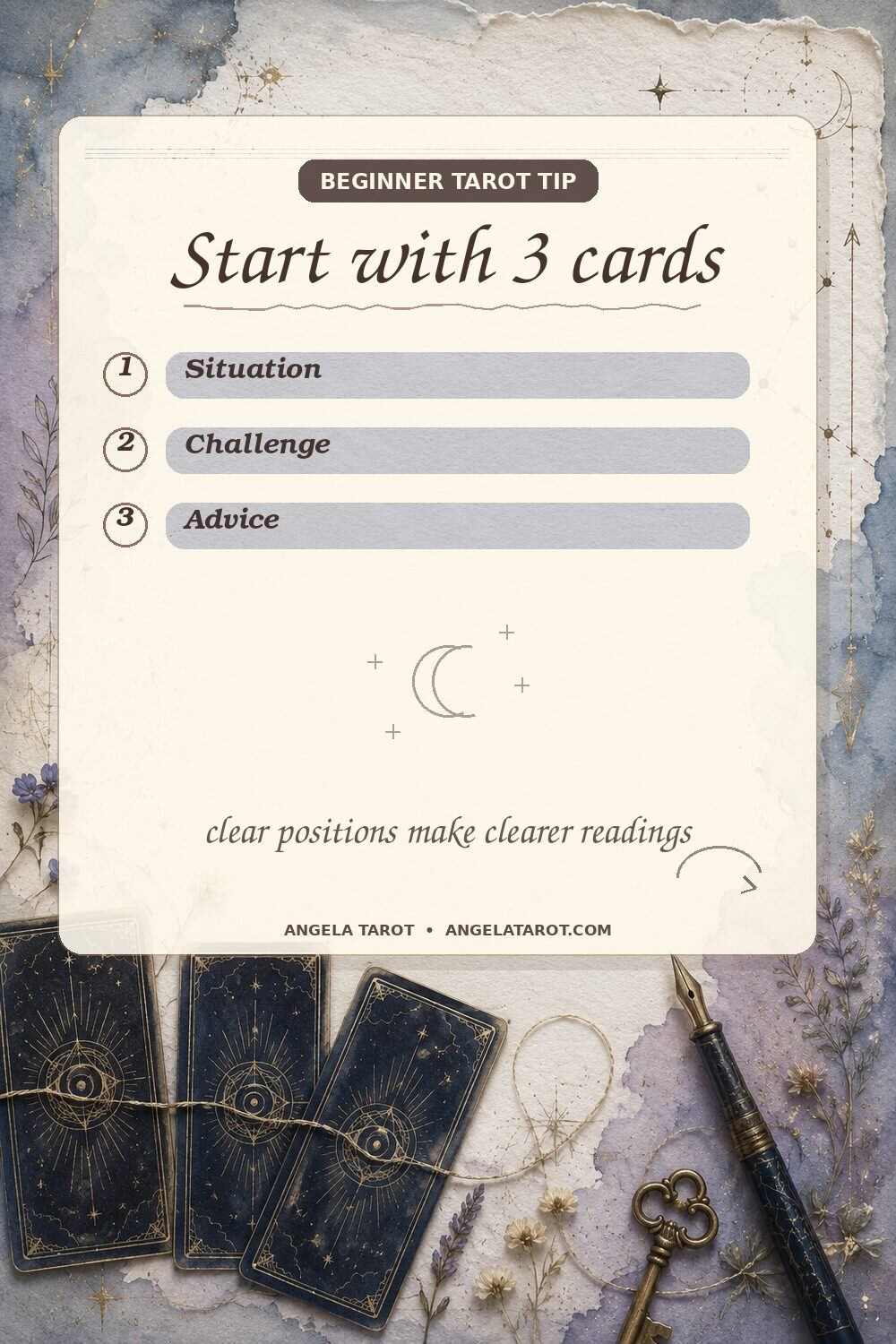
Start with 3 cards
Save this Pin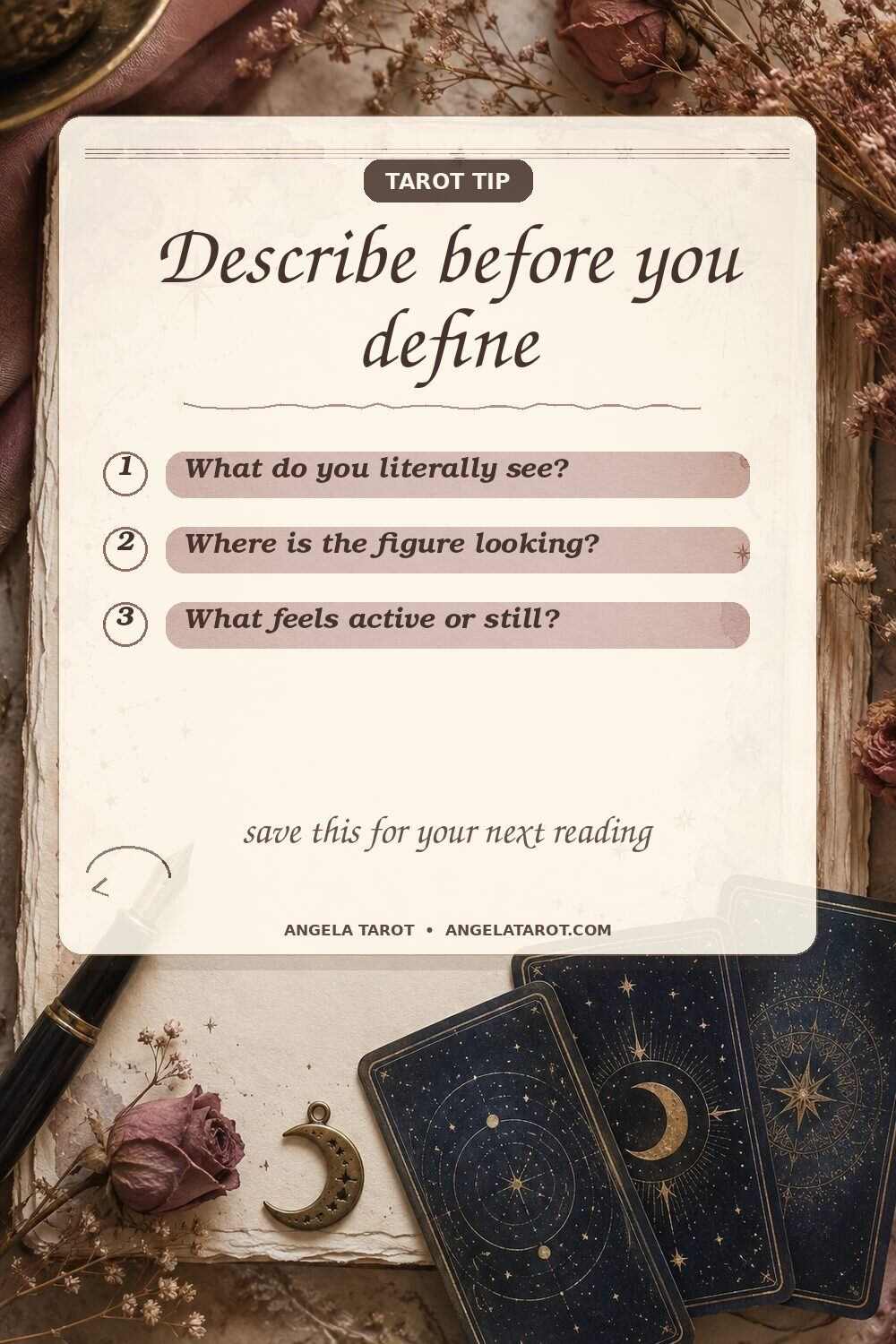
Describe before you define
Save this Pin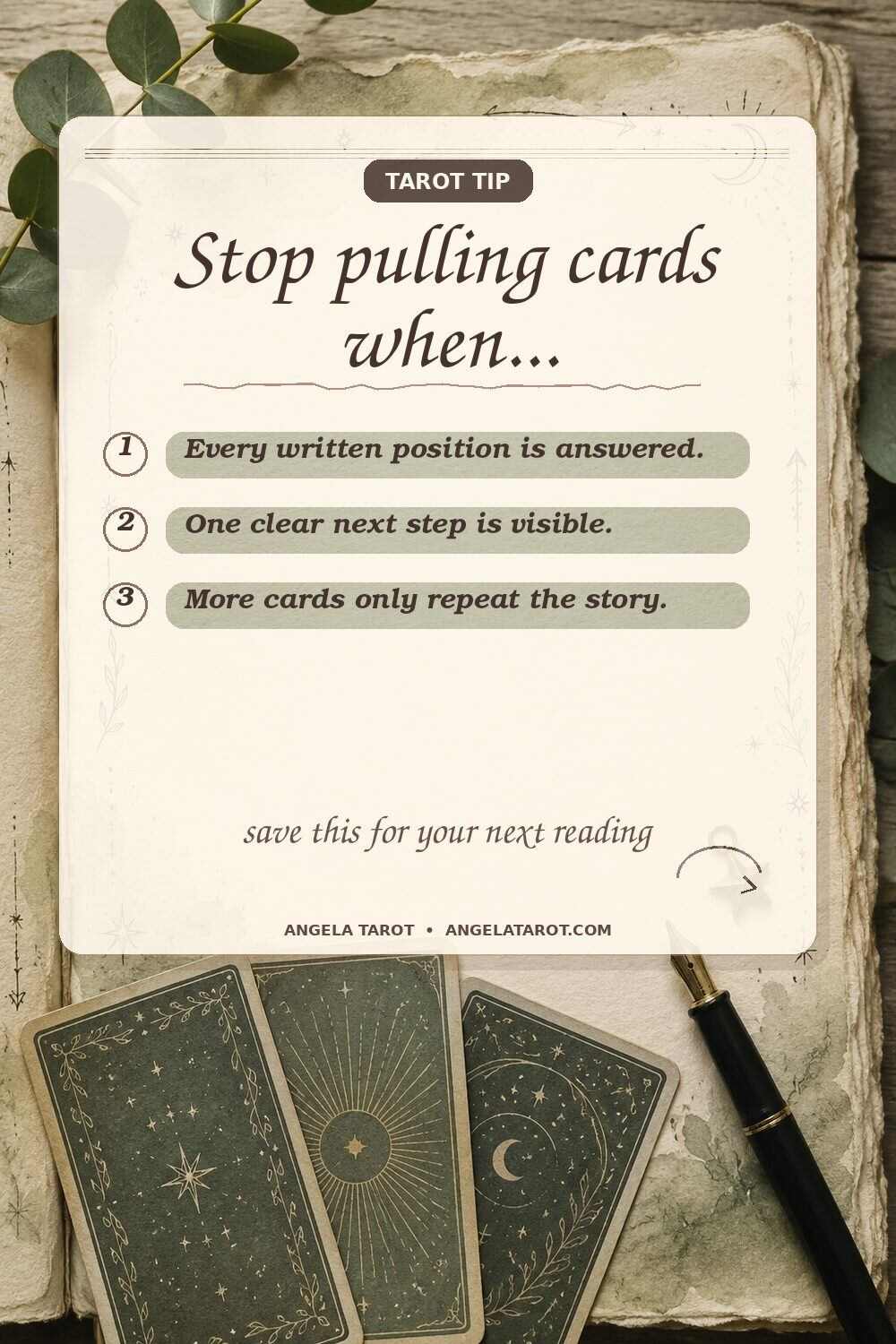
Stop pulling cards when...
Save this Pin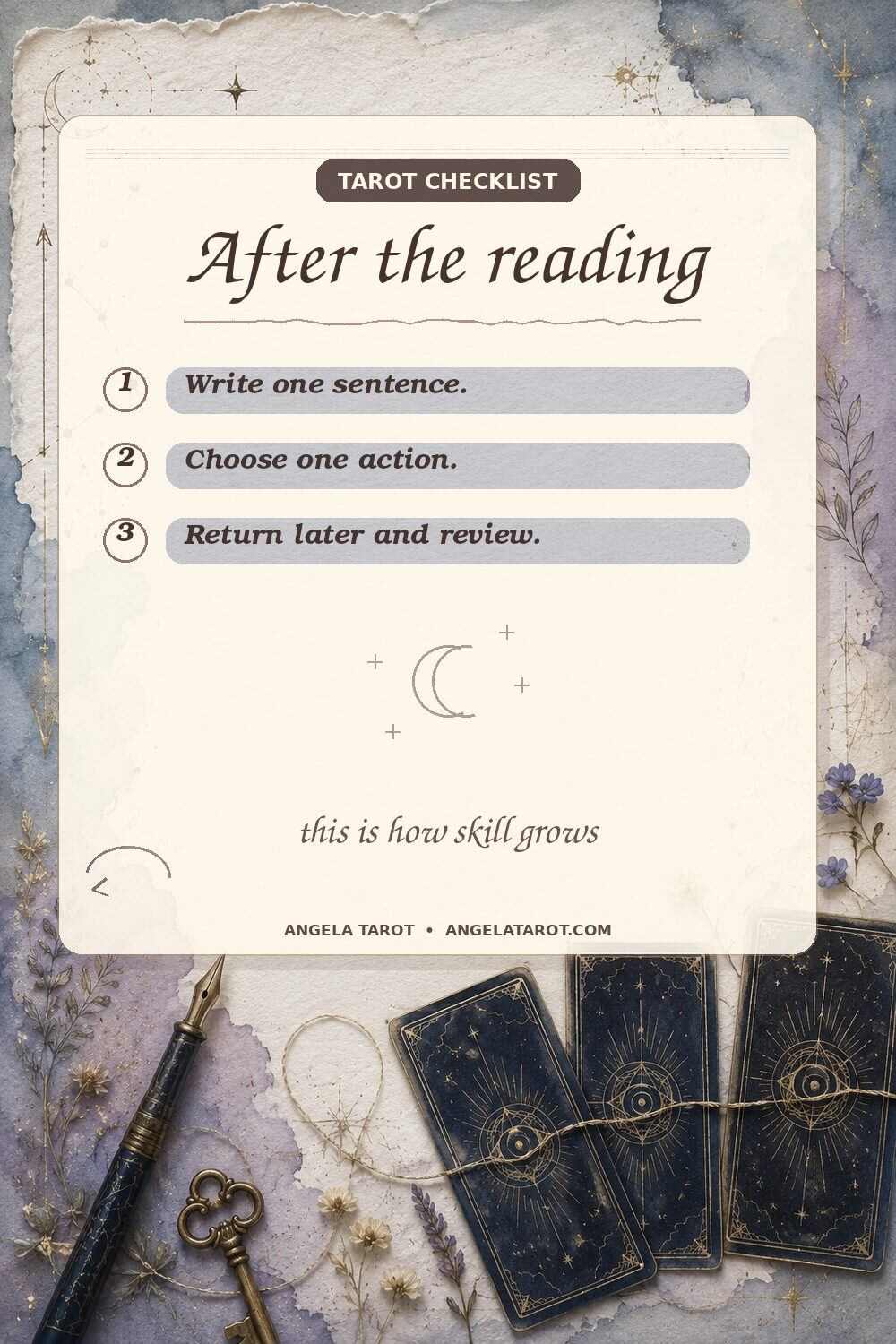
After the reading
Save this Pin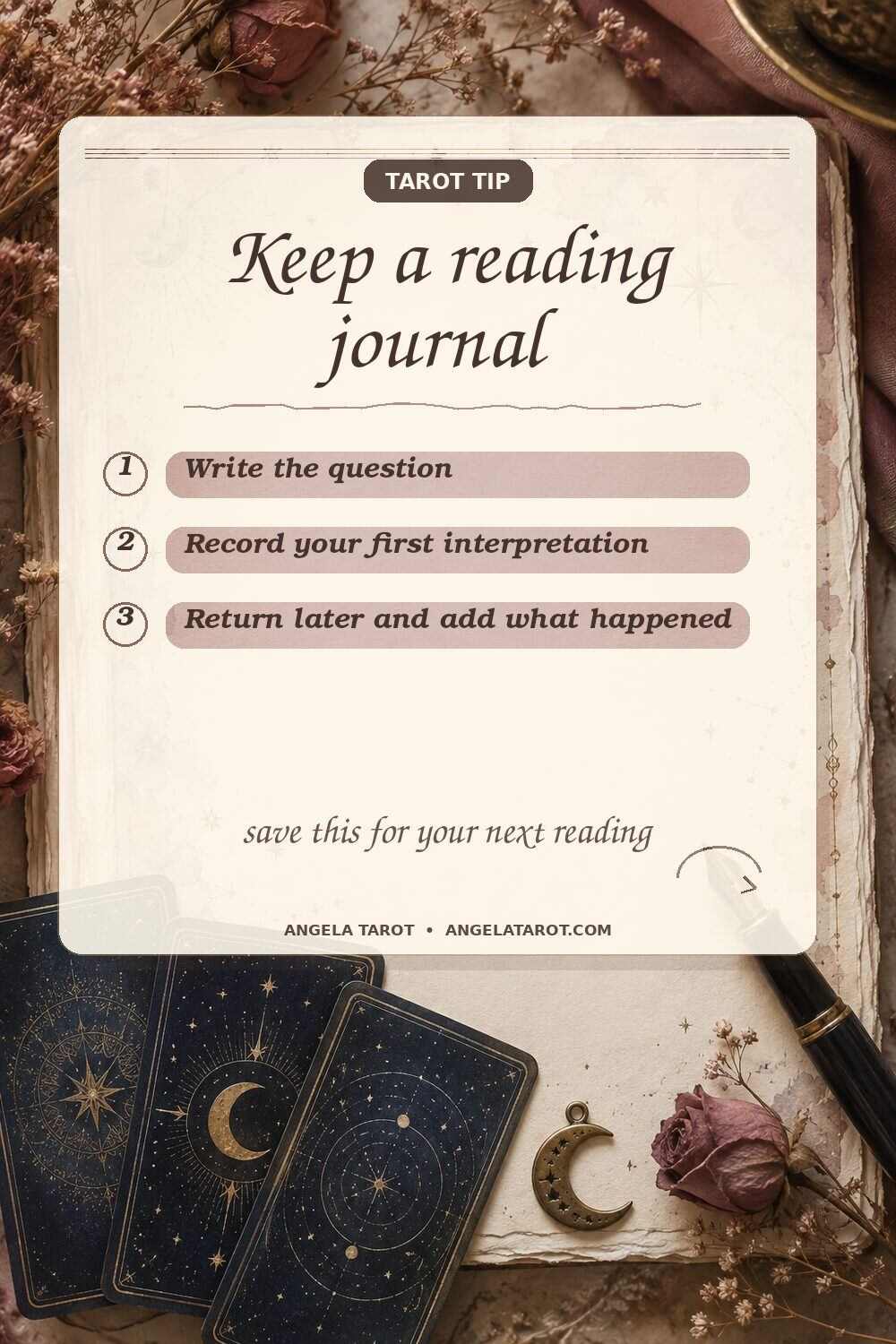
Keep a reading journal
Save this PinBring the method into your own reading
A personal reading can connect the cards with the relationship, decision or direction that matters most to you.
Explore personal readingsQuick answers
How should a beginner start reading tarot?
Begin with one focused question and a three-card spread with written positions.
How many tarot cards should a beginner draw?
Three to five cards are enough for most focused questions.
Do beginners need to memorize all 78 cards?
No. Learn through images, suits, numbers and repeated practice. Memory develops through context.
Should beginners use reversed cards?
Only if they want to. Clear positions provide contrast without requiring reversals.
How often should I practice tarot?
Short regular readings with follow-up notes build more skill than occasional very large spreads.