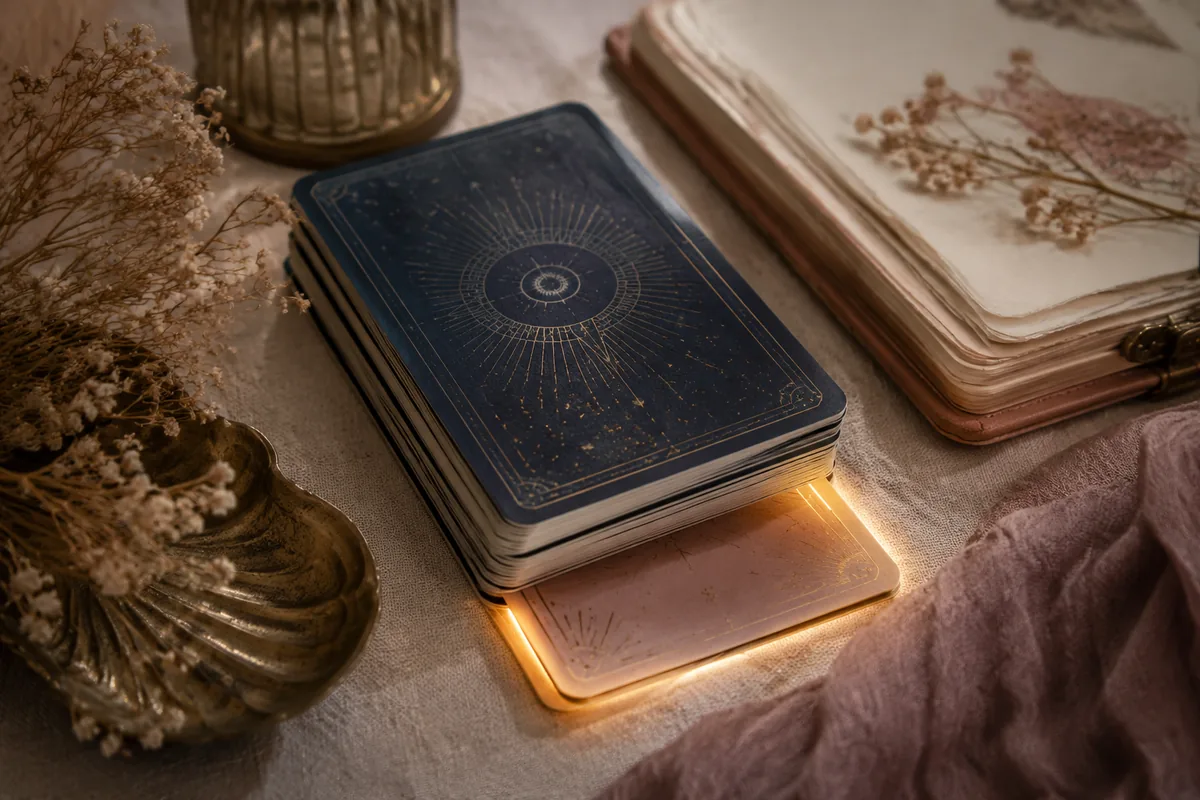
After laying out a spread, many readers turn over the deck and look at the card underneath. It may feel like a hidden message, a background influence or the real subject beneath the question. The technique can be useful, but it becomes confusing when the bottom card is allowed to rewrite the entire spread.
The bottom card is optional
A complete spread does not need a bottom card. Every position should already contribute to the answer. Use the bottom card when it adds a consistent layer to your method, not because the main cards feel uncomfortable or incomplete.
If you often forget to look, that is fine. The reading is not missing a secret answer.
Choose its job before the reading
Decide whether the bottom card will represent the foundation, background energy, an unspoken influence or a journal prompt. Use one role at a time. A card cannot be the hidden truth, the outcome and the advice simply because its image feels strong.
Write the role beside the spread positions. This keeps the technique stable enough to evaluate later.
Bottom card as the foundation
As a foundation, the card shows what the visible spread rests upon. Four of Pentacles may reveal a need for security beneath a relationship question. Three of Wands may show that waiting and expectation shape the present choices.
The foundation does not always describe the cause. It can describe the condition that gives the rest of the spread its tone.
Bottom card as background energy
Background energy is present but not necessarily central. It may describe the emotional climate, an influence entering from the side or a theme that helps the spread make sense.
For example, Temperance beneath a tense decision spread can point toward pacing, integration and the need to hold more than one concern without forcing a quick conclusion.
Is it the shadow card?
Some readers call the bottom card the shadow card. That can be useful when shadow means an unexamined or less visible part of the question. It should not automatically mean deception, danger or something negative.
Ask what has not been acknowledged yet. Keep the interpretation connected with the main cards and observable reality.
Look before or after?
Looking after the spread is usually cleaner because you interpret the main positions first. If you look before dealing, the bottom card can become a theme card, but it may also bias the way you read everything that follows.
Choose one sequence and use it consistently for several readings before deciding whether it helps.
Do not use it as a rescue card
If the main answer is difficult, turning over the deck for a better card can become another form of repeated reading. The bottom card should add context, not negotiate with the spread.
When the card appears to contradict the reading, ask whether it describes the foundation while the spread describes the visible direction. Two layers can differ without canceling each other.
A simple bottom-card spread
Draw three cards for situation, challenge and advice. Then turn over the bottom card as the foundation. Read the three positions first. Finish one sentence with: beneath all of this is...
If that sentence makes the reading more coherent, keep it. If it creates an unrelated story, record it without forcing a connection.
Journal what the card actually added
After the situation develops, return to the spread. Was the bottom card literal, emotional, contextual or unnecessary? The value of a technique becomes clearer through review, not through one striking reading.
Continue with the card before and after deck exercise and 11 tarot tricks worth testing.
Tarot can support reflection and symbolic exploration. It cannot verify private facts, guarantee outcomes or replace medical, legal, financial or mental health guidance.
Pinterest tarot library
Save 6 different notes
Each image contains a separate technique or reference worth returning to.
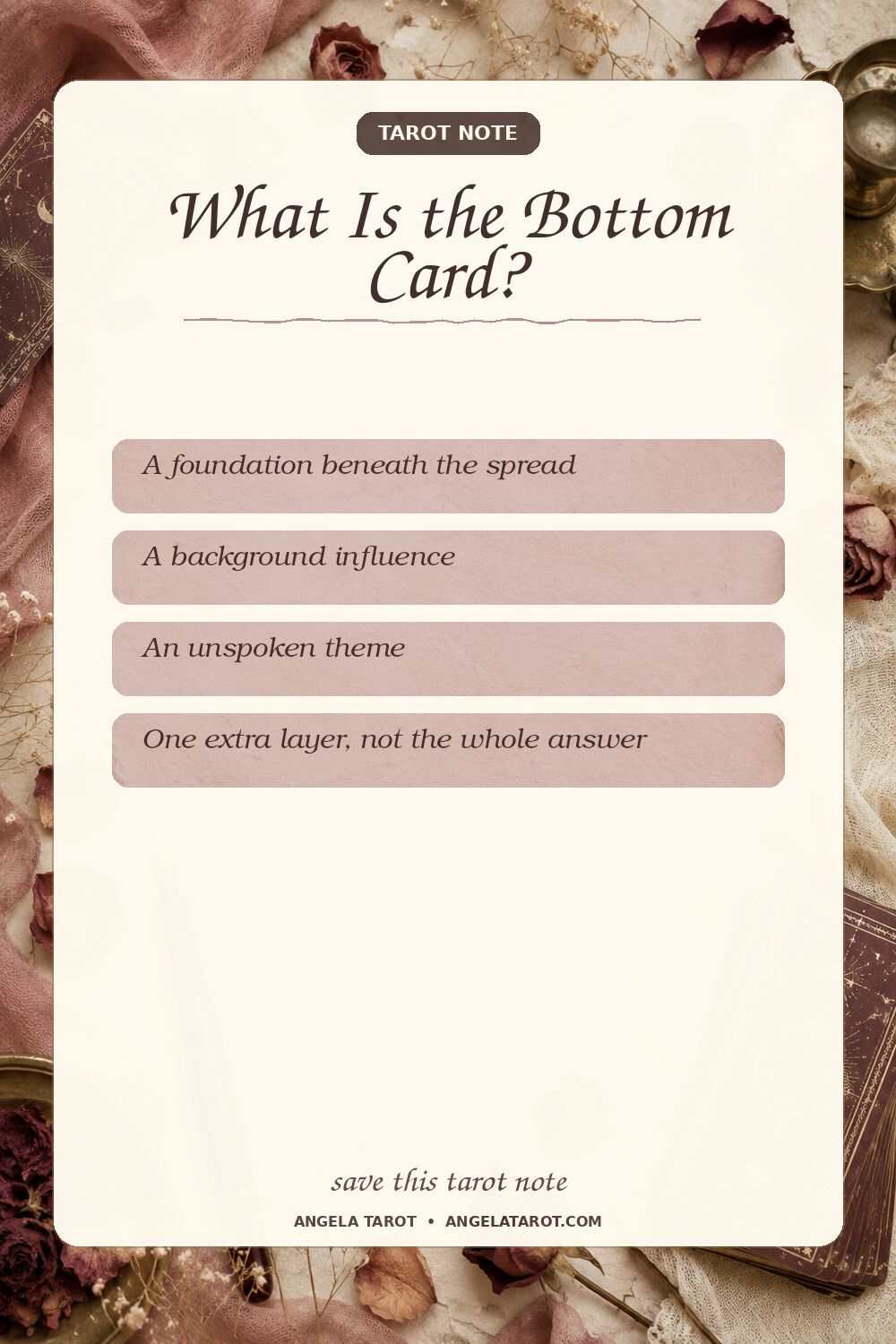
What Is the Bottom Card?
Save this note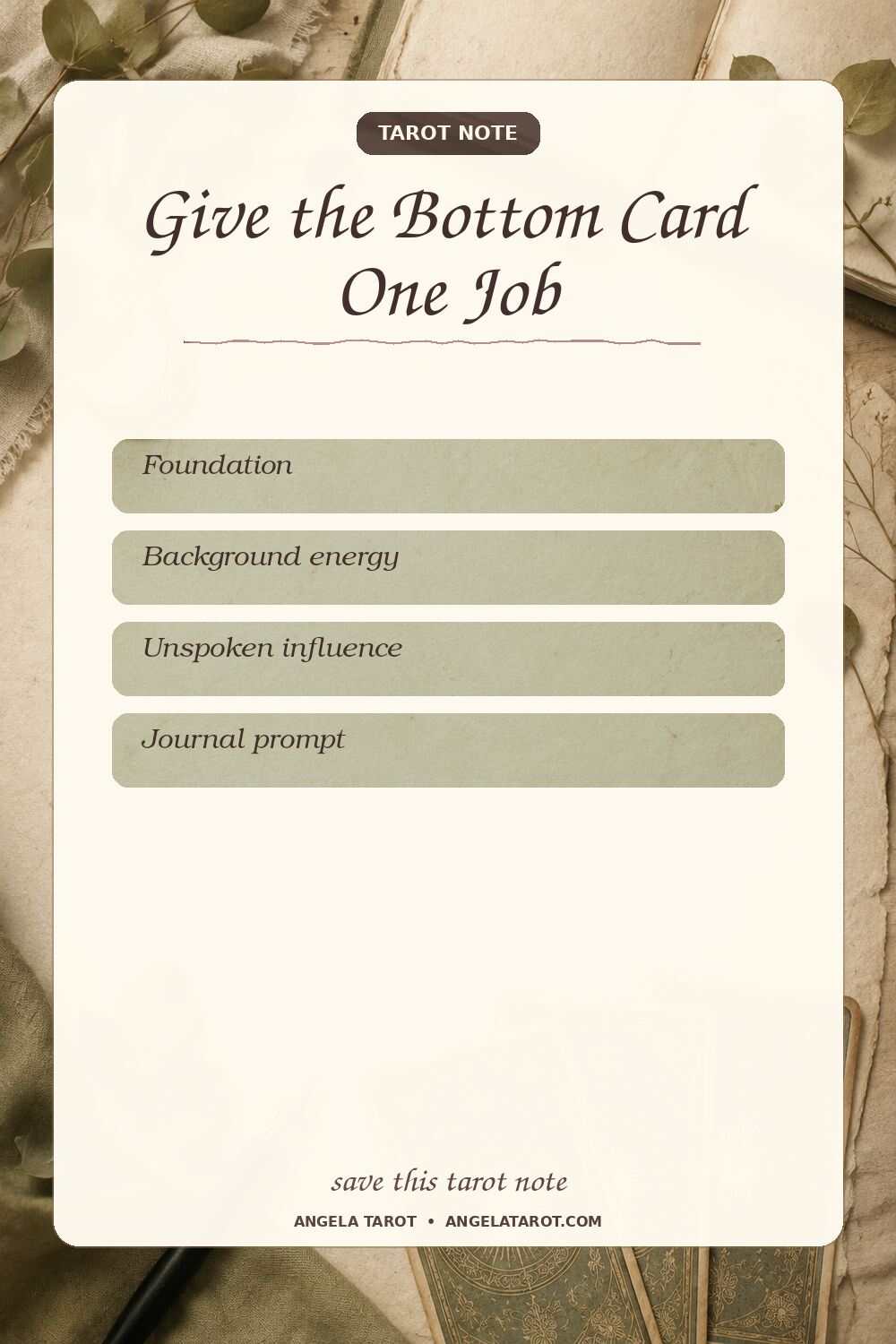
Give the Bottom Card One Job
Save this note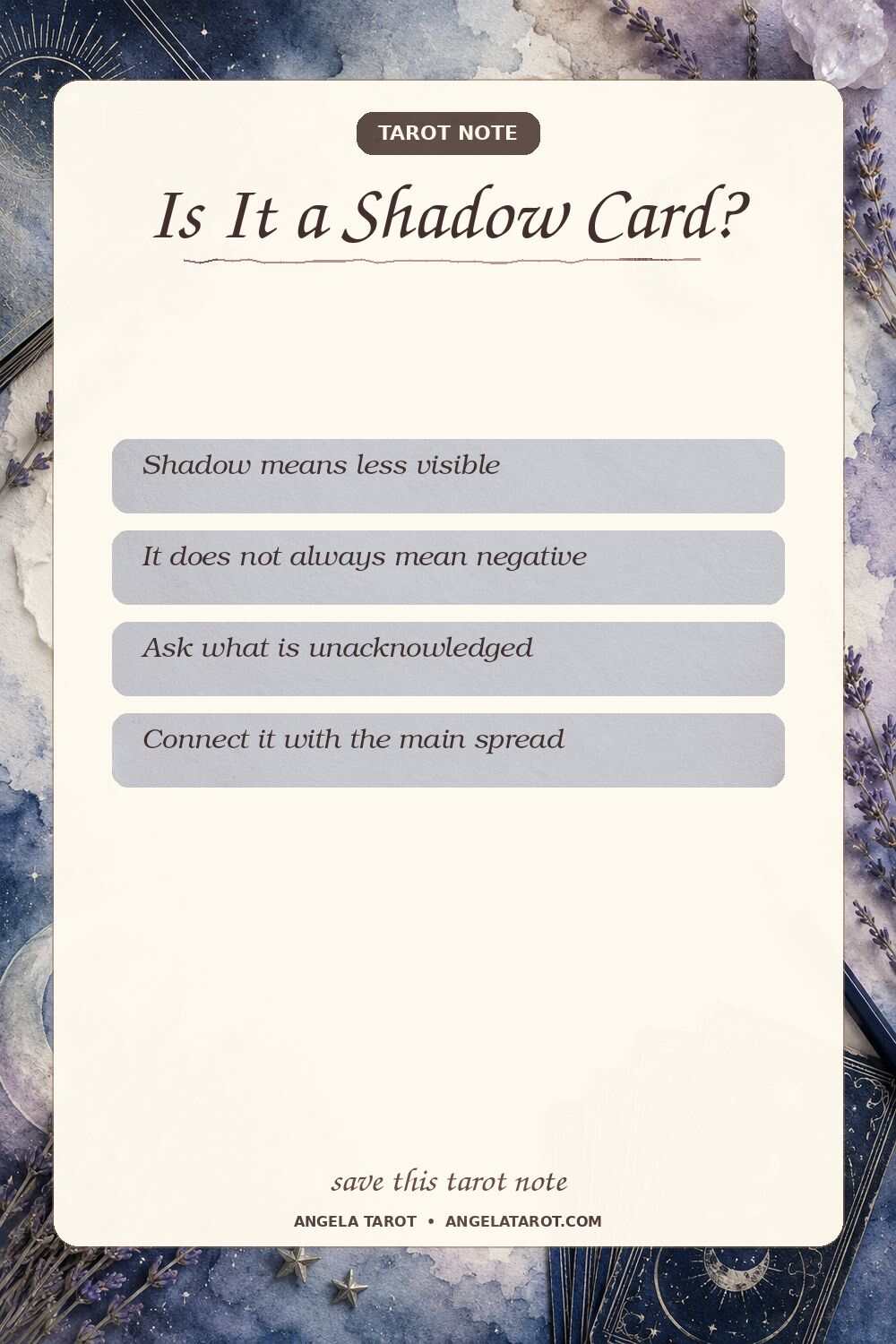
Is It a Shadow Card?
Save this note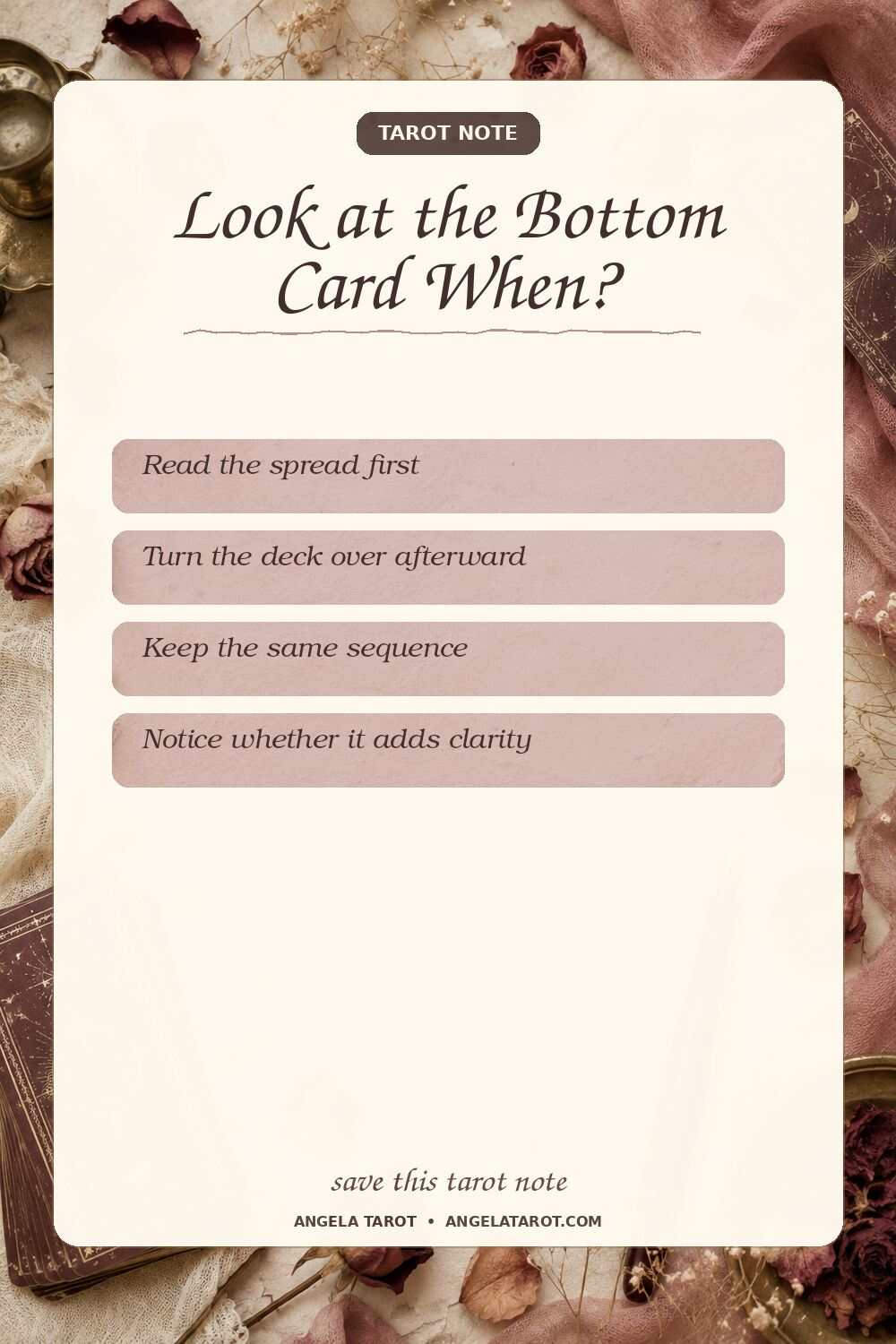
Look at the Bottom Card When?
Save this note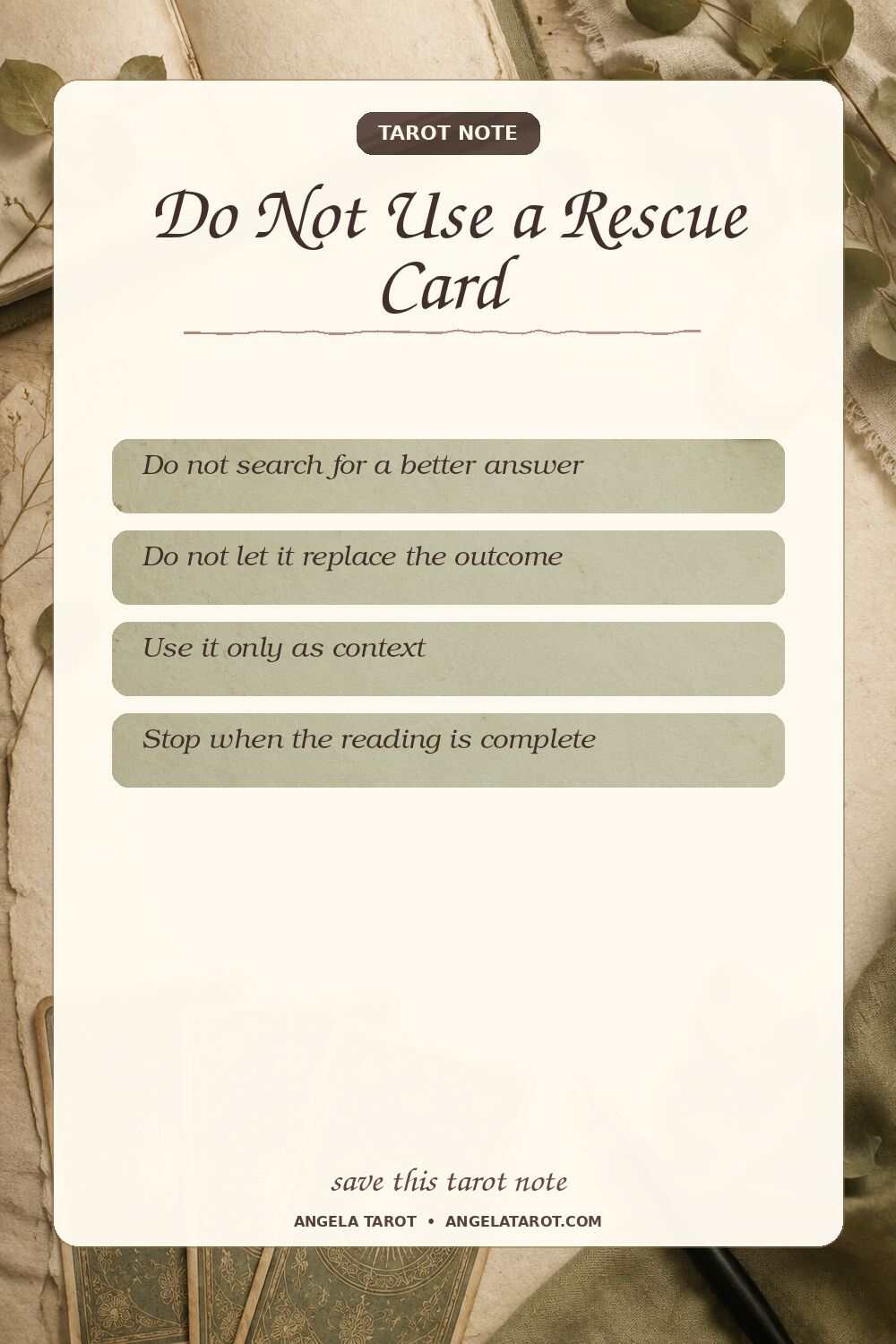
Do Not Use a Rescue Card
Save this note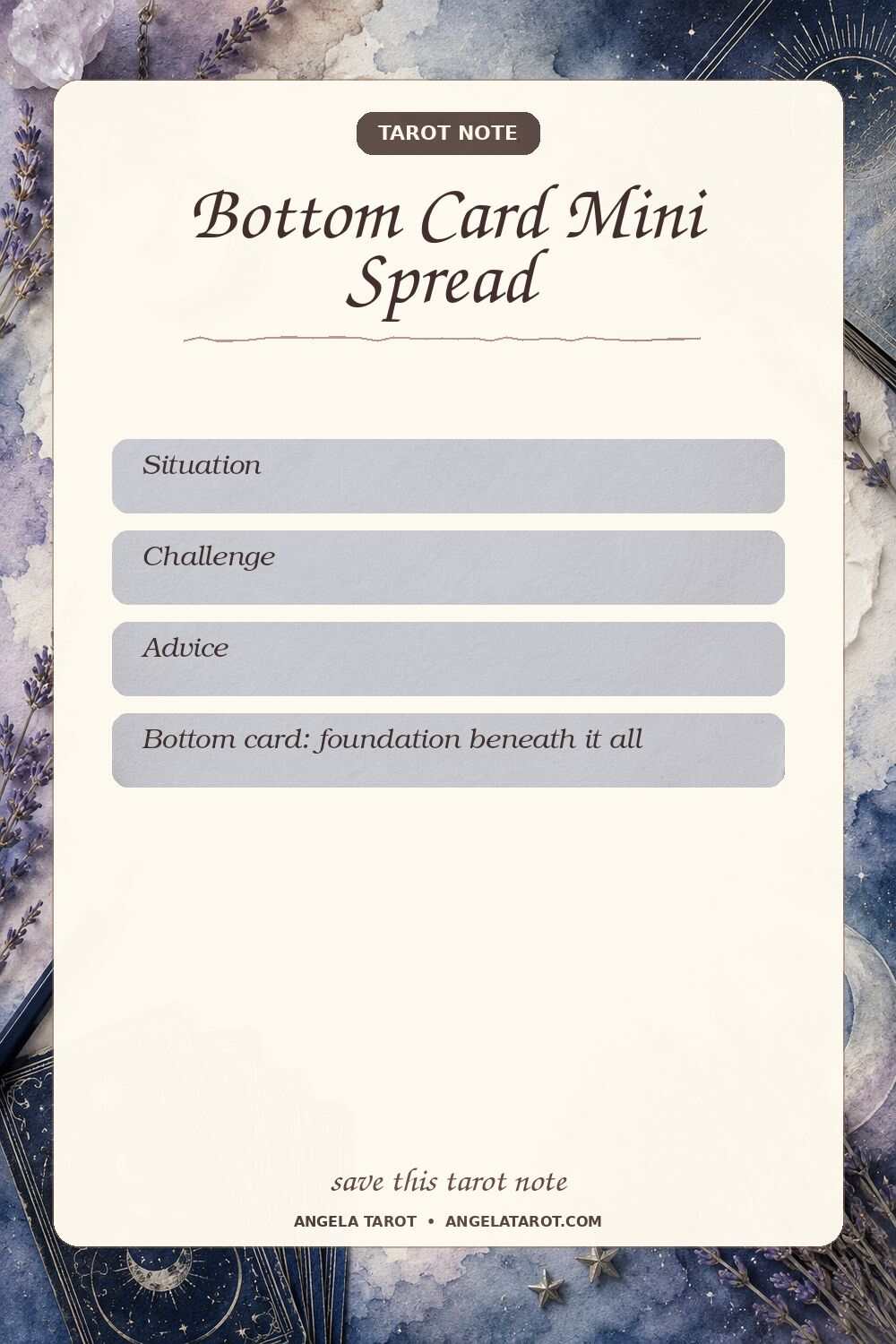
Bottom Card Mini Spread
Save this noteBring the method into your own reading
A personal reading can connect the cards with the relationship, decision or direction that matters most to you.
Explore personal readingsQuick answers
What does the bottom card of a tarot deck mean?
It can represent the foundation, background energy or a less visible influence when you assign that role before the reading.
Is the bottom card always the shadow card?
No. Shadow is one optional interpretation. The card can also serve as context, foundation or a journal prompt.
Should I check the bottom card before or after a spread?
Afterward is often clearer because it lets you interpret the main positions first. Consistency matters more than one universal rule.
Can the bottom card change the outcome?
It should not replace an outcome card. Use it to explain the atmosphere or foundation beneath the visible spread.