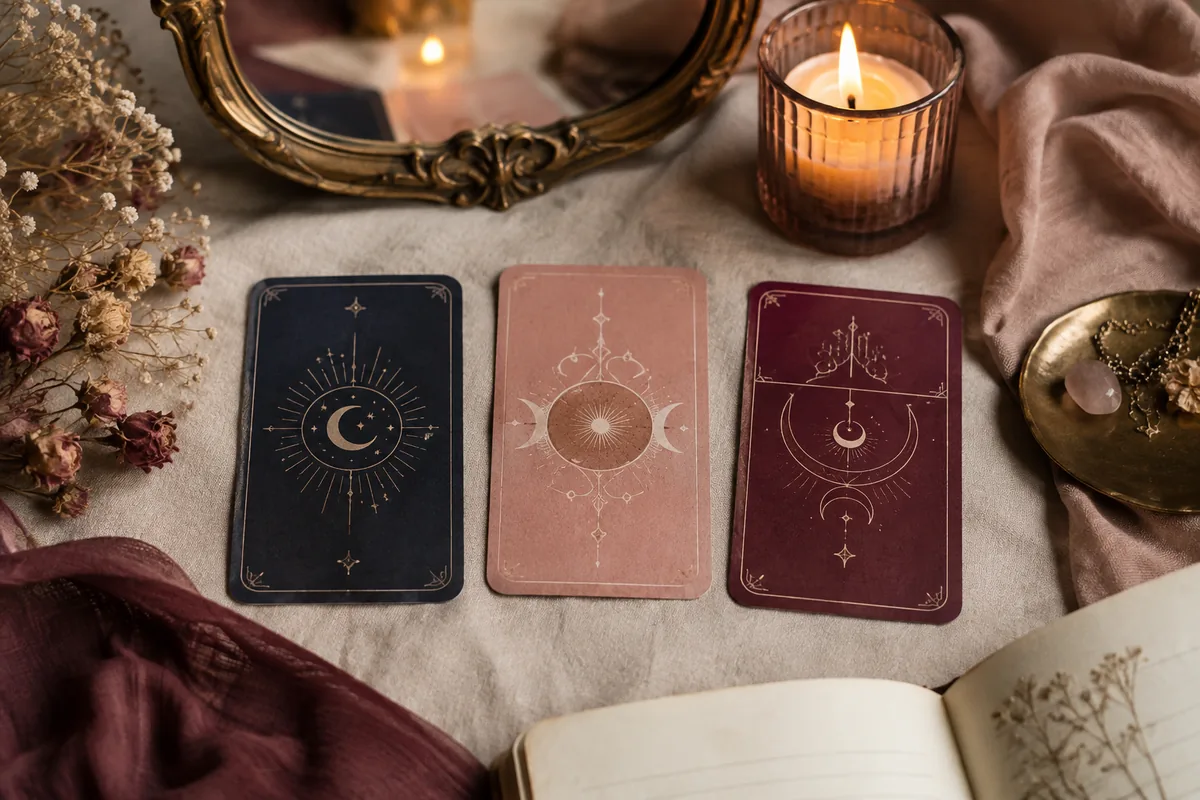
Reversals can make tarot feel twice as difficult. A deck of seventy-eight cards suddenly seems to demand one hundred and fifty-six definitions. It does not. A reversal is better understood as a change in expression, direction or access to the upright energy.
You do not have to use reversals
Reading reversals is optional. Upright cards already contain constructive and difficult expressions. If orientation distracts you from the spread, turn every card upright and use position, imagery and surrounding cards to find the full range.
If you do use reversals, choose a method before the reading. Consistency helps you test whether the system improves clarity.
Begin with the upright core
Name the simplest upright action first. The Chariot directs movement. Four of Pentacles holds. Eight of Wands accelerates. Queen of Cups receives and understands feeling. Then ask how that action changes when reversed.
This keeps the reversal connected to the card instead of replacing it with an unrelated keyword.
Lens one: the energy is internal
A reversed card can move inward. The Hermit reversed may describe private reflection that is not visible to others. Queen of Wands reversed may show confidence being developed internally rather than expressed openly.
Use this lens when the question concerns private processing, identity or something that has not yet become behavior.
Lens two: the energy is blocked
The upright quality may be difficult to access. Eight of Wands reversed can show delayed movement or interrupted communication. Ace of Cups reversed can show feeling that is held back or a need to restore emotional capacity.
Ask what creates the block and whether the surrounding cards show a way through it.
Lens three: the energy is excessive
Sometimes the upright action has gone too far. Emperor reversed can show control becoming rigid. Six of Pentacles reversed can show giving that creates imbalance or receiving with hidden conditions.
Look for too much, too little or poor proportion. Excess is often visible when nearby cards repeat the same pressure.
Lens four: the energy is delayed or redirected
A reversal can change timing or direction without canceling the card. Knight of Pentacles reversed may show a plan moving too slowly or effort being directed into the wrong routine. Wheel of Fortune reversed can describe resistance to a turn already underway.
This lens works well in process and timing questions, but it should not become a precise calendar claim.
Lens five: the energy is releasing
A difficult upright card reversed can show a pattern loosening. Eight of Swords reversed may show new perspective or growing freedom from a limiting belief. Five of Pentacles reversed may describe reconnection with support.
Release is not complete simply because the card is upside down. Check whether surrounding cards show recovery, action or a return to the same cycle.
Do not use the opposite automatically
Lovers reversed does not always mean separation. Sun reversed does not always mean unhappiness. Death reversed does not mean nothing changes. Direct opposites flatten the symbolism and can produce claims that the spread does not support.
Use the question, position and image. A reversed Sun in an advice position may ask for a more private definition of success, not predict failure.
A three-step reversal method
First, state the upright action. Second, choose the lens that fits: internal, blocked, excessive, delayed or releasing. Third, test that choice against the position and neighboring cards.
If two lenses fit, write both briefly and choose the one that creates the clearest sentence across the spread.
When many cards are reversed
Several reversals can point toward inward processing, stalled momentum or a question that is being asked before enough information is available. They can also appear because of how the deck was shuffled. Do not treat quantity alone as a warning.
Continue with the card-combination method and ten mistakes that create confusing answers.
Tarot can support reflection and symbolic exploration. It cannot verify private facts, guarantee outcomes or replace medical, legal, financial or mental health guidance.
Pinterest tarot library
Save 6 different notes
Each image contains a separate technique or reference worth returning to.
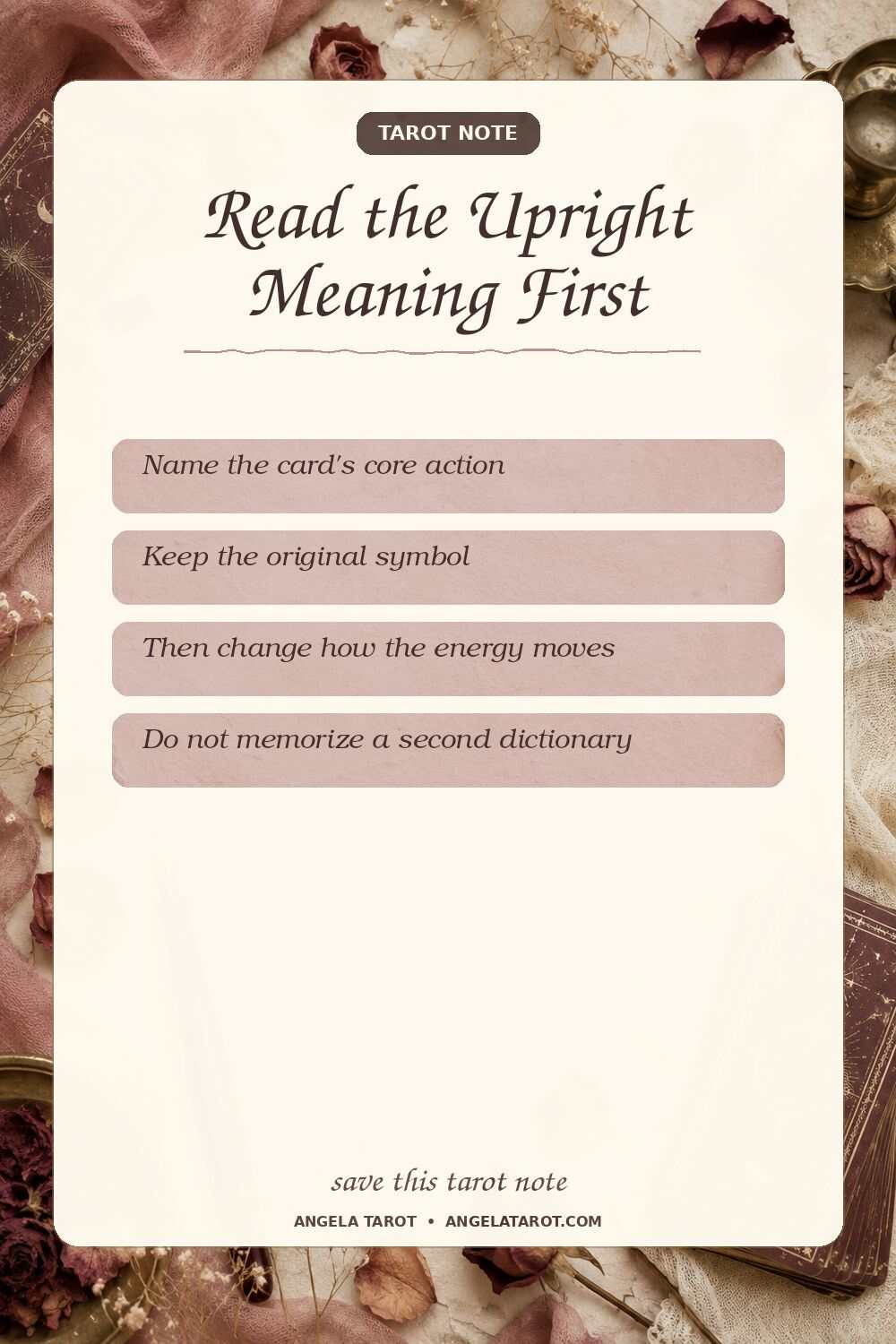
Read the Upright Meaning First
Save this note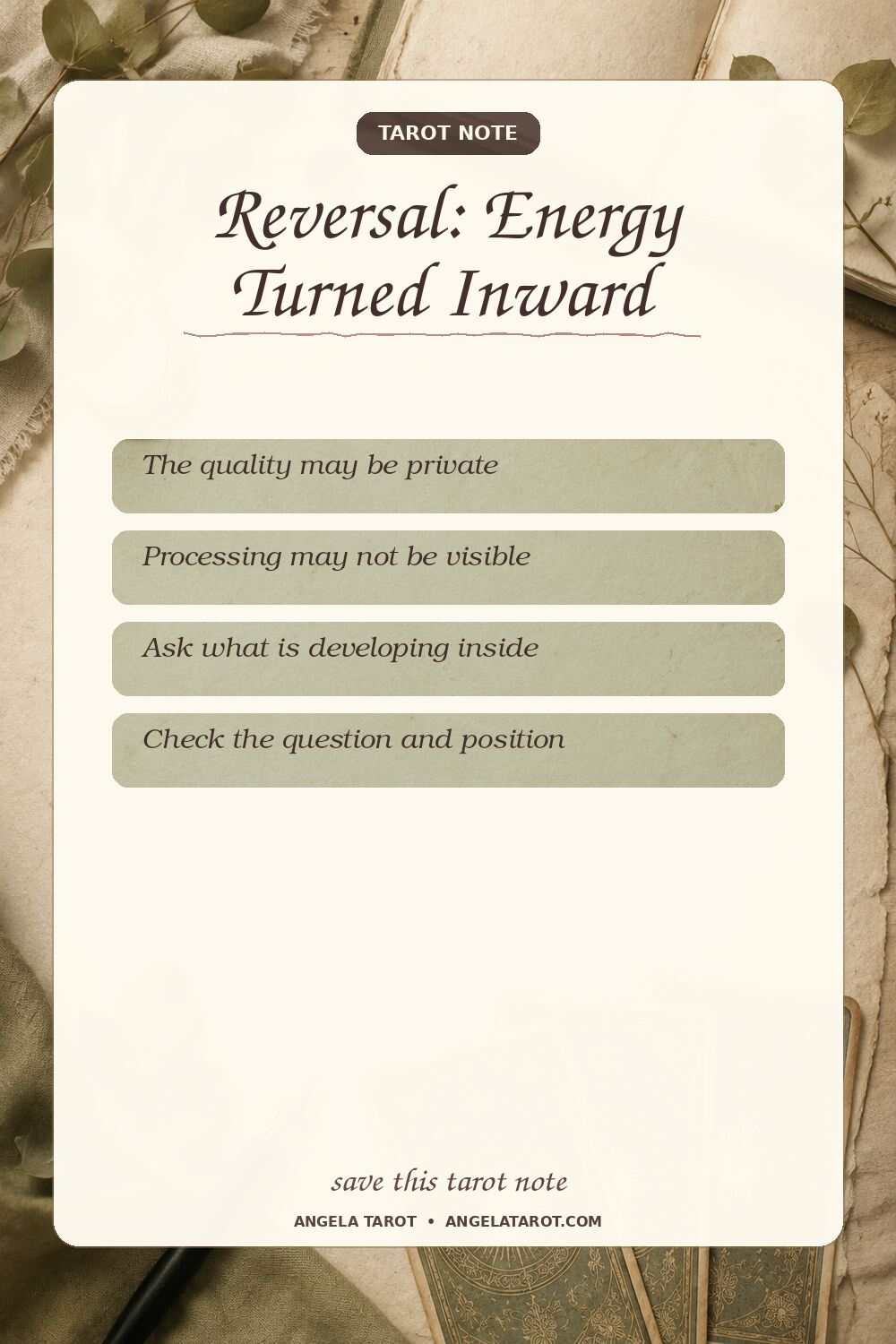
Reversal: Energy Turned Inward
Save this note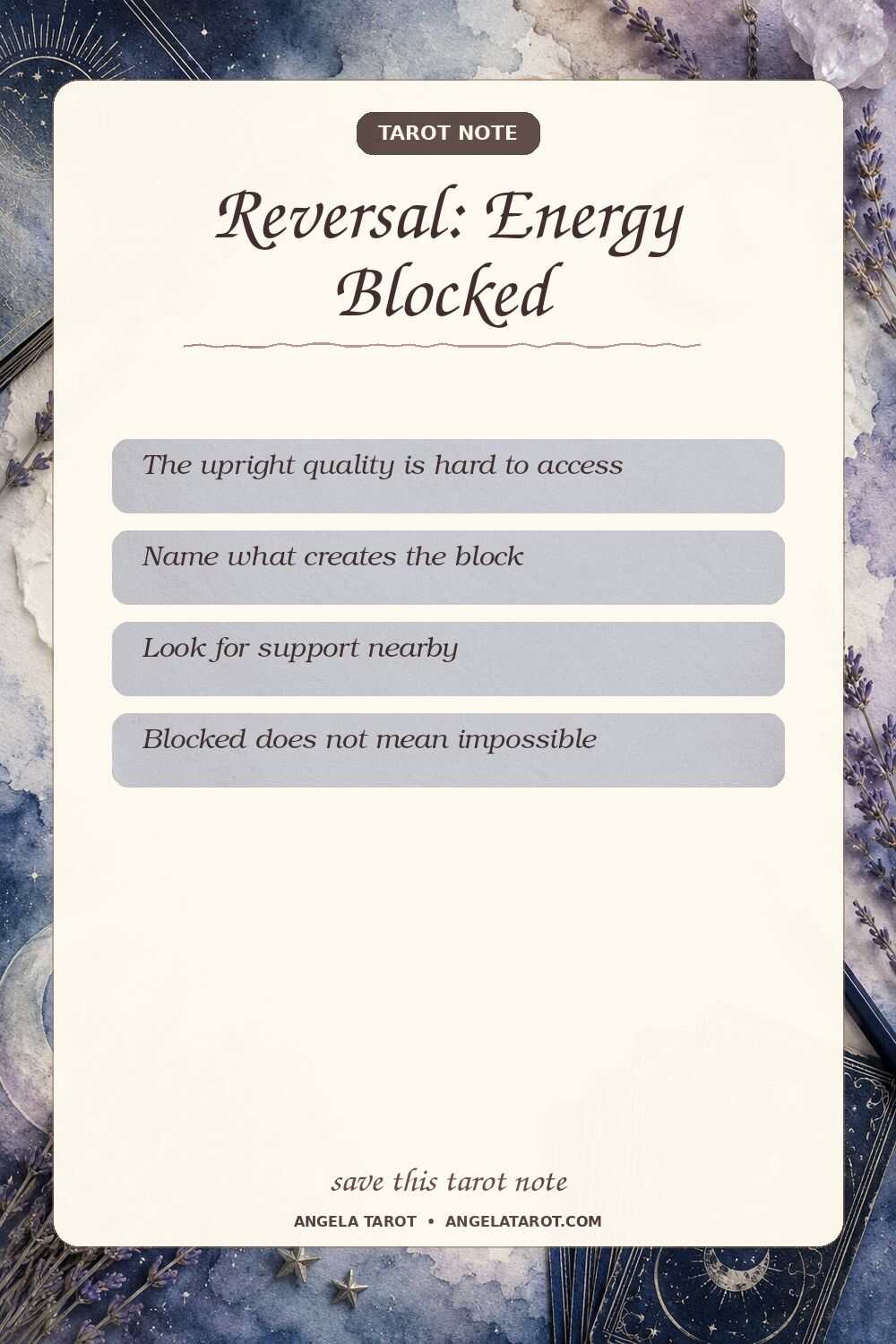
Reversal: Energy Blocked
Save this note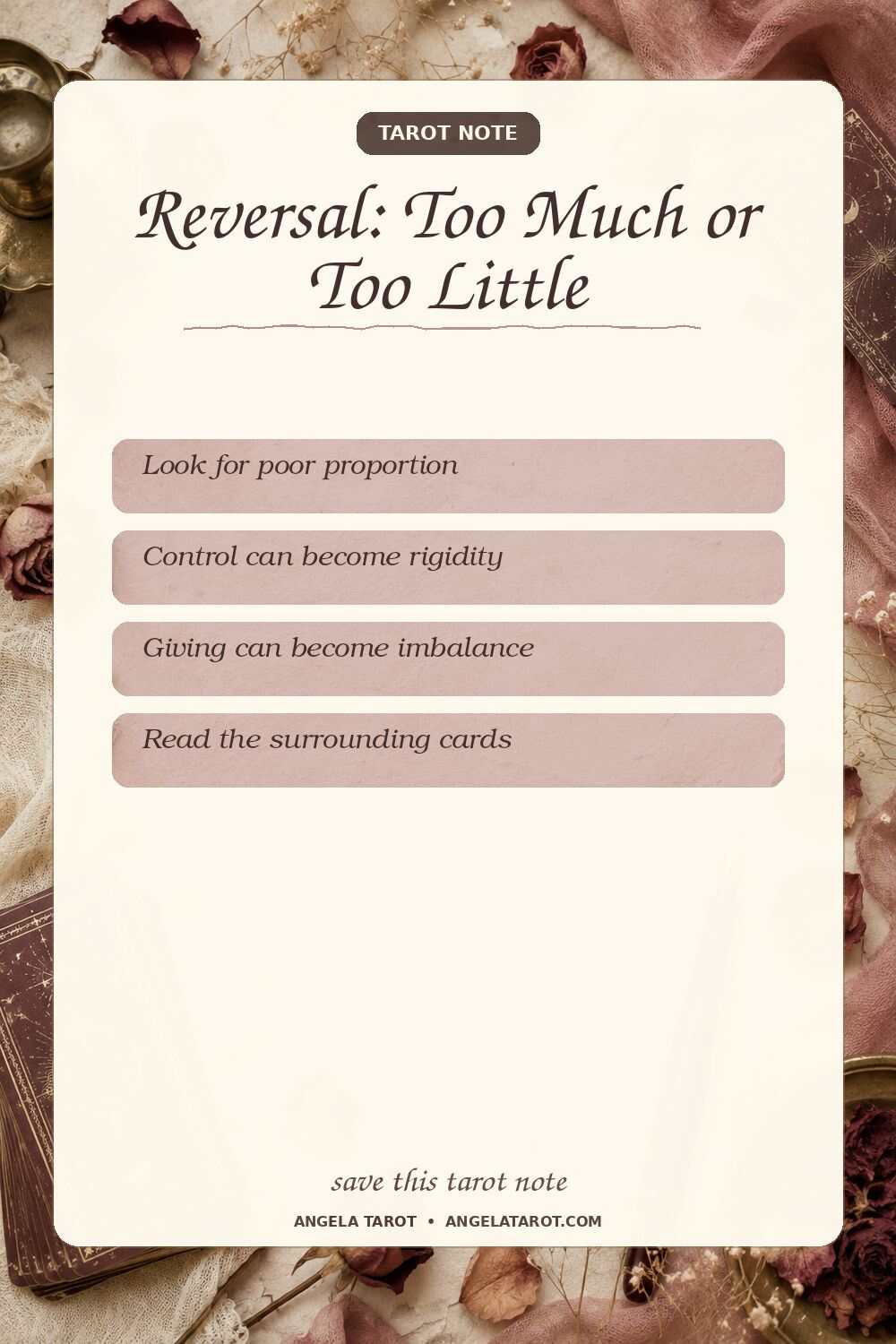
Reversal: Too Much or Too Little
Save this note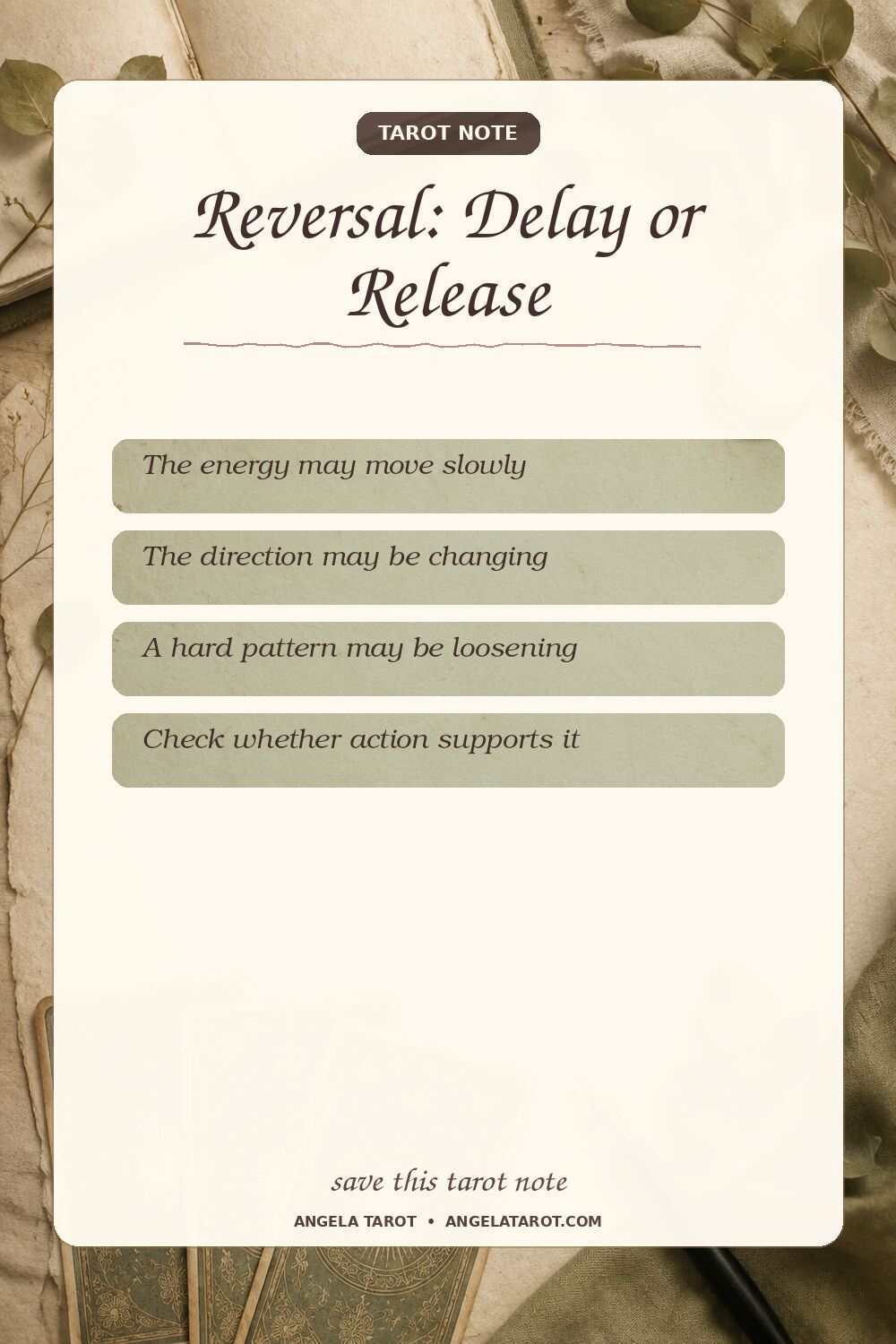
Reversal: Delay or Release
Save this note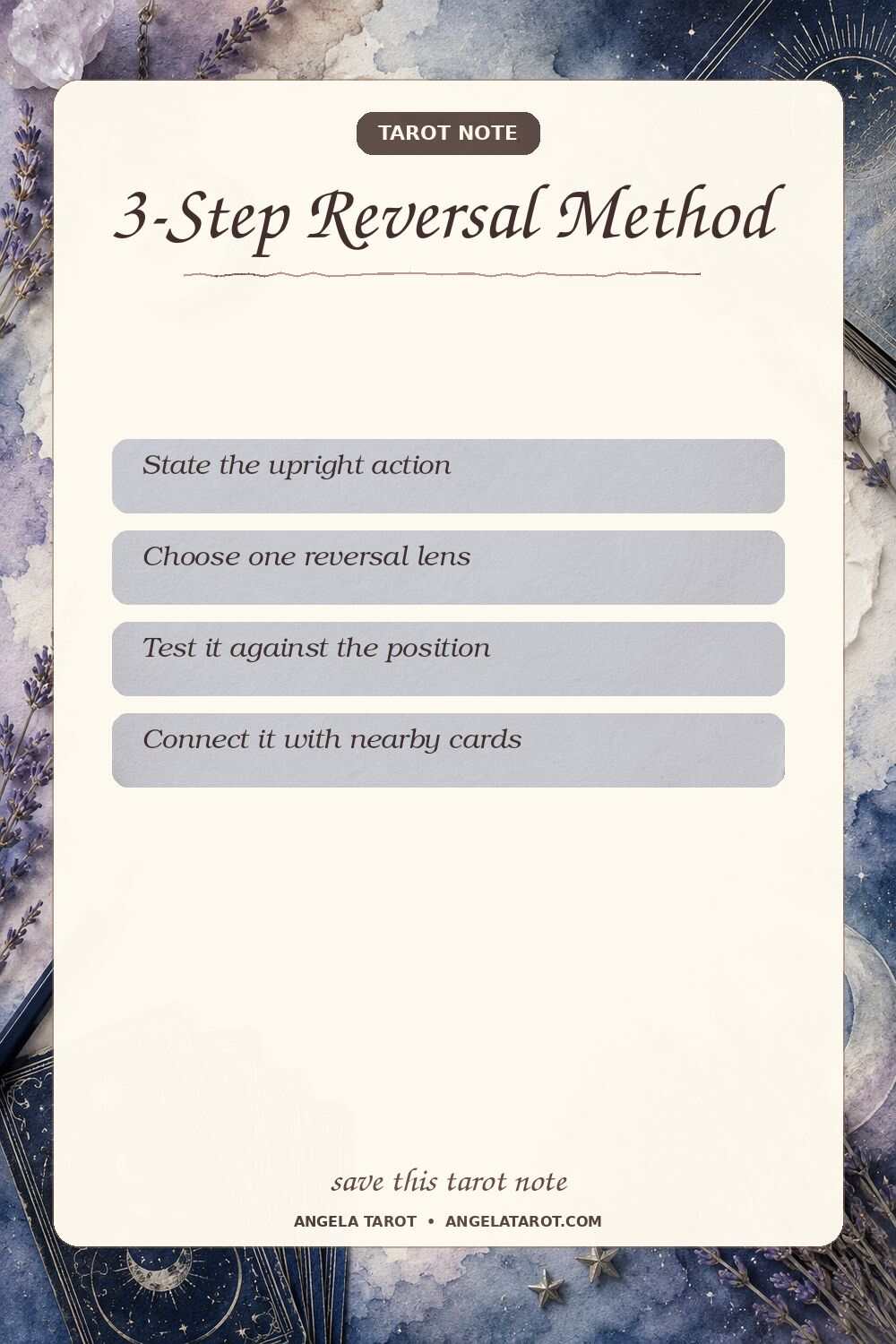
3-Step Reversal Method
Save this noteBring the method into your own reading
A personal reading can connect the cards with the relationship, decision or direction that matters most to you.
Explore personal readingsQuick answers
Do I have to read reversed tarot cards?
No. Upright cards already contain a full range of expression. Use reversals only when they make your readings clearer.
Does a reversed card mean the opposite?
Not automatically. It may show energy that is internal, blocked, excessive, delayed, redirected or releasing.
How do beginners read tarot reversals?
Start with the upright action, choose one reversal lens and test it against the spread position and surrounding cards.
What does it mean when most cards are reversed?
The reading may emphasize internal processing or stalled movement, but deck handling and context matter. Quantity alone is not a warning.