
A significator is a card chosen to represent the person, role or central subject of a tarot reading. It is placed on the table before the remaining cards are drawn. The method can create focus, especially in large spreads, but it works best when the card is treated as a reference point rather than a fixed identity.
What a significator does
The significator names the center of the reading. It can represent the person asking, the relationship, a goal, a role or the energy being developed. Because it is selected before the shuffle, it is not interpreted as a random answer.
Think of it as the title of the spread. The drawn cards show what is happening around that title.
Do you need a significator?
No. Most readings work perfectly without one. A significator is helpful when the spread is large, when several people are involved or when you want to return to the same developmental theme over time.
Skip it when choosing the card creates more anxiety than focus, or when you want the deck to reveal which energy is central.
Choose by the role in the question
The most practical method is to select a card for the role, not the person's appearance. Queen of Swords can represent the need for clear judgment. Emperor can represent leadership or structure. Three of Pentacles can represent a collaborative project.
Role-based choices keep the card connected with the purpose of the reading.
Choose a Court card
Court cards work well when the significator represents a way of participating. Pages learn and explore. Knights pursue and test momentum. Queens develop a quality from within. Kings direct it visibly and take responsibility for its use.
Choose the suit through the situation. Cups for emotional receptivity, Swords for communication and discernment, Wands for initiative, Pentacles for work, time and material conditions.
Choose a Major Arcana archetype
A Major Arcana significator can hold a wider developmental theme. Strength may represent patient courage. Justice can center accountability and fair decision-making. The Hermit can frame a period of study or withdrawal. The Star can represent renewal and future orientation.
Select the archetype you are working with, not the outcome you hope to force.
Choose a Minor Arcana card
A numbered card can make the focus more concrete. Two of Pentacles can represent competing priorities. Six of Swords can represent transition. Eight of Pentacles can represent skill-building. Ten of Cups can frame a question about shared emotional belonging.
Minor Arcana significators are especially useful for short-term or practical themes.
Choose intentionally or draw randomly?
Traditionally, many readers select the significator intentionally. You can also draw one randomly as a theme card, but that changes its function. A randomly drawn card is part of the reading and should be interpreted as information.
Name the method in your journal. Selected significator and drawn theme card are not the same technique.
A three-card significator layout
Place the significator in the center. Draw one card for what supports this role, one for what challenges it and one for how to embody it more fully. The significator remains the focus rather than becoming a fourth prediction.
For relationship work, you can use two significators with one card between them for the current connection. Avoid choosing a card that claims to define another person's private inner life.
Do not let one card become a label
A person is always larger than one archetype. Queen of Cups can describe a role in one reading and Queen of Swords in another. The card represents the part of the story being explored, not a permanent personality verdict.
If the spread contradicts the qualities of the selected card, pay attention. The contrast may show what the situation requires and where the present behavior differs.
Use the card as a reading anchor
At the end, return to the significator. Ask how every drawn card changes your understanding of the central role. Finish with one sentence that begins: To embody this card well, I need to...
Continue with the repeating patterns guide and the anchor card deck exercise.
Tarot can support reflection and symbolic exploration. It cannot verify private facts, guarantee outcomes or replace medical, legal, financial or mental health guidance.
Pinterest tarot library
Save 6 different notes
Each image contains a separate technique or reference worth returning to.
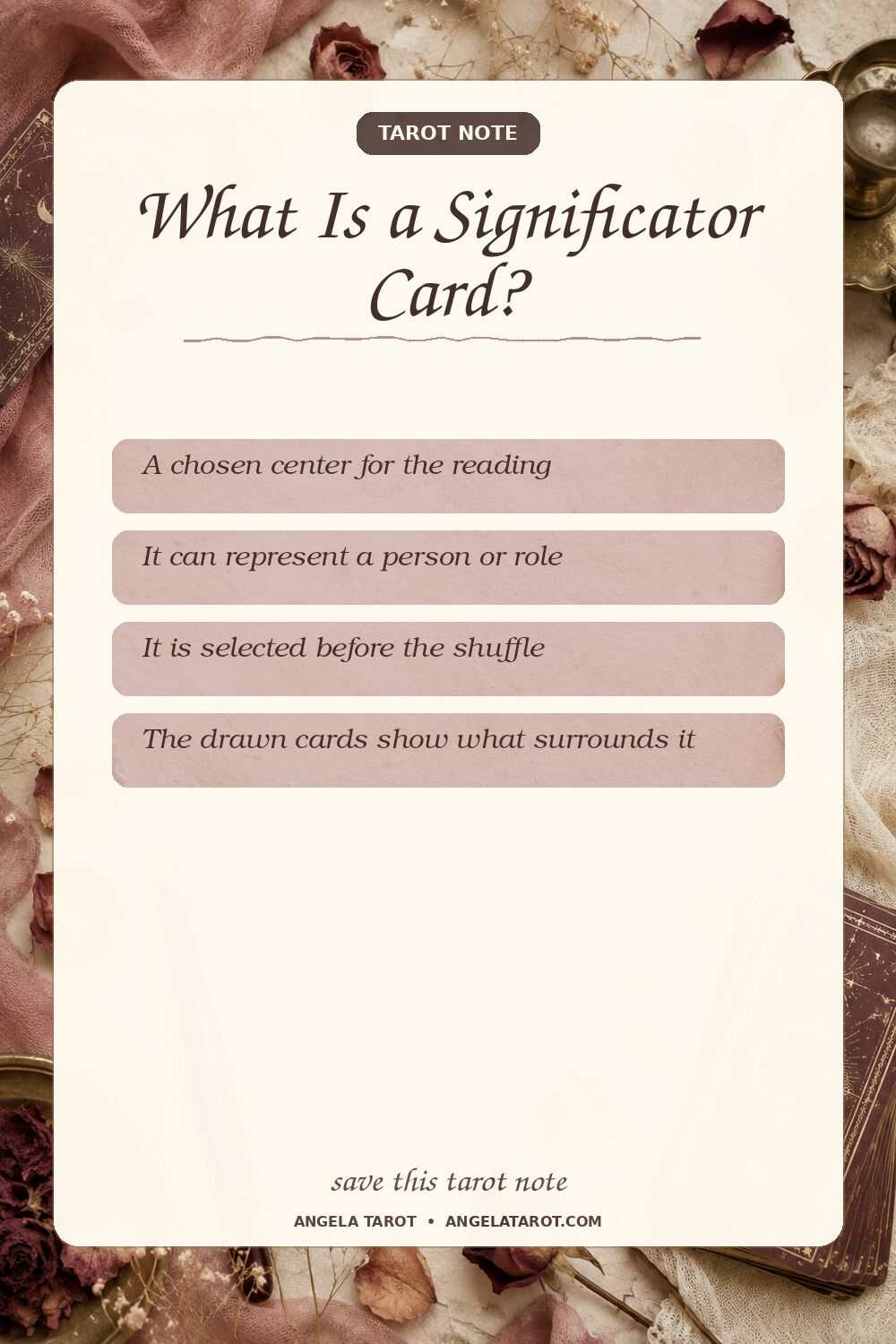
What Is a Significator Card?
Save this note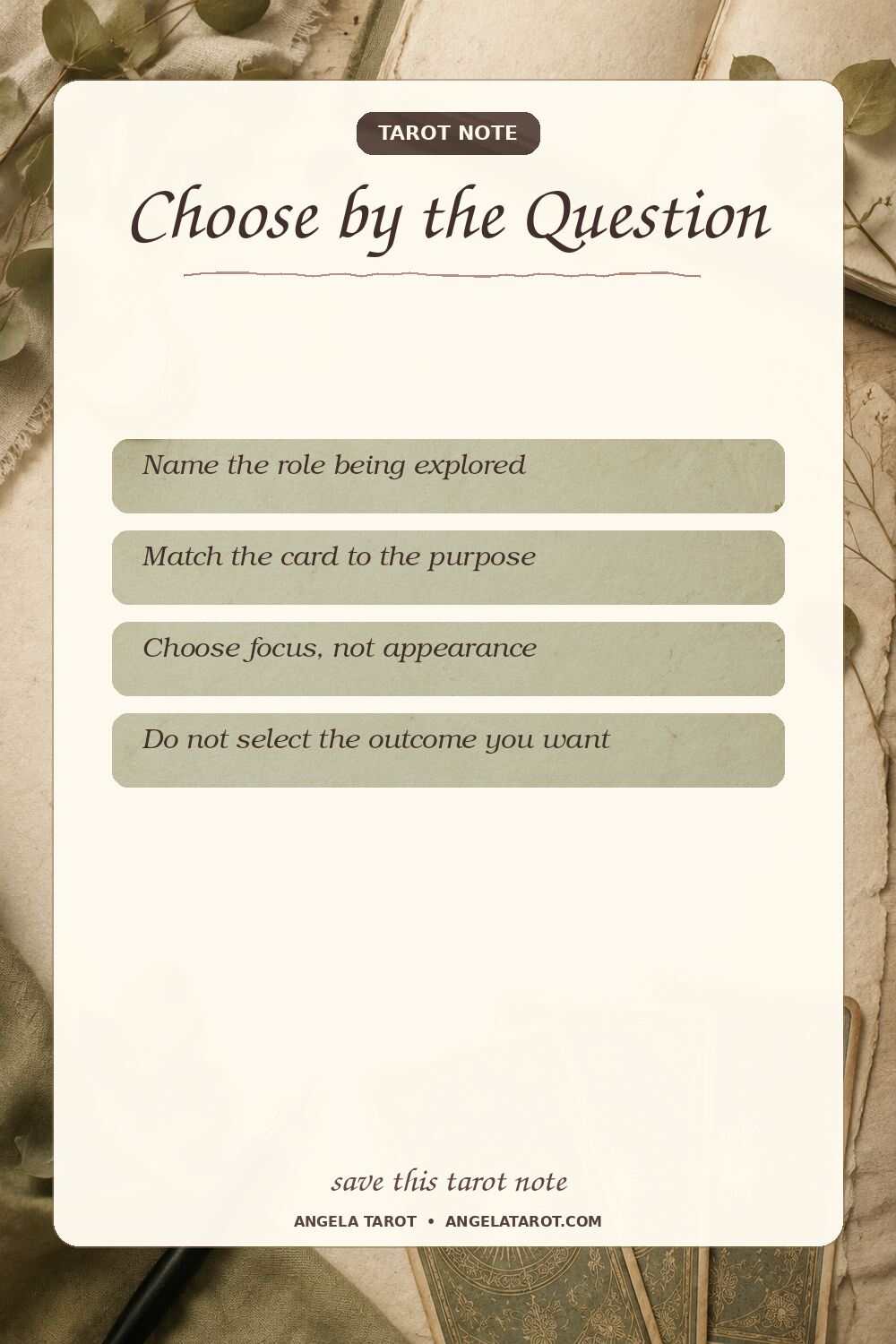
Choose by the Question
Save this note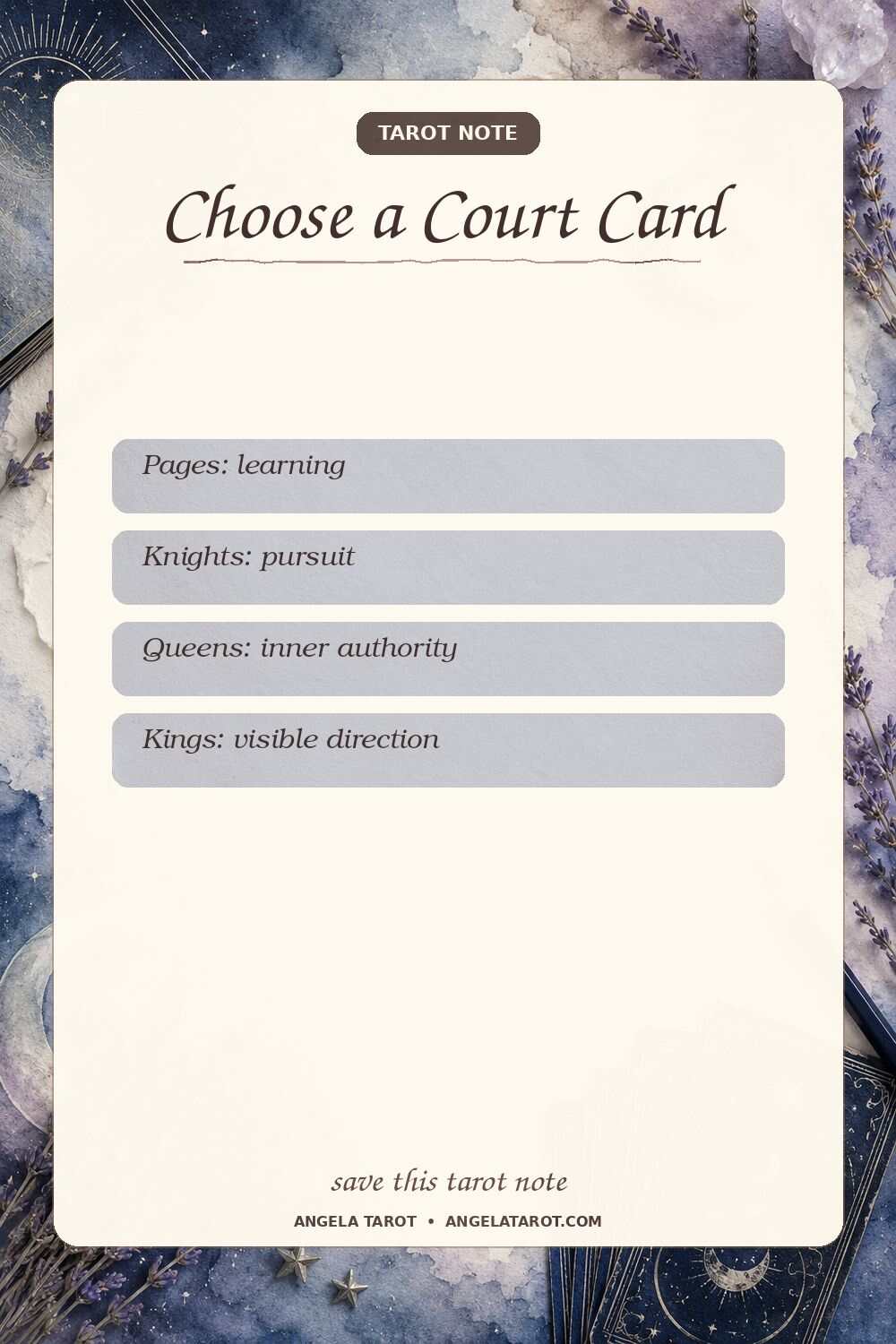
Choose a Court Card
Save this note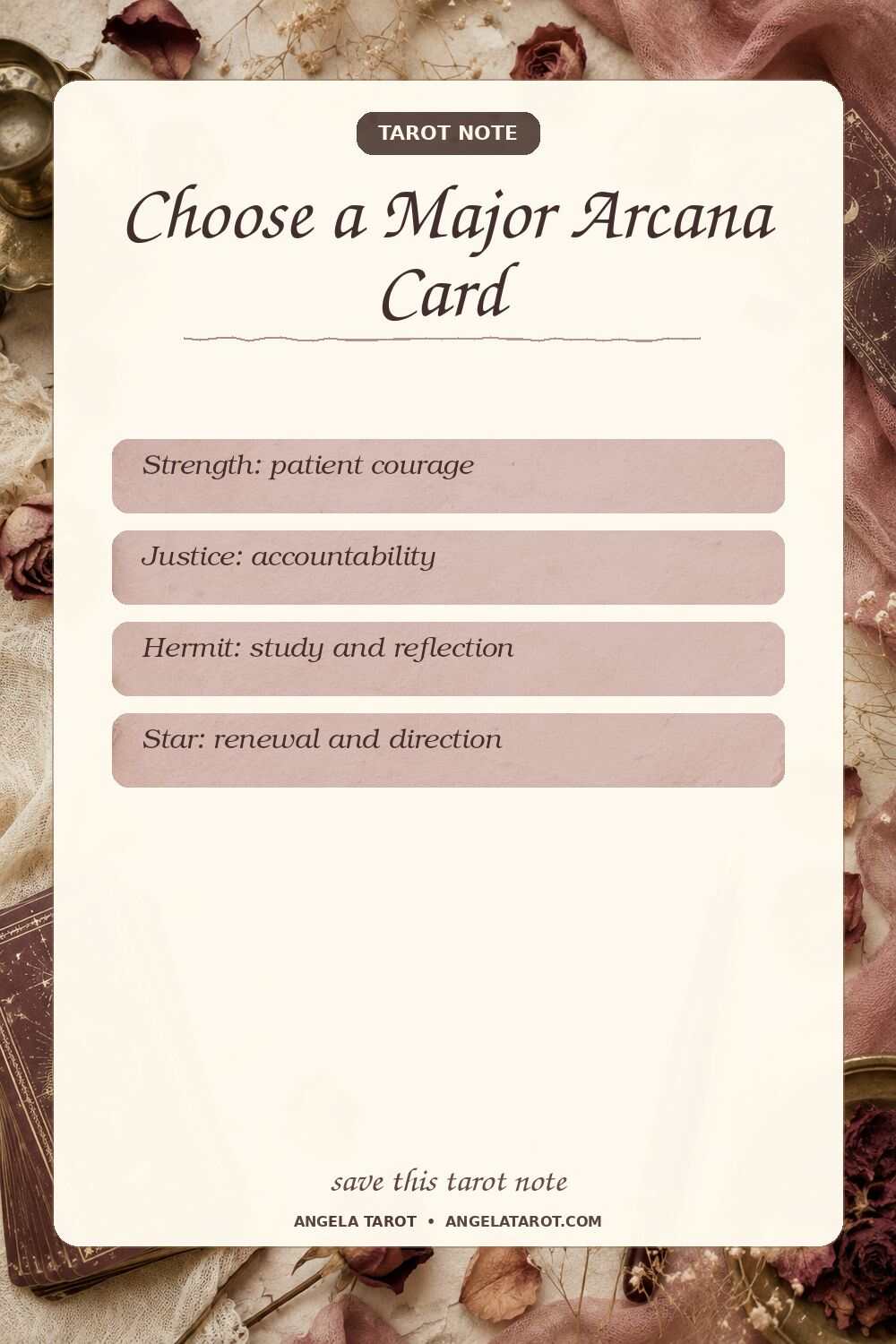
Choose a Major Arcana Card
Save this note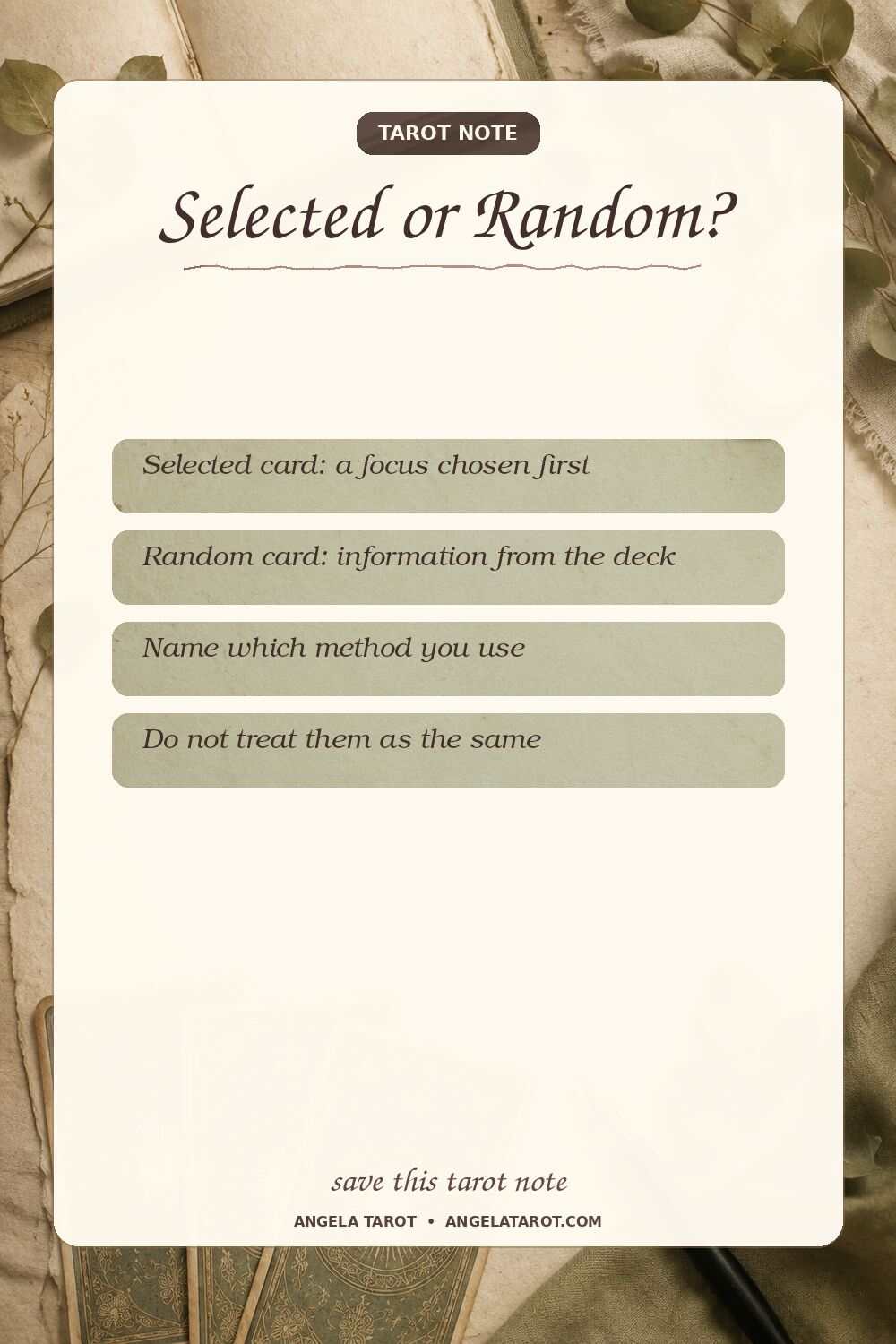
Selected or Random?
Save this note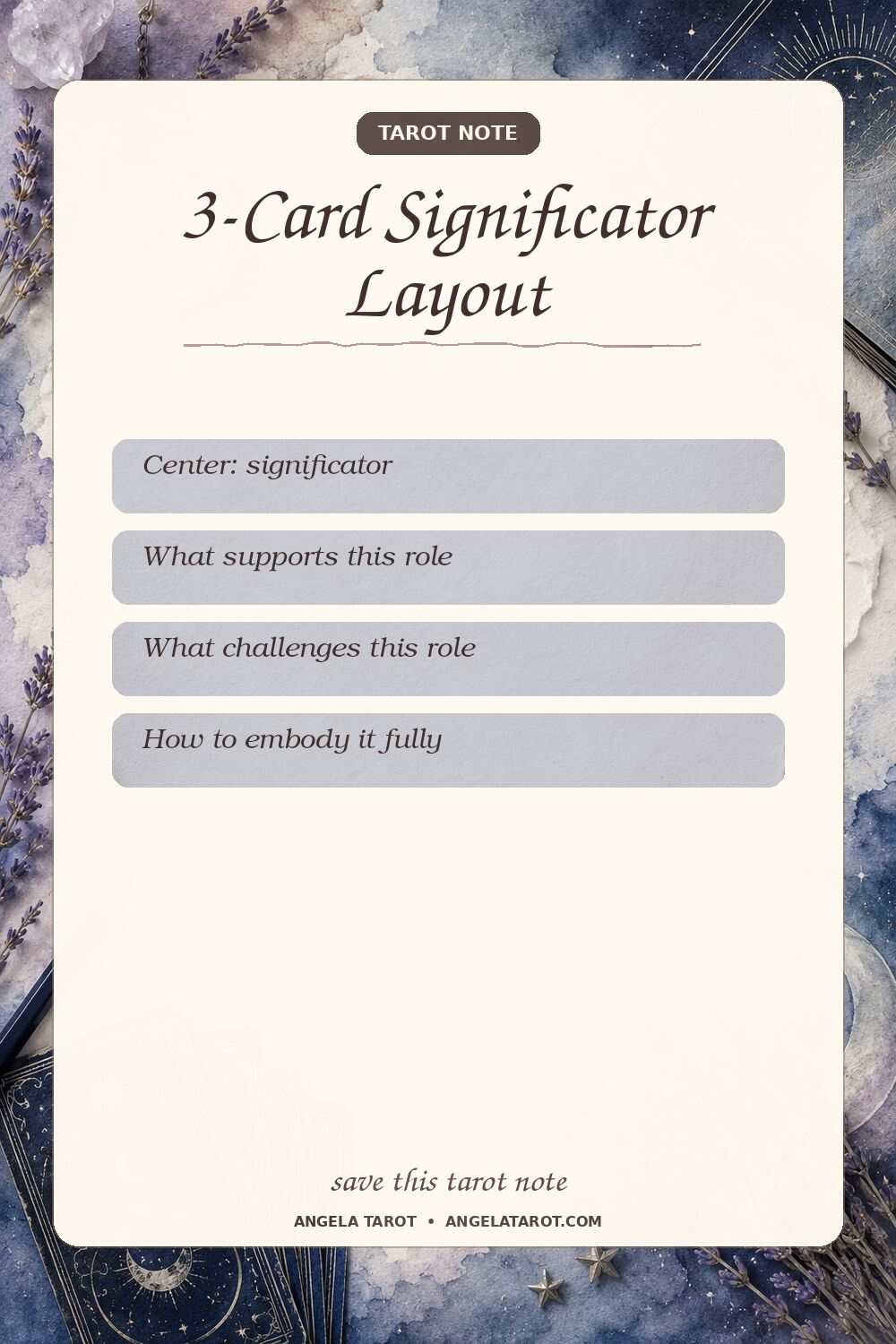
3-Card Significator Layout
Save this noteBring the method into your own reading
A personal reading can connect the cards with the relationship, decision or direction that matters most to you.
Explore personal readingsQuick answers
What is a significator card in tarot?
It is a card selected before the reading to represent the person, role or central subject around which the spread is organized.
Do I need a significator for every tarot reading?
No. It is most useful for large spreads, repeated developmental work or questions involving several roles.
How do I choose a significator card?
Choose by the role or purpose of the question. Court cards suit behavioral roles, Majors suit wider archetypes and Minors suit concrete situations.
Can I draw a significator randomly?
You can draw a theme card, but a random card becomes part of the answer. A traditional significator is intentionally selected before shuffling.