A confusing reading does not always mean you lack intuition or need a different deck. Often the structure broke before the cards were interpreted.
The ten mistakes below are common because they begin with a real desire for certainty. Correcting them makes the reading smaller, clearer and easier to evaluate.
A quick reset before drawing again
Write the original question, list the spread positions and underline what is actually unclear. You may discover that the cards answered the question, but the answer did not match the form you expected.
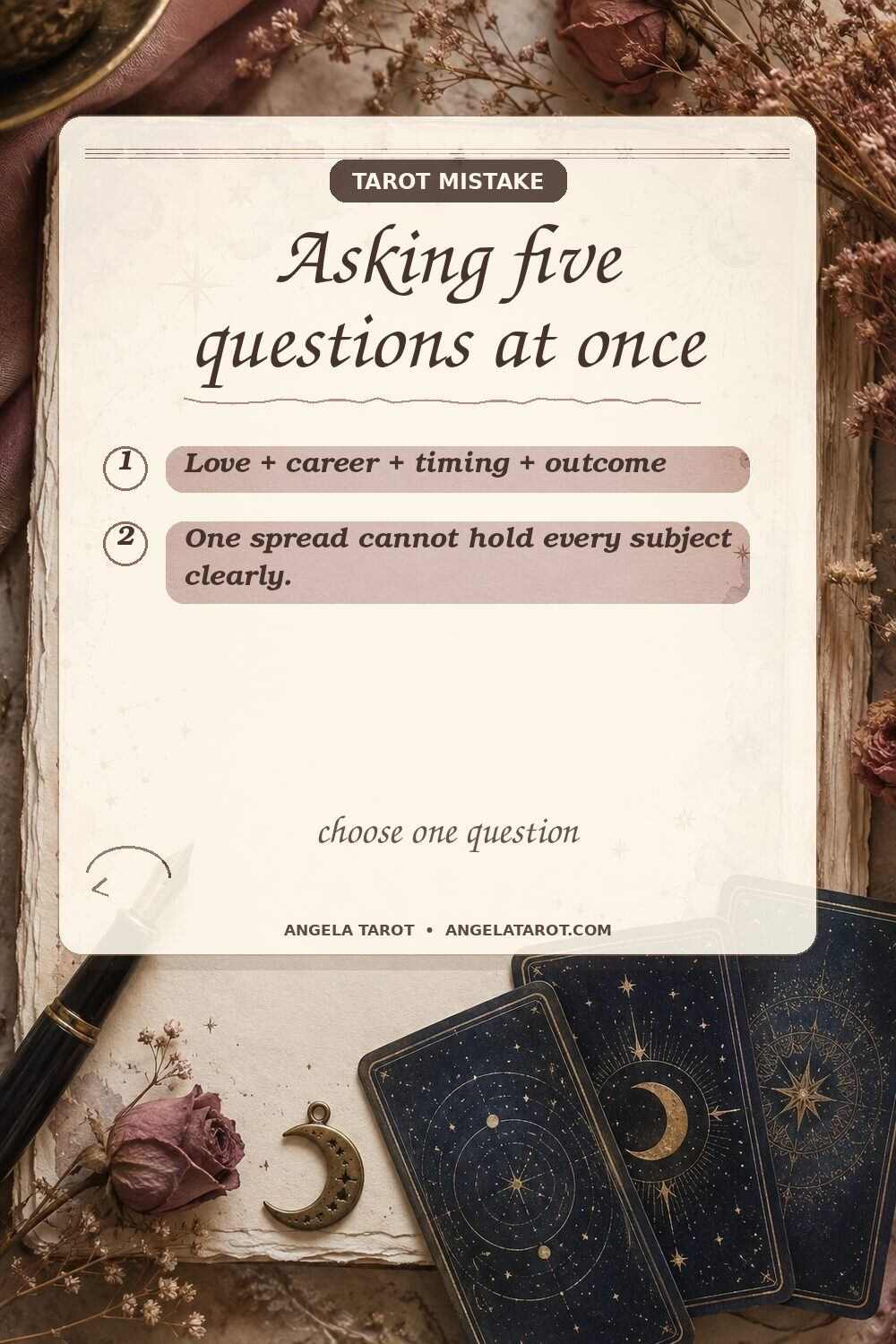
1. Asking a question that contains five questions
A wide question creates an answer with no clear boundary. Love, career, timing, another person and the final outcome cannot all occupy the same card position.
Try it: Choose one area and one time frame.
2. Drawing cards without written positions
When every card can mean anything, the interpretation moves too easily. Spread positions protect the reading from becoming a search for confirmation.
Try it: Write the positions before drawing.
3. Using too many cards for a simple problem
More cards do not always create more clarity. They can introduce new themes that the original question never asked about.
Try it: Use the smallest layout that can hold the question.
4. Repeating the reading until the answer changes
Immediate repetition often reflects anxiety, disappointment or hope rather than new conditions. The cards may become a mirror of the reaction to the first spread.
Try it: Wait for action, information or a meaningful change.
5. Ignoring the spread position
A card is not a floating dictionary definition. The same card changes when it appears as a fear, resource, advice or outcome.
Try it: Read the card and position as one phrase.
6. Treating every difficult card as disaster
Death, The Tower, The Devil and Three of Swords carry serious themes, but they do not automatically predict catastrophe. Context, scale and real evidence still matter.
Try it: Name the pattern before imagining the worst event.
7. Using tarot to state another person’s thoughts as fact
A reading can explore relationship dynamics and observable patterns. It cannot verify private thoughts, cheating, motives or promises.
Try it: Translate mind-reading claims into questions about behavior and mutuality.
8. Reading every card in isolation
Separate meanings can contradict each other because the story lives in the transitions between cards. Suit, direction, number and position create the relationship.
Try it: Write one sentence that connects at least two cards.
9. Pulling clarifiers without a question
An unclear clarifier creates another unclear card. Each extra draw should have one exact purpose.
Try it: Write: What part of this card needs clarification?
10. Never reviewing the reading
Without follow-up, it is easy to remember the striking hits and forget the vague or incorrect parts. Review creates a more honest and skilled practice.
Try it: Date the spread and add a follow-up note later.
Example: how one question becomes confusing
Imagine asking, “Will they contact me, what do they feel, are they seeing someone else, when will we reconcile and should I wait?” Five separate concerns have been placed inside one question. A three-card spread cannot show which card belongs to timing, emotion, behavior or advice.
A clearer version is: “What should I understand about the current communication pattern between us?” You might use What is visible, What is missing and What is in my control. A second reading about reconciliation is unnecessary until communication or circumstances actually change.
Separate prediction from advice
Prediction asks where the present pattern may lead. Advice asks how you can respond. When the same card is expected to do both, the reading can become circular. Write separate positions such as Likely direction and Best response.
For example, Eight of Cups as the likely direction may show emotional departure. Strength as advice may ask for self-command, patience and a response based on dignity. The advice does not erase the direction, and the direction does not remove your choice.
A clearer replacement method
- Choose one question.
- Use three to five positions.
- Read every card through its job.
- Connect the cards before adding detail.
- Pull one clarifier only for a named uncertainty.
- Record the answer and return after life has moved.
Know when the reading is complete
The reading is complete when every written position has an interpretation, the cards can be summarized in one paragraph and at least one next step is visible. Completion does not mean every uncertainty has disappeared. Some answers depend on time, communication or information that tarot cannot provide.
When the cards still feel disconnected, use the combination method. Beginners can return to 15 practical tarot tips.
Tarot can support reflection and choices. It cannot verify another person’s private thoughts, guarantee events or replace professional guidance.
Pinterest tip library
Save 6 different tips
Each image contains a separate technique or checklist and saves this article as its source.
Asking five questions at once
Save this Pin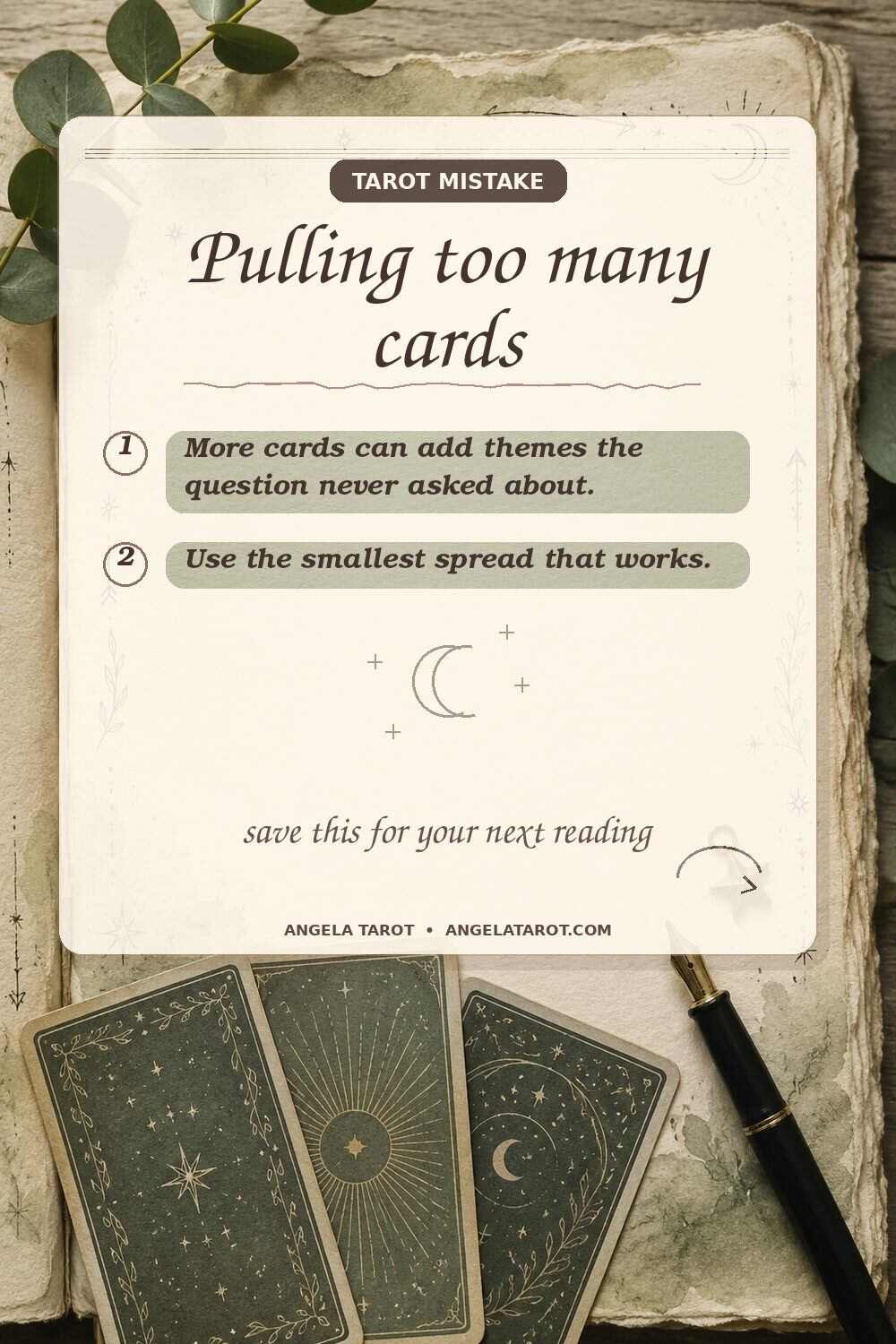
Pulling too many cards
Save this Pin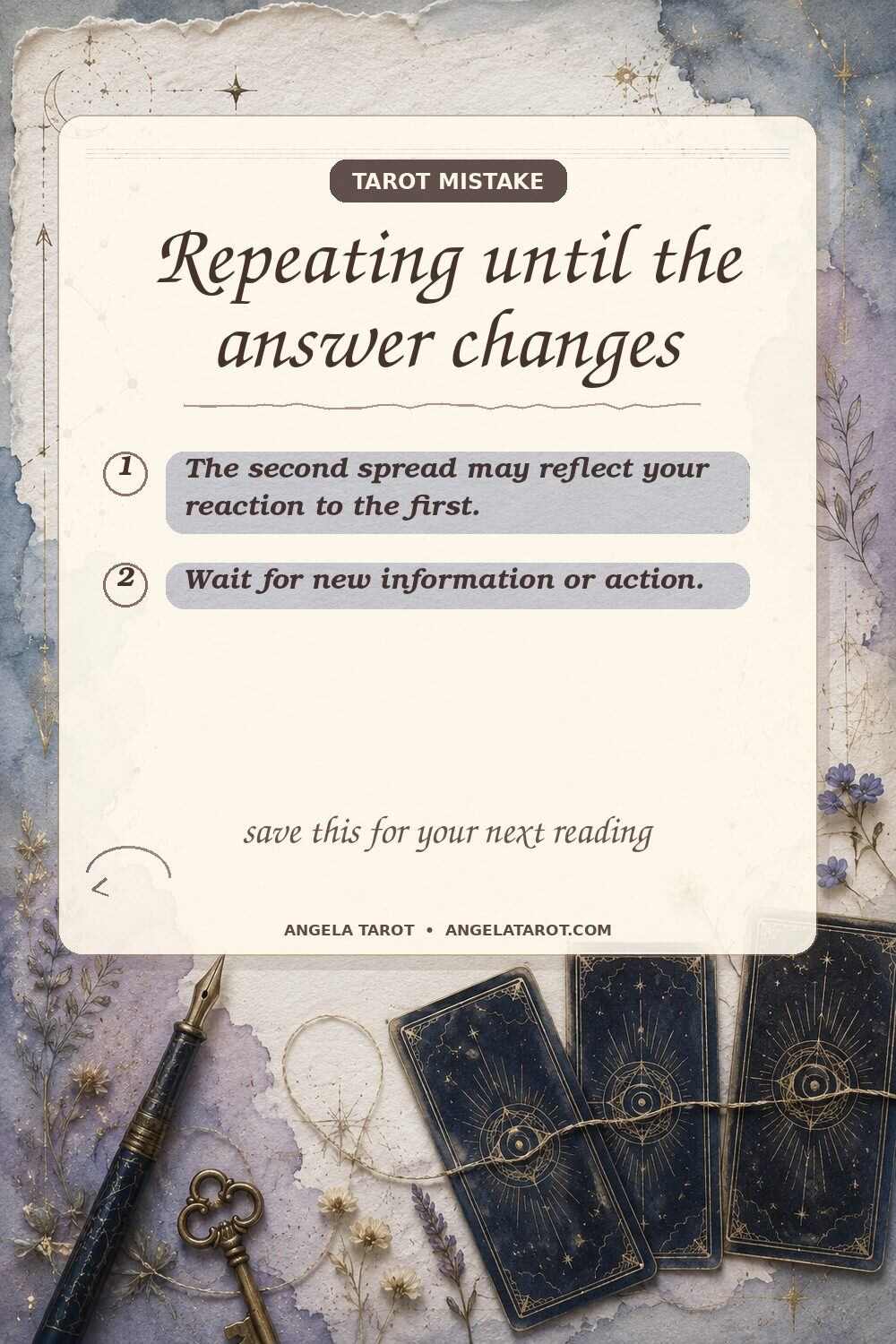
Repeating until the answer changes
Save this Pin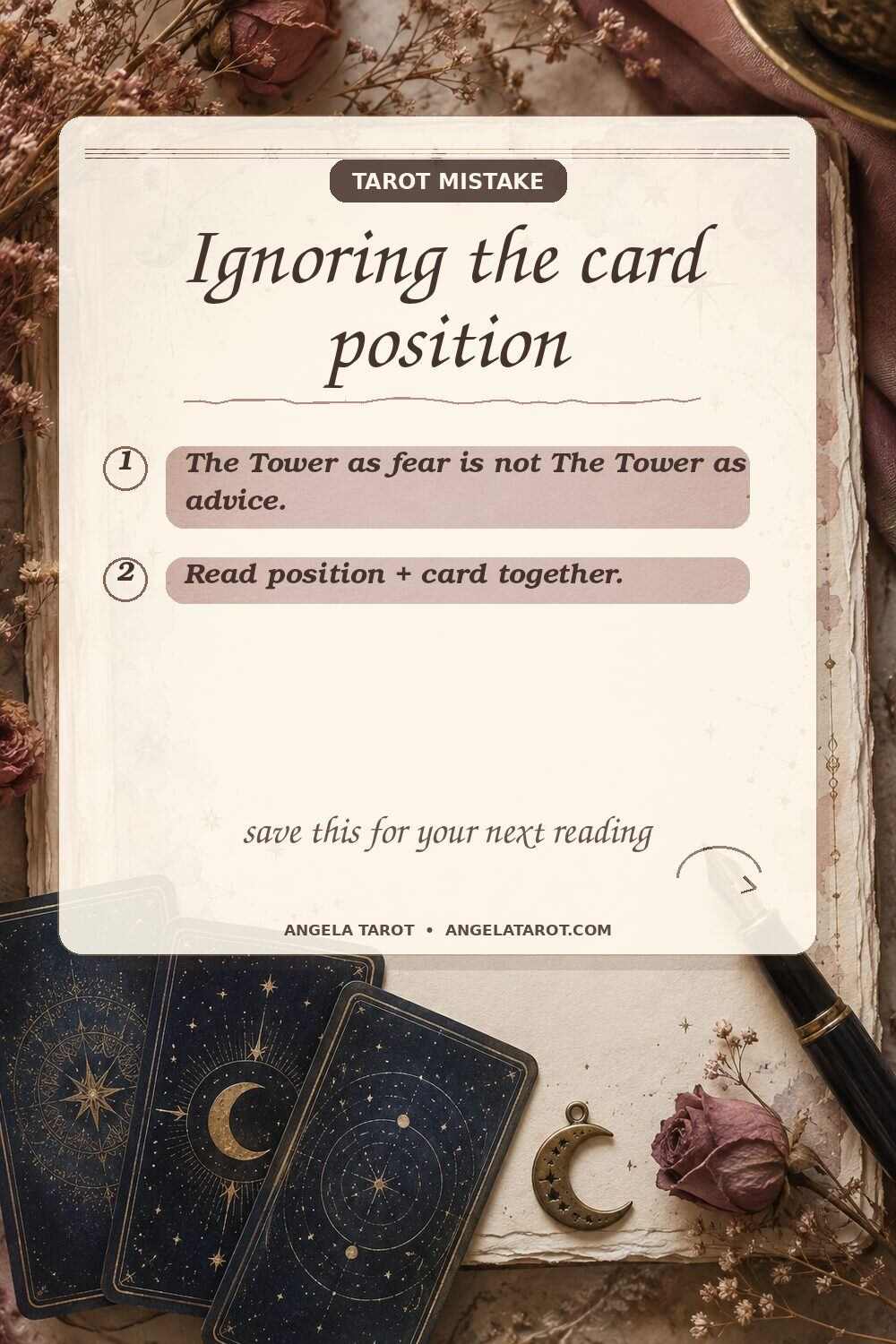
Ignoring the card position
Save this Pin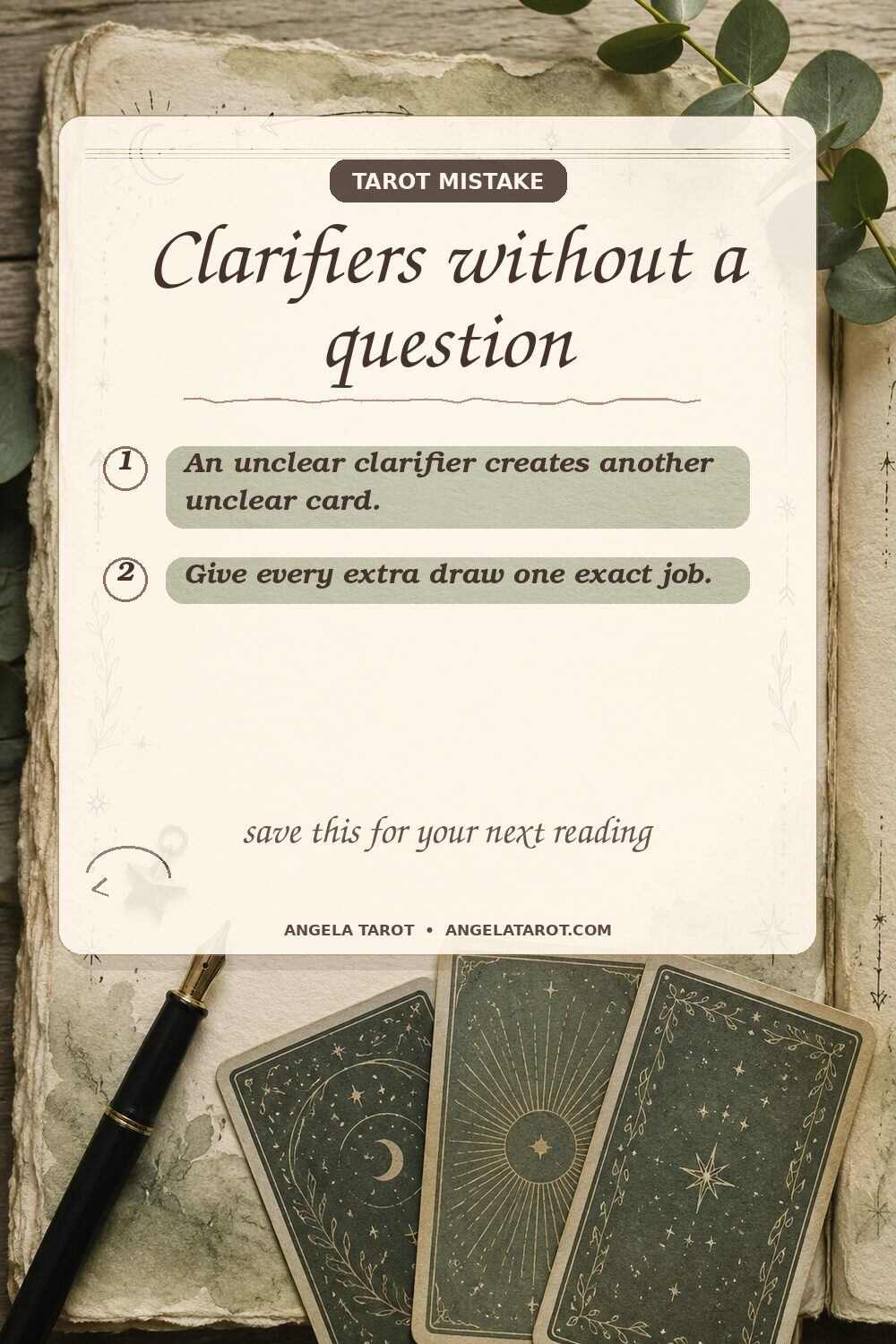
Clarifiers without a question
Save this Pin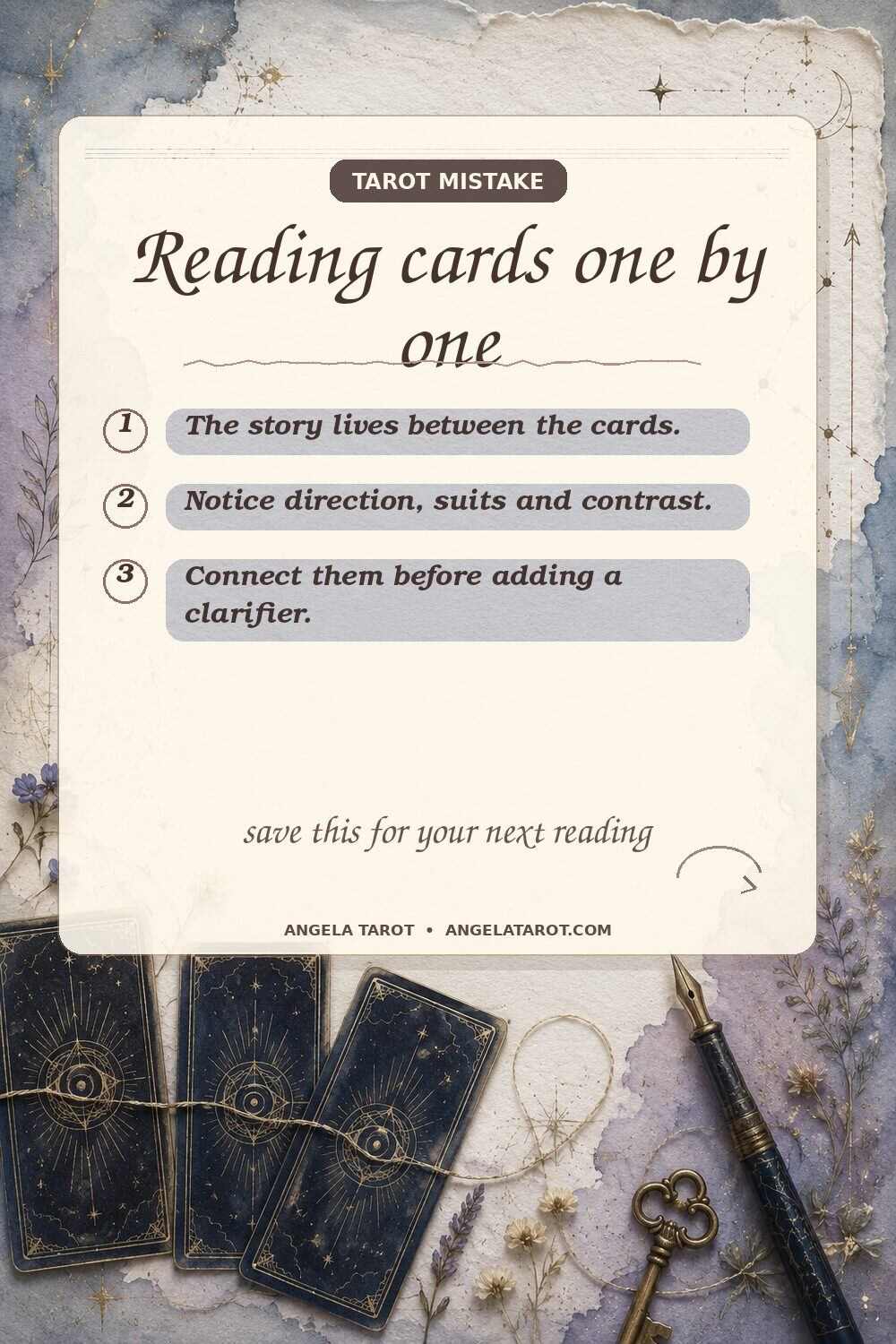
Reading cards one by one
Save this PinBring the method into your own reading
A personal reading can connect the cards with the relationship, decision or direction that matters most to you.
Explore personal readingsQuick answers
Why do my tarot readings feel confusing?
The question may be too wide, the positions may be unclear or too many extra cards may have introduced unrelated themes.
Can I redo a tarot reading immediately?
It is better to wait for new information, action or changed circumstances.
How many clarifiers are too many?
If the clarifiers create more questions than they answer, stop and return to the original positions.
Does a difficult card mean something bad will happen?
Not automatically. Read its scale, position and surrounding cards before drawing conclusions.
Can tarot tell me exactly what someone thinks?
No. It can explore relationship dynamics, but private thoughts require evidence and communication.