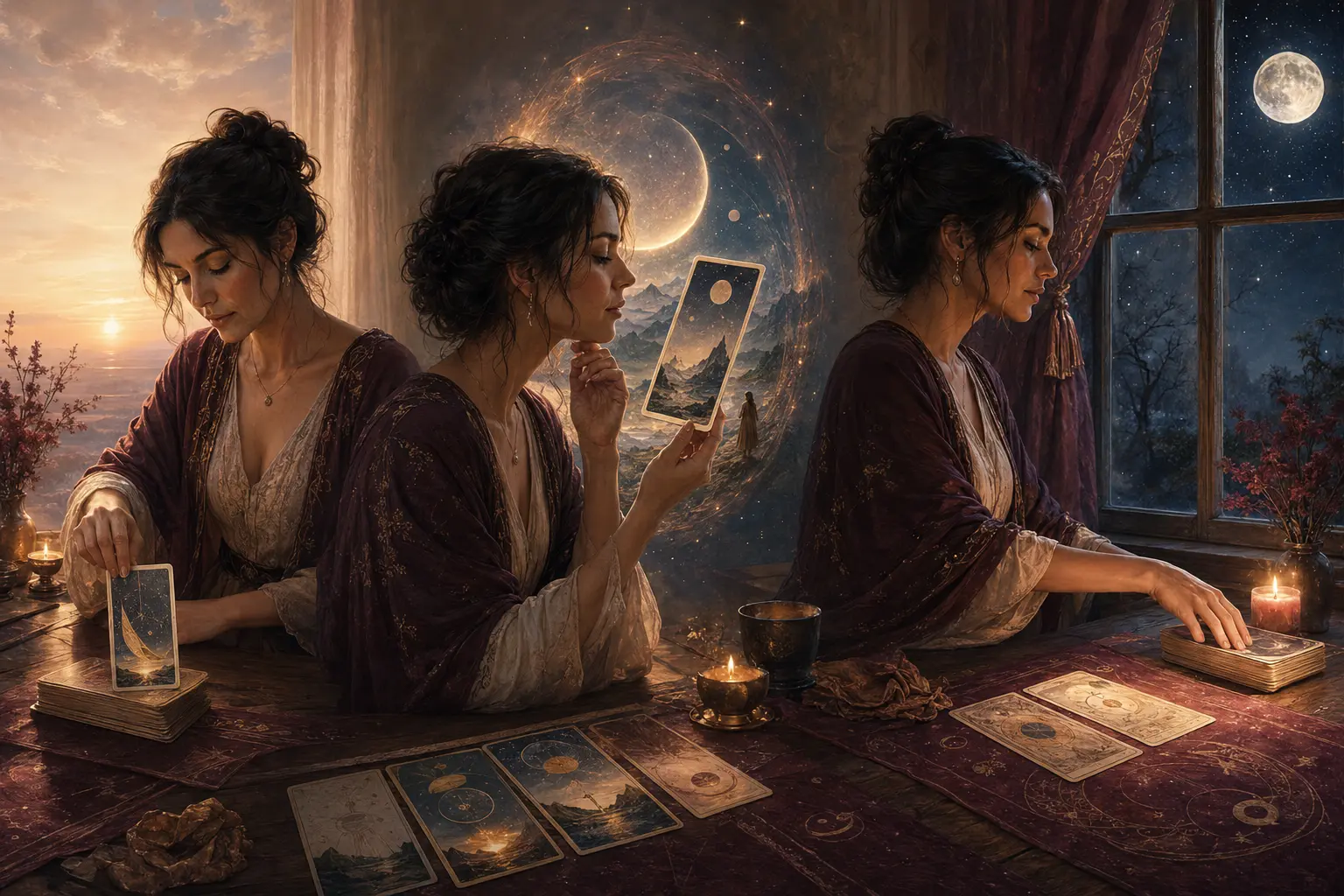
Tarot study can become heavy before it becomes helpful. There are 78 cards, four suits, numbers, elements, symbols, reversals and a growing shelf of books that all seem to hold one more rule.
Yet your first meeting with a card happens before any definition. A color catches your eye. A figure appears open or guarded. The image feels warm, tense, distant or full of movement. That first response is where tarot intuition begins.
The short answer: You develop tarot intuition through small acts of attention. Draw one card each day, spend a few minutes inside one card image and create a simple ritual that marks the end of a reading. Record what you notice, then test it against context. You do not need to reject traditional meanings or force a mystical experience.
What tarot intuition is, and what it is not
Intuition is often treated as a sudden message that arrives from nowhere. In practice, it can include fast pattern recognition, memory, emotion, sensory response and spiritual belief. A reader may experience it as a word, image, body response or clear sense of where the card points.
That does not make every first thought true. Fear can speak fast. Hope can select the meaning we want. A familiar story can attach itself to a card before we have looked at the spread. Good intuitive reading includes both openness and a check.
Use three anchors:
- The image: What can you see in the card?
- The context: What did you ask, and what position does the card hold?
- The facts: What do you know outside the reading?
Intuition adds life to card knowledge. It does not need to replace it. Traditional meanings give you a shared language, while your response shows how that language may be moving in this reading.
1. Draw one card for the day
One card for the day is one of the best tarot intuition exercises for beginners because it limits the amount of information. One image is enough. You can meet it in the morning, carry one question through the day and return to it at night.
How to do the practice
- Before you check messages or open a guidebook, take one slow breath and shuffle the deck in the way that feels natural to you.
- Ask, What energy can I notice today? or What deserves my attention today?
- Draw one card with either hand. There is no required hand. The common claim that the left hand gives direct access to the intuitive right side of the brain is too simple and is not a tarot rule.
- Look at the card for 30 seconds before you name its standard meaning.
- Write three short notes: what drew your eye, what mood you felt and one word for the card's movement.
Questions that open the image
- Which color reached me first?
- Where is the figure looking?
- Does the scene move toward something or away from it?
- What feels open, guarded, full or absent?
- If the card could give one instruction, what verb would it use?
At the end of the day, return to the card. Do not search for a grand event that proves it was right. Look for a smaller echo. The Eight of Pentacles may appear as focused work. The Four of Cups may show a missed invitation or a mood that kept you turned inward. Some days the connection will be clear. On other days it will not appear, and that is useful data too.
Keep the first note beside the evening note. Over several weeks you will see which visual details speak to you with consistency. That record is more valuable than trying to remember a perfect impression after the event.
If you want to turn the one-card exercise into an immediate plan for work or daily life, use the five-minute morning tarot routine. It keeps the visual reading brief and ends with one action you can test by evening.
2. Enter one tarot card through guided imagination
Tarot cards are small scenes. Guided imagination lets you explore the space inside a scene before you reduce it to keywords. This practice is sometimes called card meditation or pathworking.
Choose a card that holds your attention. Start with an image that feels inviting, such as The Star, The Empress or the Six of Cups. You do not need to begin with a card that frightens you. If an image creates strong distress, stop and choose another one.
A ten-minute card journey
- Place the card at eye level. A candle can help mark the space, but it is optional. Keep flame away from cards and fabric.
- Study the border, foreground, figures and distant background. Notice what the artist chose to reveal.
- Close your eyes and imagine the card as a doorway. Picture yourself standing just inside the scene.
- Ask what you can hear, smell and feel under your feet. Let the details arrive without demanding an answer.
- If a figure is present, ask one question: What do you want me to notice?
- After a few minutes, picture yourself stepping back through the border. Open your eyes and name five objects in the room.
- Write what happened before you check a card meaning.
You may receive a sentence. You may see a new detail or feel nothing beyond the image itself. All three outcomes are valid. The goal is not to prove contact with a higher source. The goal is to give imagination enough space to form a relationship with the symbols.
Then compare your notes with the traditional meaning. Where do they meet? Where do they differ? If you entered The Moon and felt watched, the card may touch uncertainty or projection. If you felt protected by the night, it may speak about moving through the unknown without full visibility. The surrounding question decides which direction has value.
3. Create a deck reset ritual
Many tarot readers cleanse a deck with moonlight, sound, incense, breath or a crystal. You can use any of these as a spiritual practice. You do not need to believe that cards store energy as a proven physical fact.
The most useful part of a reset ritual is the boundary it creates. It tells your mind that one reading has ended. It also gives you a clean moment before the next question, which matters when the last spread carried strong emotion.
A simple moonlight ritual
- Close the reading and put every card back in the deck.
- Hold the deck and name what you are releasing: the question, your preferred answer or the need to draw again.
- Place the deck near a window for the evening. Full moon and new moon can add personal meaning, but the phase is not a requirement.
- Keep the cards inside and away from moisture, direct heat and long sun exposure. Sunlight can fade the print.
- When you pick up the deck, set one intention for the next reading, such as honesty, patience or clear questions.
A crystal is optional. Smoke is optional. Moonlight is optional. The ritual works as a personal marker because you give it meaning and repeat it with care. If tapping the deck three times helps you end a reading, that can be enough.
How to tell intuition from projection
No method creates perfect certainty, but you can make your reading more honest. Write the first impression in plain words before you build a story around it. Then ask:
- Can I point to something in the card that supports this impression?
- Does it answer the question, or does it repeat what I want to hear?
- Am I turning a possibility into a fact about another person?
- Would I read this card the same way for a friend?
- What evidence outside tarot could confirm or challenge the idea?
If the answer feels urgent, absolute or fixed, pause before you act on it. Do not draw five more cards to force certainty. The guide to confusing tarot spreads gives a full reset method for readings that become tangled through repetition.
A seven-day tarot intuition practice
You can combine all three exercises without turning tarot into another task list.
- Days 1 to 5: Draw one morning card. Record three first impressions and one evening reflection.
- Day 6: Choose the card that stayed with you and take a ten-minute journey into its scene.
- Day 7: Review your notes, return the cards to the deck and use your preferred reset ritual.
At the end of the week, circle repeated words, colors and forms of movement. Perhaps you notice hands before faces, water before sky or distance before emotion. This becomes part of your personal tarot vocabulary.
When you move from one card to a spread, keep the same approach. Notice each image, then build a connection. The guide to reading tarot card combinations as one story shows how to join those first impressions without losing structure.
Your intuition does not need a performance
You do not have to see visions, receive names or know the future to read tarot with intuition. Sometimes intuition is a small recognition: the figure is holding too tight, the road is open, the cup is offered but not received.
Give that response space. Write it down. Check it against the image and the facts. Then let the card remain a conversation, not a command.
With time, your readings can become less like a test of memory and more like a language you know from use. The guidebook still has a place. So does reason. Intuition grows between them, one honest observation at a time.
When you want to use that visual language for a goal rather than a question, continue with the guide to manifestation through tarot. It turns one chosen card into an intention, a ritual and a grounded next step.
When you need another perspective
A personal reading can bring a fresh set of eyes to the symbols when your own hopes make the message hard to separate from the outcome you want.
Explore personal readingsTarot intuition: quick answers
How can a beginner develop tarot intuition?
Draw one card, notice your first response before checking a guidebook, and compare that response with the events of the day. Short, repeated practice builds a personal bond with tarot symbols.
Do I need to memorize tarot meanings before reading with intuition?
No. Learn the traditional foundation while you observe color, posture, action and mood. Intuition and card knowledge work best as partners.
Do tarot cards need to be cleansed in moonlight?
No. Moonlight cleansing is an optional personal ritual, not a rule. Its practical value is that it marks a pause, clears your attention and helps you begin the next reading with a fresh focus.
How do I know whether a tarot impression is intuition or fear?
Write the first impression in plain words and test it against the card image, the question and known facts. Fear tends to repeat an urgent conclusion, while a useful impression leaves room for context and choice.
Tarot can support reflection and personal insight. It does not prove facts, guarantee events or replace medical, legal or financial advice.