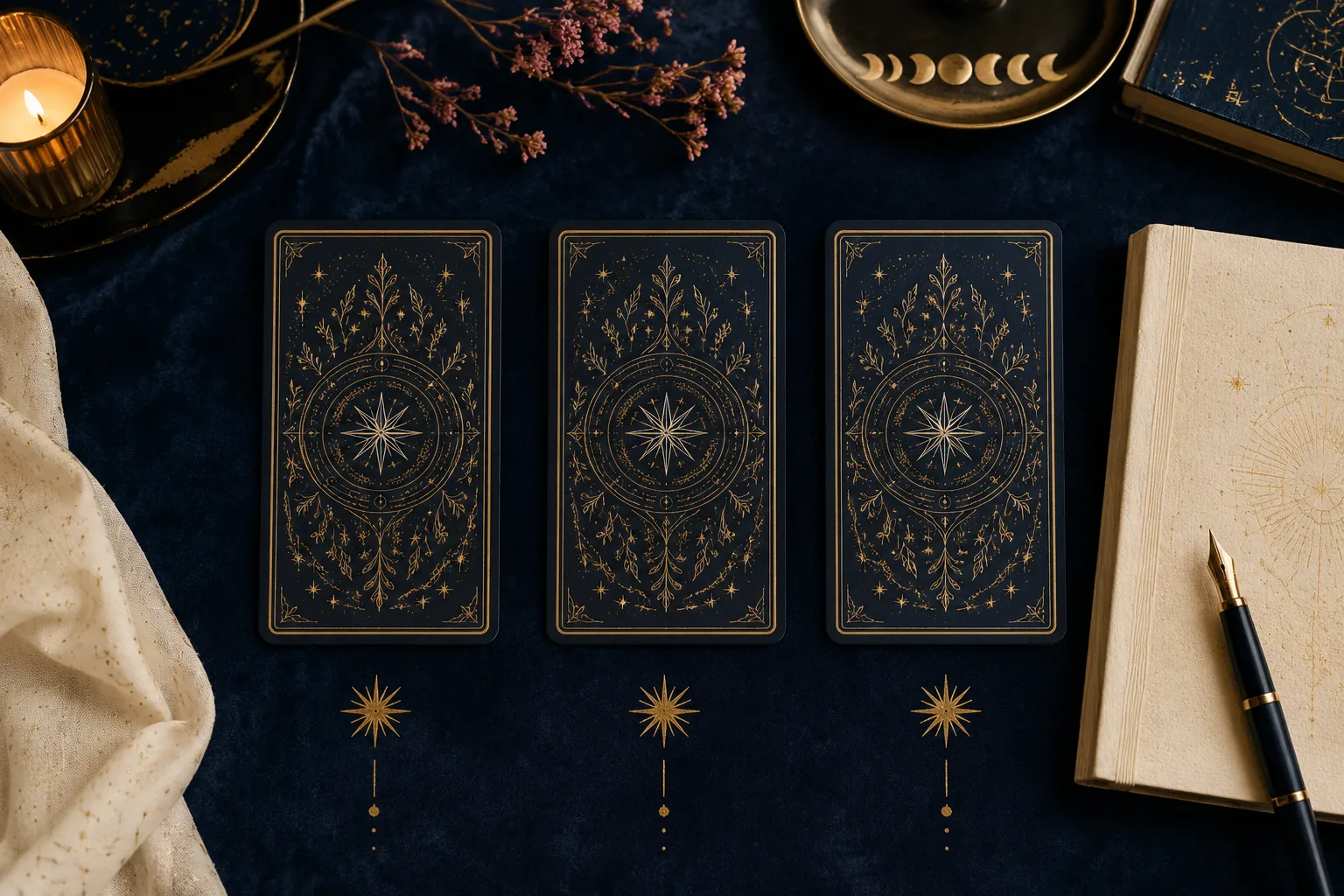
Three cards are often enough. They create movement, contrast and context while keeping the reading close to the question.
The strength of a three-card spread is not speed alone. It is discipline. Each card has one role, so you are less likely to make every image answer every part of the situation.
How to lay out and read three cards
Place the cards from left to right when the reading describes a timeline or process. Use a triangle when Cards One and Two are two sides of a question and Card Three is the decision, synthesis or next step.
- Read Card One on its own.
- Notice how Card Two changes or challenges it.
- Use Card Three to complete the sentence.
- Look for repeated suits, numbers, elements or directions.
- Write the reading in one paragraph before pulling a clarifier.
1. Past, Present, Future
A simple timeline for one focused situation.
- Past influence
- Present energy
- Likely direction
Reading tip: Avoid treating the third card as fixed. It shows where the current pattern leads.
2. Situation, Challenge, Advice
A direct layout for a practical question.
- Situation
- Challenge
- Advice
Reading tip: Make the final card an action, not only a keyword.
3. Mind, Body, Spirit
A whole-self check-in when one part of life has been receiving all the attention.
- Mind
- Body
- Spirit
Reading tip: Notice which card feels least familiar. That area may need more listening.
4. You, Them, Connection
A relationship snapshot grounded in behavior and mutual dynamics.
- What I bring
- What they show
- The connection
Reading tip: The middle card is not permission to claim another person's hidden thoughts.
5. What, Why, How
Use this when you know the event but not its meaning or your response.
- What is happening
- Why it matters
- How to respond
Reading tip: If Card Two feels abstract, ask what value, fear or need it represents.
6. Option A, Option B, Decision
Compare two choices without asking tarot to decide for you.
- Path A
- Path B
- Decision principle
Reading tip: The last card names the standard you want to live by.
7. Expect, Accept, Do
Prepare for a situation by separating conditions from action.
- What to expect
- What to accept
- What to do
Reading tip: Acceptance does not mean approval. It means starting from what is real.
8. Visible, Hidden, Truth
Explore missing information without turning uncertainty into accusation.
- What is visible
- What is unclear
- What brings clarity
Reading tip: The hidden card can represent your own blind spot or incomplete facts.
9. Stop, Start, Continue
A practical reset for habits, projects or relationships.
- Stop
- Start
- Continue
Reading tip: Choose one behavior for each position and test the spread for a week.
10. Strength, Blind Spot, Next Step
Balance confidence with honest self-review.
- My strength
- My blind spot
- Next step
Reading tip: A blind spot is not a verdict. It is information that improves the next choice.
11. Morning Focus
Set a clear direction without trying to predict every hour.
- Today's energy
- My focus
- My boundary
Reading tip: Keep it under five minutes and write one sentence.
12. Opportunity, Risk, First Step
Evaluate a new opening with both enthusiasm and discernment.
- Opportunity
- Risk
- First step
Reading tip: Risk does not always mean stop. It names what deserves preparation.
13. Need, Want, Deserve
Separate urgency, desire and self-respect in an emotional choice.
- What I need
- What I want
- What I deserve to honor
Reading tip: Look for overlap before assuming the three cards conflict.
14. Head, Heart, Choice
Use when logic and feeling seem to disagree.
- What my head says
- What my heart says
- My choice
Reading tip: The final card belongs to you. It is not a vote between the first two.
15. Energy, Lesson, Next Chapter
Close a cycle and identify what continues.
- Current energy
- Lesson
- Next chapter
Reading tip: Let the last card describe a direction you can participate in.
When a three-card reading still feels unclear
Return to the position labels. The Moon in “What is unclear” confirms partial visibility. The same Moon in “Advice” may ask you to slow down and allow more information to emerge. Position changes meaning.
If one card remains difficult, ask one precise clarifying question. Do not add a second spread on top of the first. You can also use the guide for cards that make no sense.
For wider layouts, visit 21 easy tarot spreads. For a lighter reading night, try 10 fun tarot spreads.
For relationship questions, continue with 12 love tarot spreads with positions for connection, communication, new love and future direction.
Tarot can support reflection and decision-making. It cannot establish private facts, guarantee outcomes or replace professional guidance.
Pinterest spread library
Save 6 different layouts
Each image below is a complete spread with labeled card positions. Choose the one you want to keep for your next reading.
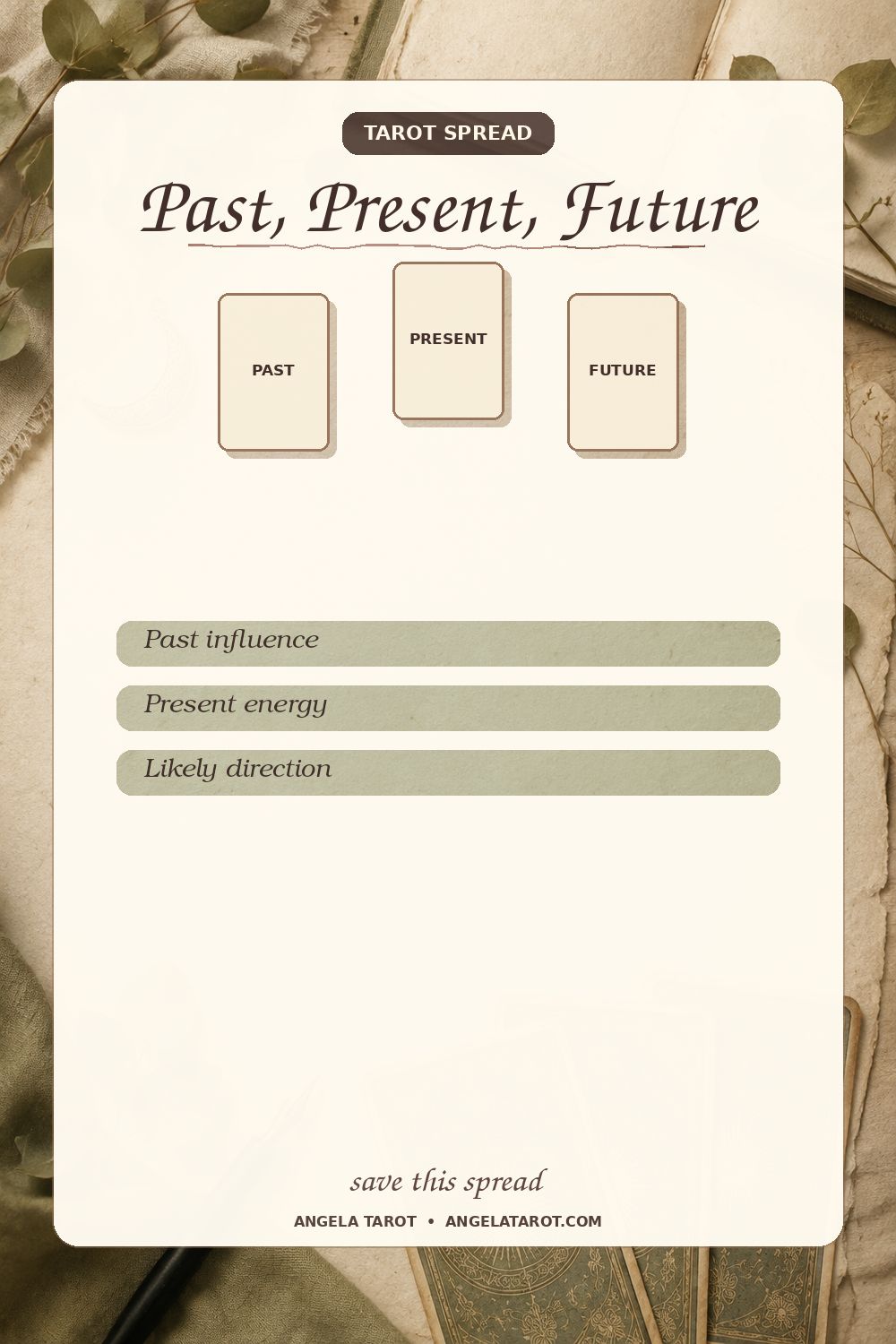
Past, Present, Future
Save this layout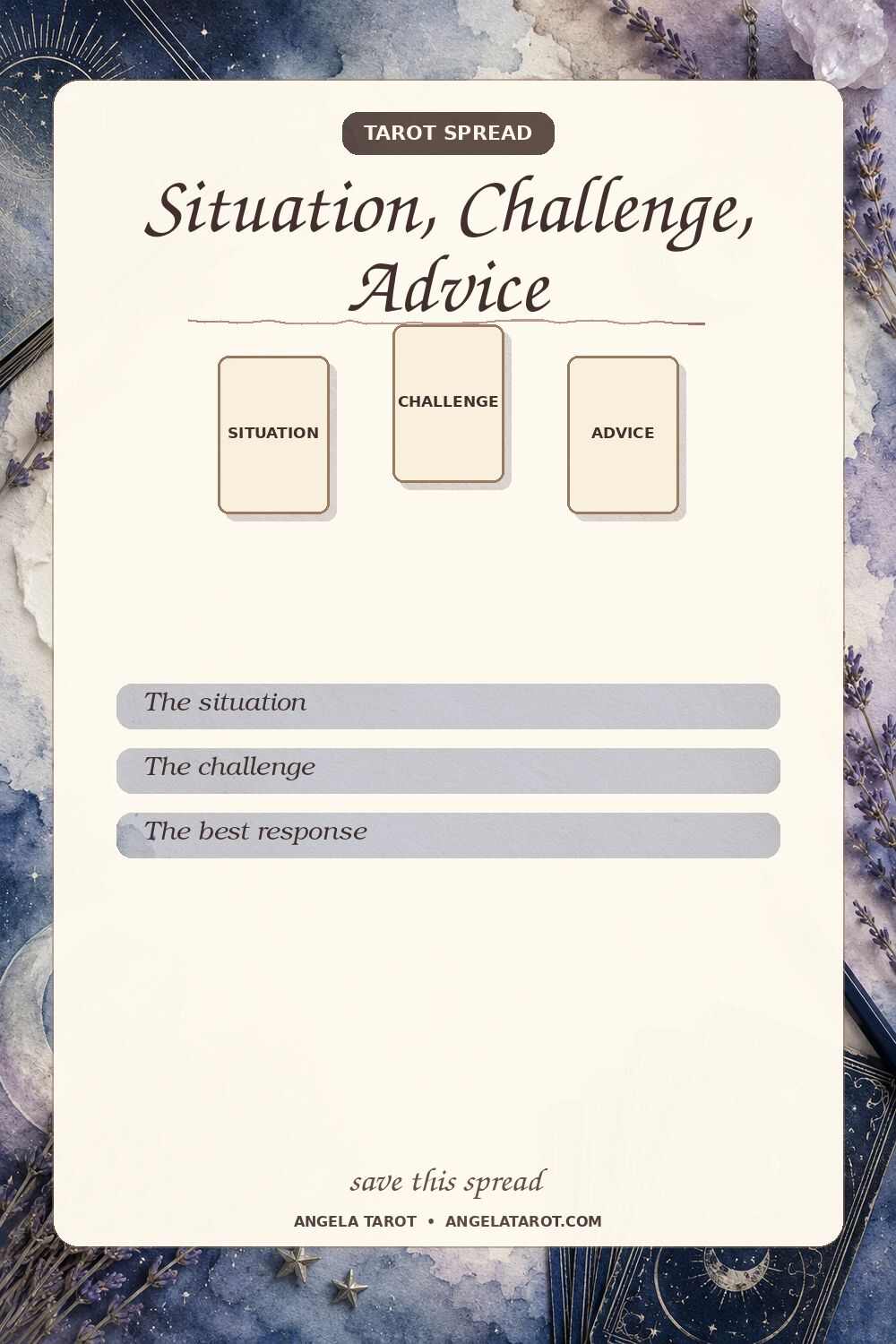
Situation, Challenge, Advice
Save this layout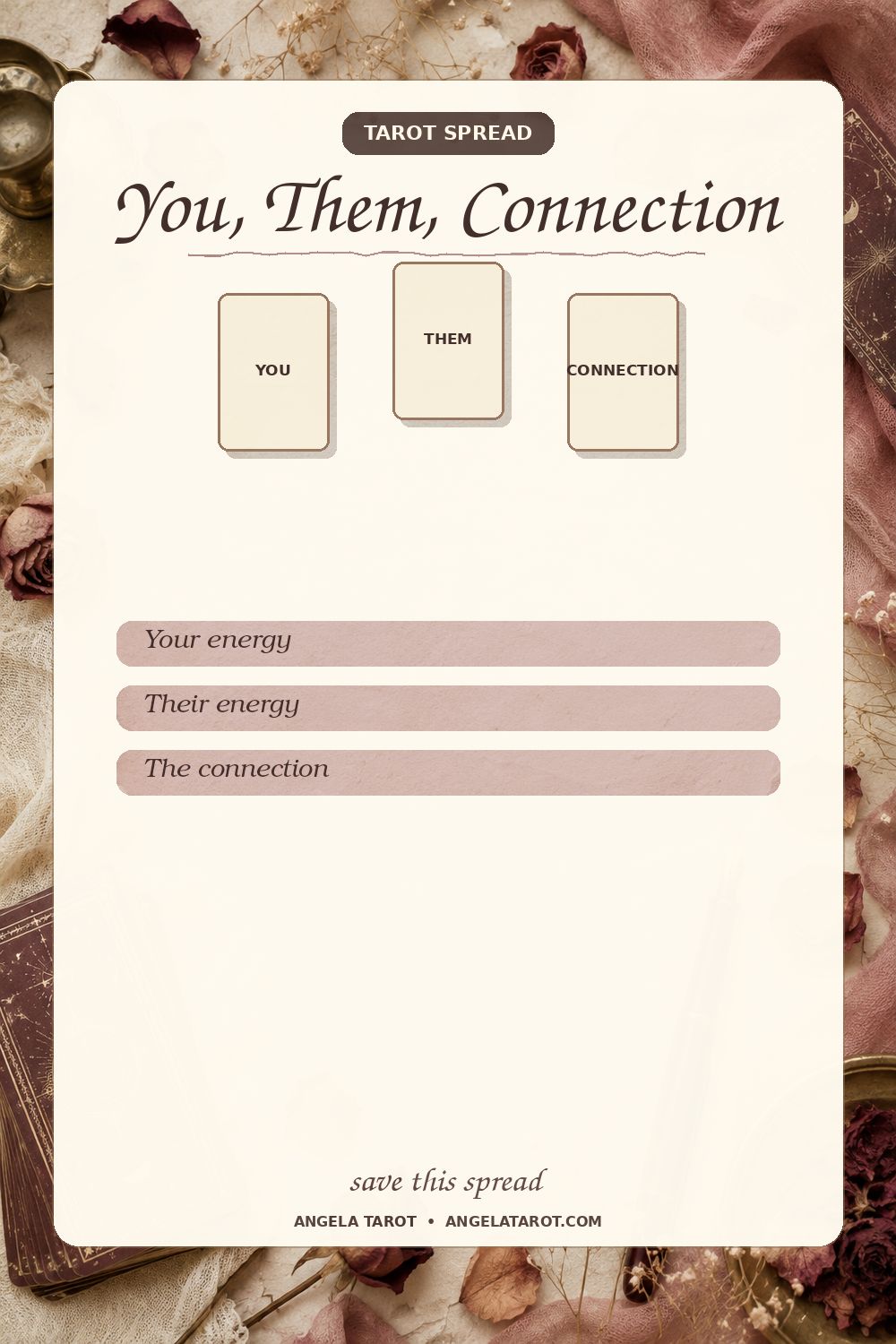
You, Them, Connection
Save this layout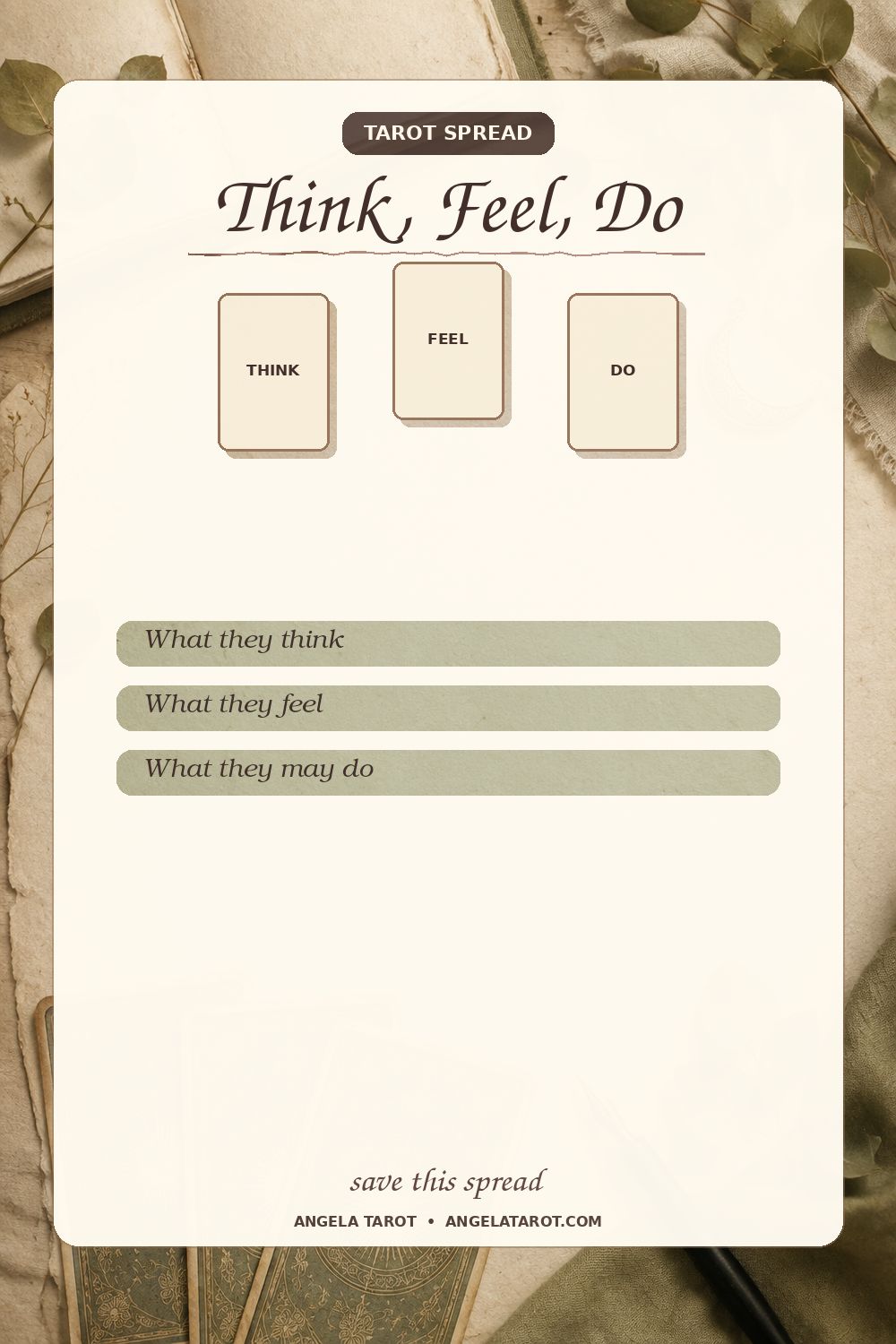
Think, Feel, Do
Save this layout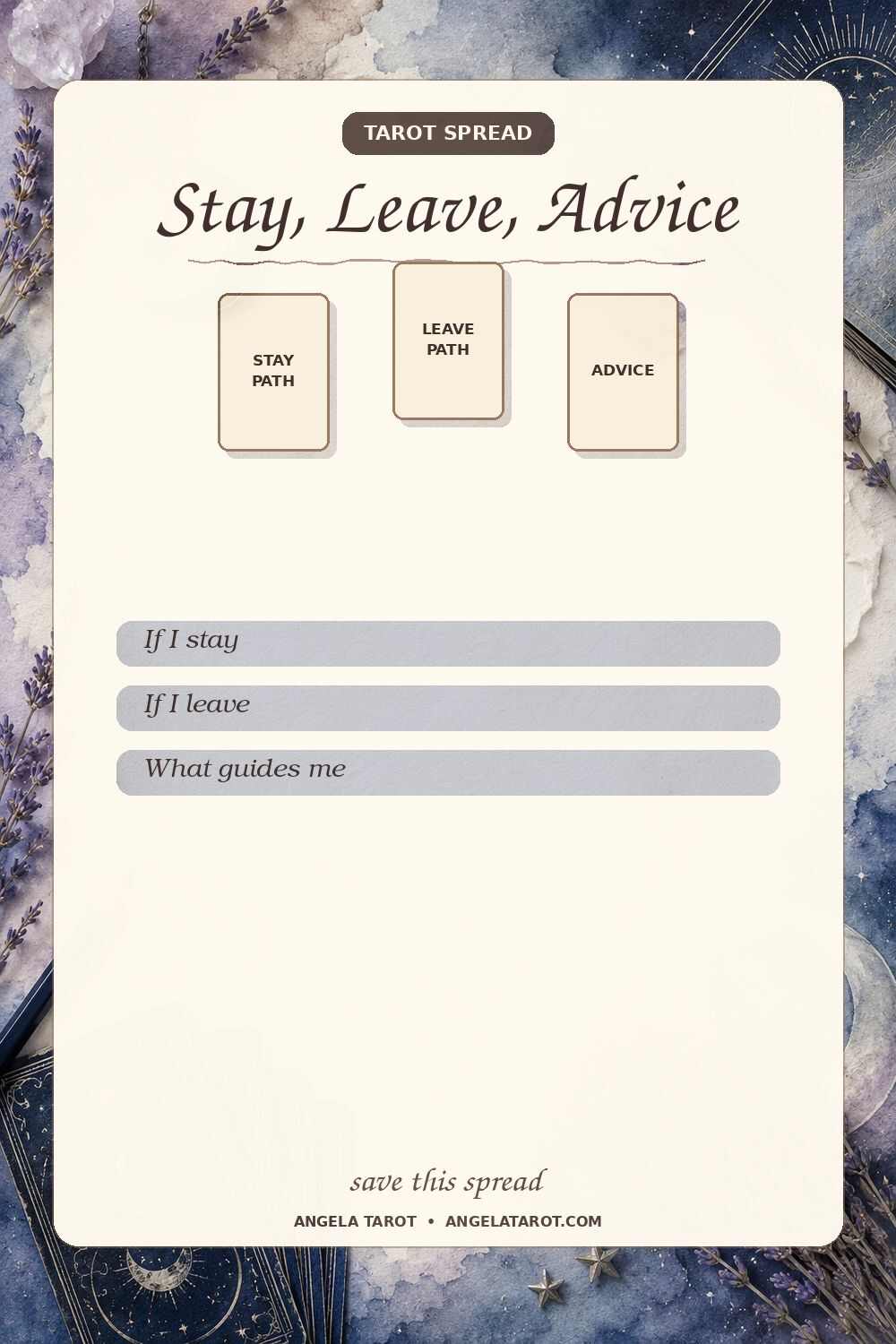
Stay, Leave, Advice
Save this layout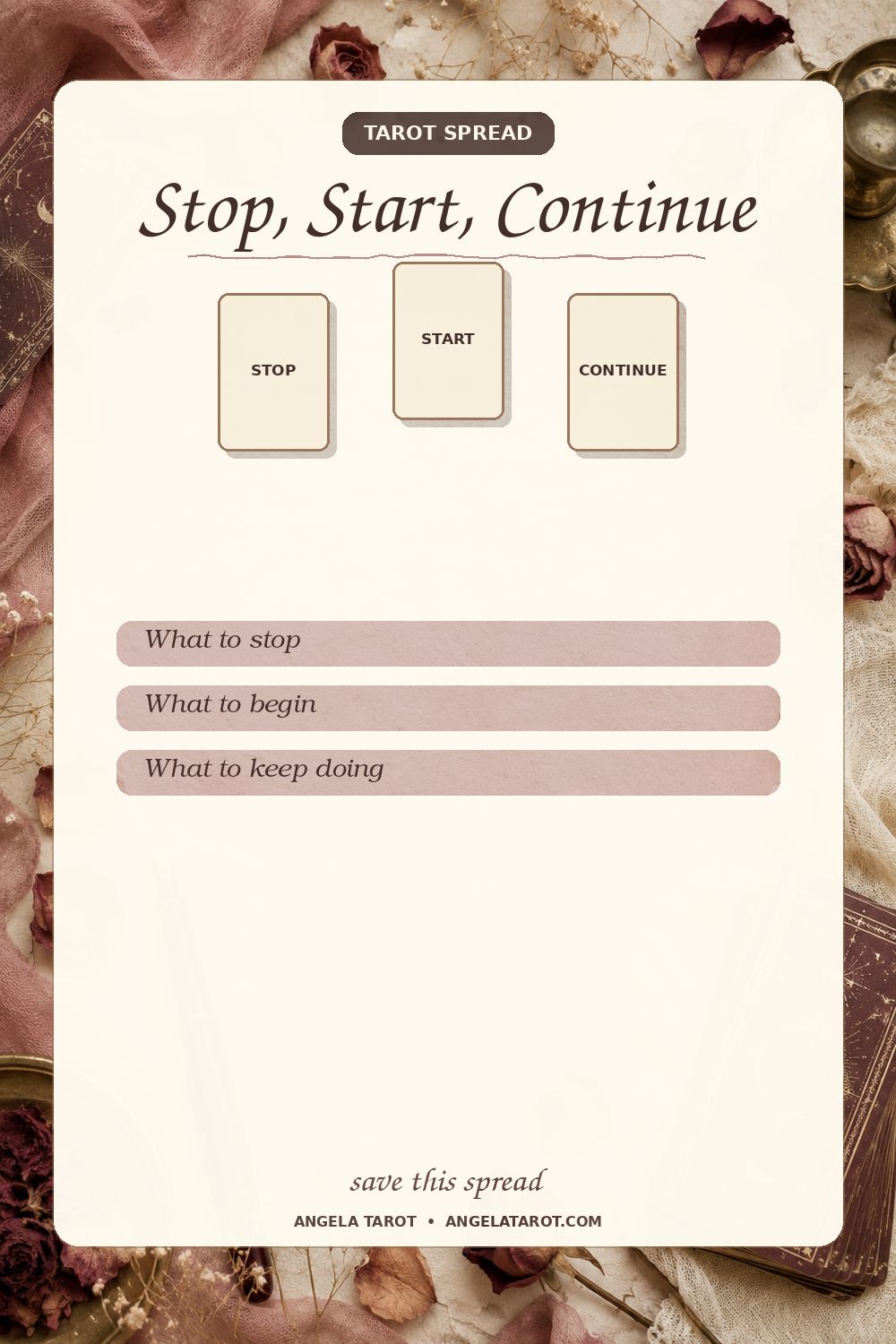
Stop, Start, Continue
Save this layoutBring your own question into focus
A personal reading can connect the spread with the relationship, decision or future direction that matters most to you.
Explore personal readingsQuick answers
What is a good three-card tarot spread?
Situation, Challenge, Advice is a strong general spread because it describes the issue, the friction and a useful response.
How do I read three tarot cards together?
Read each card through its position, then connect the three into one sentence or progression.
Can a three-card spread answer a yes or no question?
It can add context, but it is better to assign positions such as What supports yes, What supports no and What decides the matter.
Should the cards be placed left to right?
Left to right is easiest for timelines, but you can use a triangle when the third card represents a conclusion or choice.
Can beginners use reversed cards in a three-card spread?
Yes, if reversals are already part of their method. The position meanings provide enough contrast without requiring them.