A useful tarot spread does one thing before any card is drawn: it gives the question a structure. Instead of asking the deck to explain everything, you decide what each position needs to reveal.
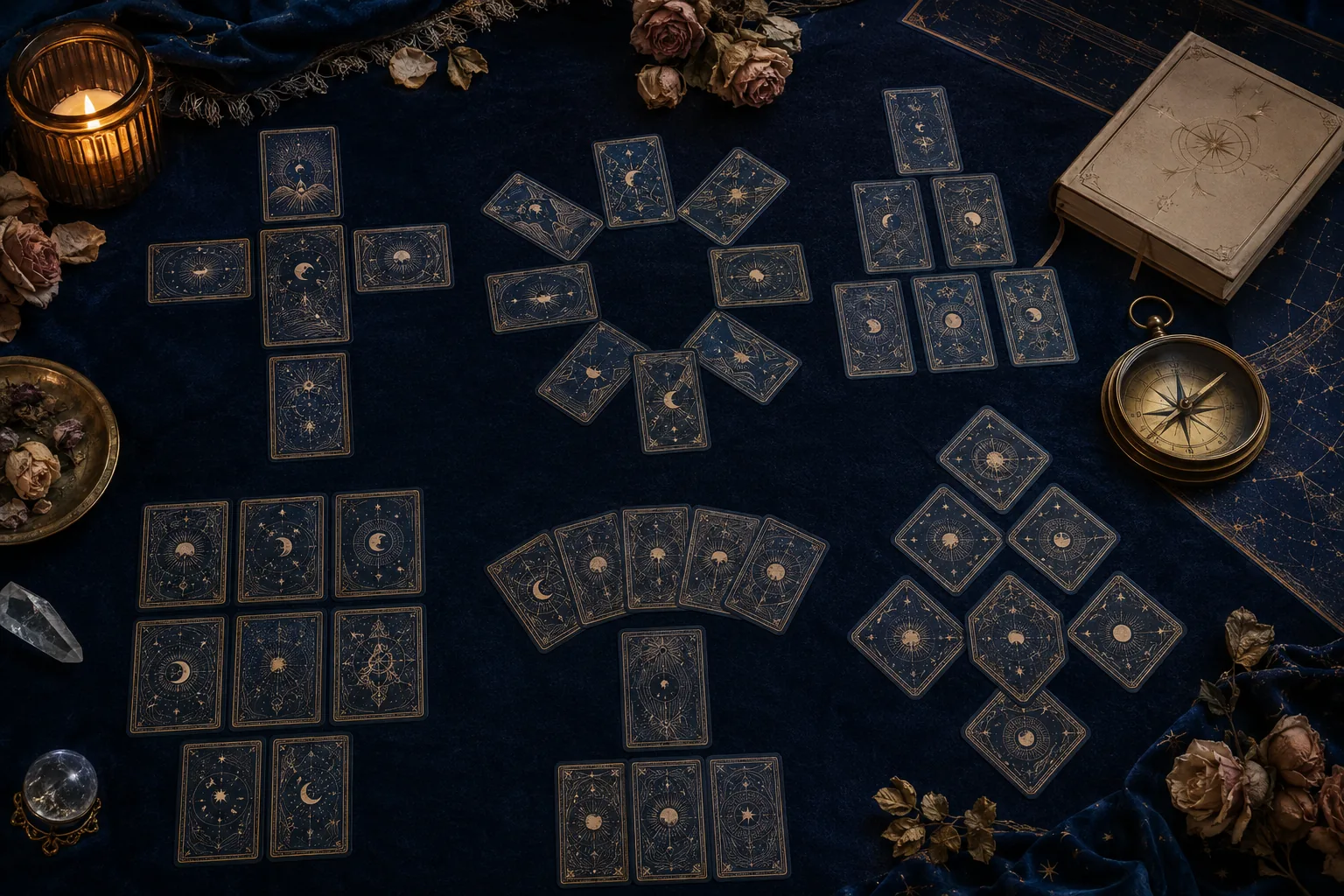
This library contains twenty-one layouts for love, decisions, work, self-discovery and the future. Some use three cards. Others create a wider map. Choose the smallest spread that can hold the question clearly.
How to choose a tarot layout
Use a timeline when you want to understand development. Use a decision spread when two real paths exist. Use a relationship layout when mutuality, communication or boundaries matter. Use a guidance spread when the next step is more important than a distant outcome.
- Write the question before shuffling.
- Choose the spread before drawing.
- Read every card through its position.
- Use one clarifier only when you can name what is unclear.
- Finish with one sentence and one practical action.
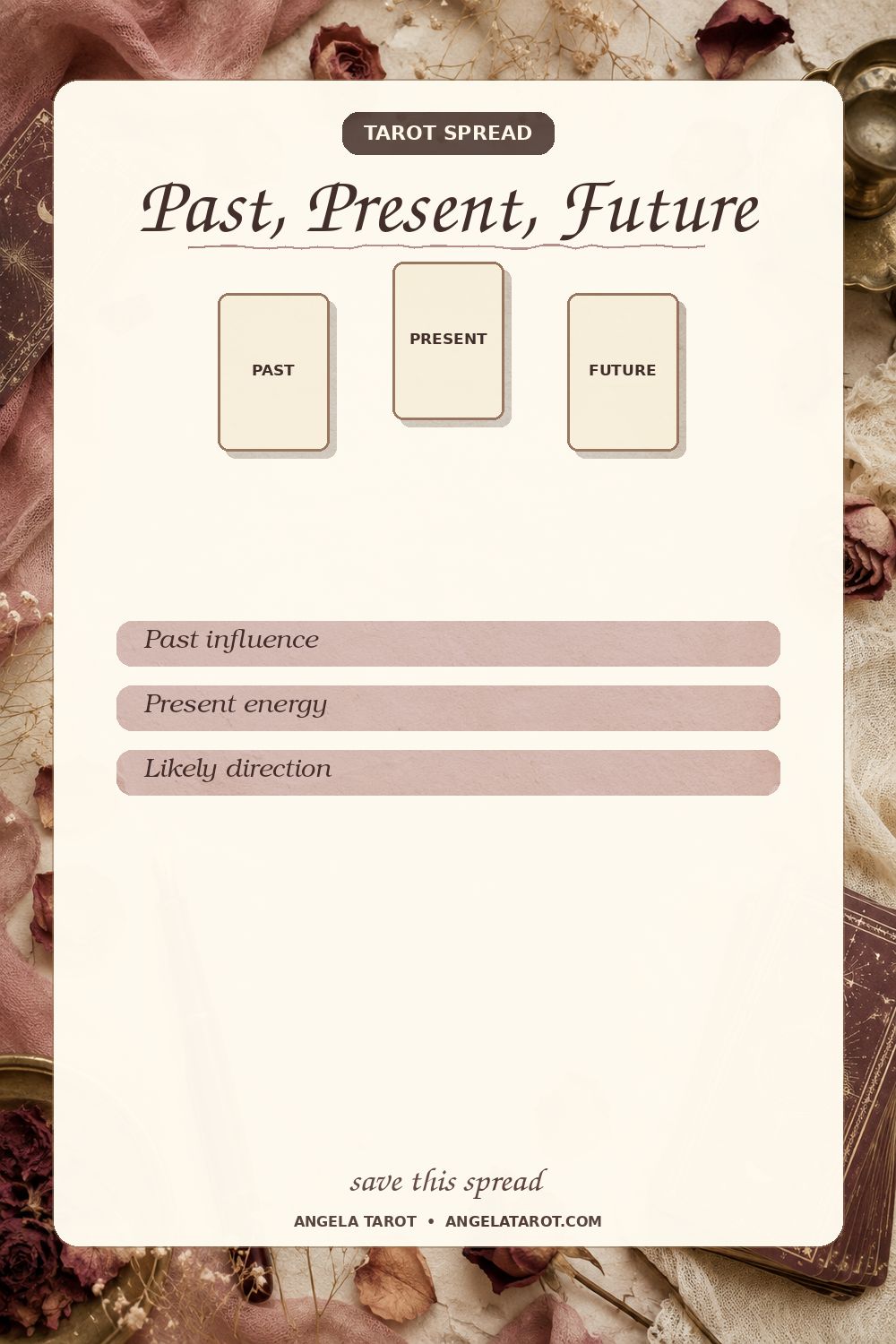
1. Past, Present, Future
Use this classic line when you want a clean timeline without turning the future card into an unchangeable promise.
- Past influence
- Present energy
- Likely direction
Reading tip: Read the three cards as one sentence. The present card is the bridge between what shaped the situation and what is developing.
2. Situation, Challenge, Advice
Choose this layout when the question feels simple but the next step is not.
- The situation
- The challenge
- The advice
Reading tip: Keep the advice practical. Translate the final card into one action you can complete.
3. Mind, Heart, Action
This spread separates analysis, emotion and choice when they are pulling in different directions.
- What I think
- What I feel
- What I can do
Reading tip: Neither the mind nor the heart has to win. Card Three looks for an action that respects both.
4. What I Know, What Is Missing, Next Step
Use this when uncertainty has created several competing stories.
- What is known
- What is missing
- What reveals more
Reading tip: A missing-information card does not prove deception. It may show that more time, evidence or a direct question is needed.
5. Should I Stay or Go?
Compare two real paths without forcing one side to contain only good cards.
- What keeps me here
- What asks me to leave
- If I stay
- If I go
- What must guide me
Reading tip: Read Cards Three and Four as conditions, not guarantees. Card Five names the value that should guide the choice.
6. Relationship Mirror
This five-card mirror focuses on the relationship as it exists, not on claims about another person's private mind.
- What I bring
- What they show
- What is mutual
- What needs care
- The next conversation
Reading tip: Tie Card Two to observable behavior. Use the last card to plan a conversation or boundary.
7. Future Love
Use this for future love without demanding a name, exact date or fixed description of a person.
- What I am ready for
- What I am releasing
- How love may enter
- The quality to notice
- How I can meet it
Reading tip: Look for qualities and conditions. The final card keeps the reading connected with your participation.
8. Communication Reset
Prepare for a conversation that needs clearer words and steadier limits.
- What needs saying
- What blocks honesty
- What tone helps
- What boundary remains
Reading tip: Tarot cannot script the other person's response. It can help you decide what is yours to say.
9. One-Week Guidance
A seven-day frame is useful when the larger future feels too wide.
- Main focus
- What helps
- What distracts
- Midweek shift
- Best next step
Reading tip: Return at the end of the week and compare the reading with what actually happened.
10. Monthly Map
Use this at the beginning of a month or whenever you need a mid-month reset.
- Main theme
- Love
- Work
- Challenge
- Opportunity
- What continues
Reading tip: Read challenge and opportunity together. The same condition may contain both.
11. Career Crossroads
Compare professional directions through growth, cost and responsibility.
- Current path
- What it offers
- What it costs
- Alternative path
- What it requires
- Decision principle
Reading tip: Confirm financial or contractual choices with reliable information outside the cards.
12. Money Clarity
Use this to identify habits and priorities around money, not to predict markets or guaranteed income.
- Current pattern
- What drains resources
- What supports stability
- A practical adjustment
- Long-term focus
Reading tip: Make Card Four measurable, such as a budget category, deadline or conversation.
13. Goal Path
Turn a wish into a sequence of effort, support and review.
- The goal
- My strongest resource
- The obstacle
- The next milestone
- What makes it sustainable
Reading tip: If the goal card is too abstract, rewrite it before continuing.
14. Creative Block
Use this when perfection, comparison or lack of direction has stopped creative movement.
- What wants expression
- What blocks the work
- What restores curiosity
- The smallest experiment
Reading tip: Let the last card be small. A twenty-minute experiment can be more useful than a grand plan.
15. Repeating Pattern
Map a cycle without treating yourself as the cause of everything that happens.
- Where it begins
- What rewards it
- What it costs
- What interrupts it
- What needs practice
Reading tip: Focus on the point where your choice is real. Some conditions still require outside support or distance.
16. Self-Care Check-In
A short check-in for attention, energy and everyday care.
- What feels depleted
- What restores me
- What needs a boundary
- One kind action
Reading tip: Keep the interpretation ordinary enough to use. Rest, food, help and a changed schedule can be valid answers.
17. New Moon Intention
Set an intention through meaning, support and action rather than wishful thinking alone.
- What is beginning
- Why it matters
- What supports it
- What may interfere
- First action
Reading tip: Write the first action into your calendar within twenty-four hours.
18. Full Moon Release
Review a cycle and separate completion from rejection of the whole experience.
- What is complete
- What I learned
- What I can release
- What remains valuable
- How I move forward
Reading tip: The fourth card prevents release from becoming an attempt to erase what mattered.
19. Birthday Year Ahead
Use this around a birthday to frame the coming year through themes rather than twelve fixed predictions.
- Theme of the year
- Love
- Work
- Growth edge
- Support
- What I am becoming
Reading tip: Take a photo and revisit it quarterly. Meanings often become clearer through lived context.
20. Future Direction
A seven-card map for a transition that has already begun.
- Where I stand
- What is ending
- What is emerging
- What I cannot control
- What I can choose
- Support available
- Likely direction
Reading tip: Read Cards Four and Five together so the reading separates circumstance from agency.
21. Clarity Compass
Use this five-card compass when you feel pulled in several directions.
- North: purpose
- East: new information
- South: grounding
- West: what to release
- Center: next right step
Reading tip: Read the center last. It should gather the four directions into one usable choice.
How to create your own tarot spread
Write the question at the top of a page. Under it, list the distinct parts of the answer. If you are deciding whether to move, you might need the reason for moving, the reason for staying, the practical cost, the emotional cost and the first step. Those become the positions.
Keep each position different. “What happens?” and “What is the outcome?” usually ask the same thing. Replace one with a condition, resource or action. The layout becomes clearer when every card has a separate job.
For a shorter library, continue with 15 three-card tarot spreads. When direction is the main question, use the nine guidance layouts.
For relationship questions, continue with 12 love tarot spreads with positions for connection, communication, new love and future direction.
Tarot spreads can organize reflection and choices. They do not guarantee outcomes or replace medical, legal, financial or mental health guidance.
Pinterest spread library
Save 6 different layouts
Each image below is a complete spread with labeled card positions. Choose the one you want to keep for your next reading.
Past, Present, Future
Save this layout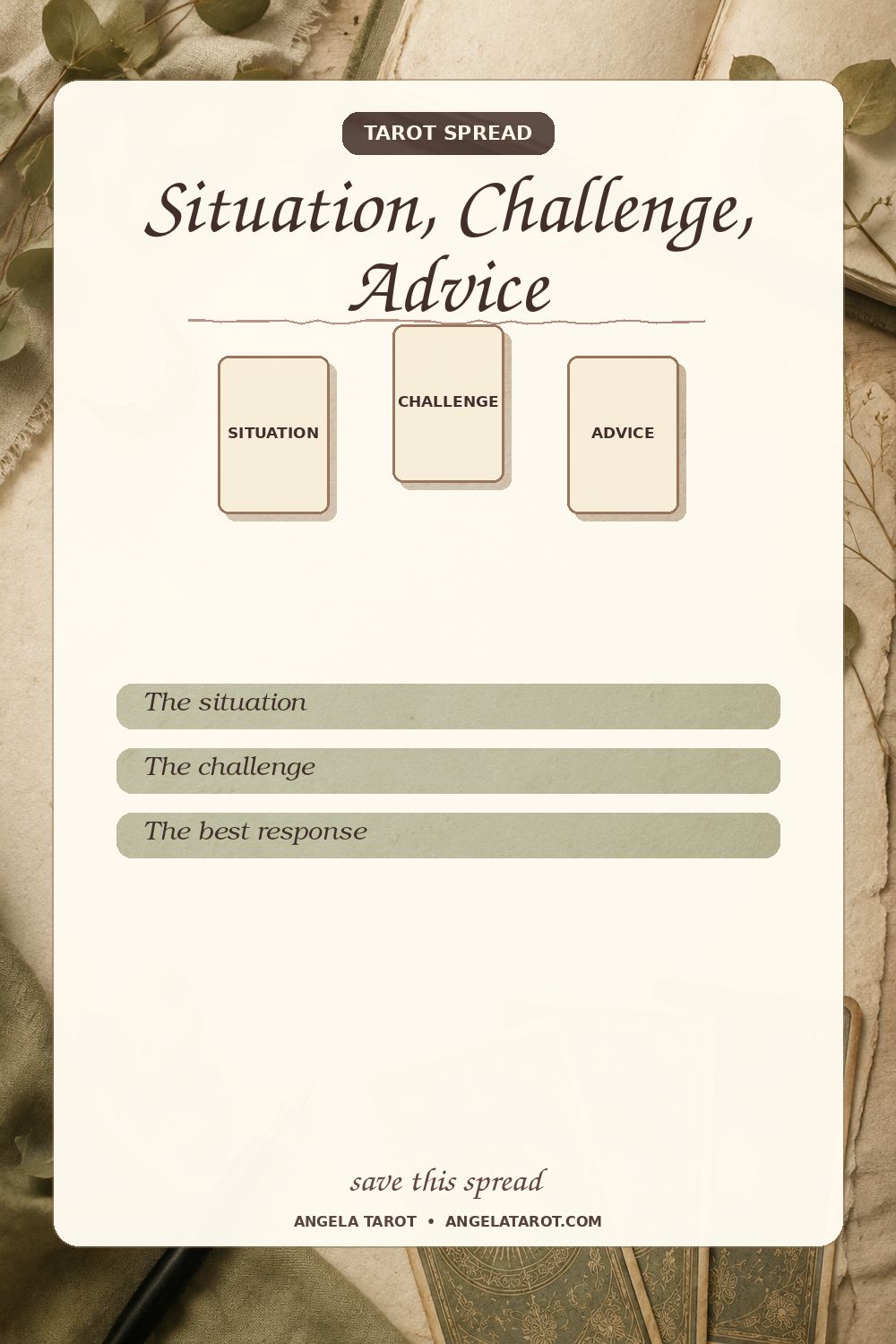
Situation, Challenge, Advice
Save this layout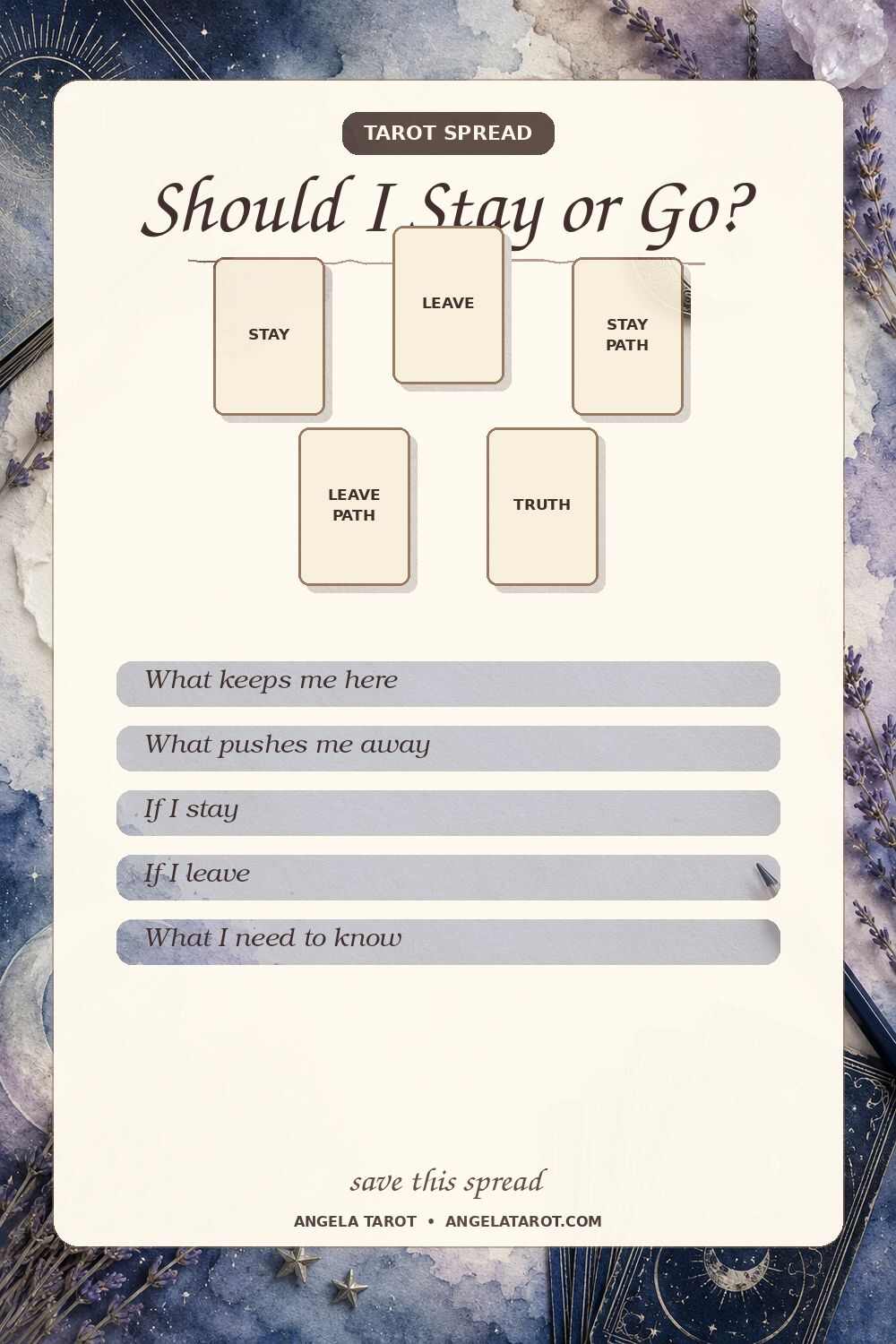
Should I Stay or Go?
Save this layout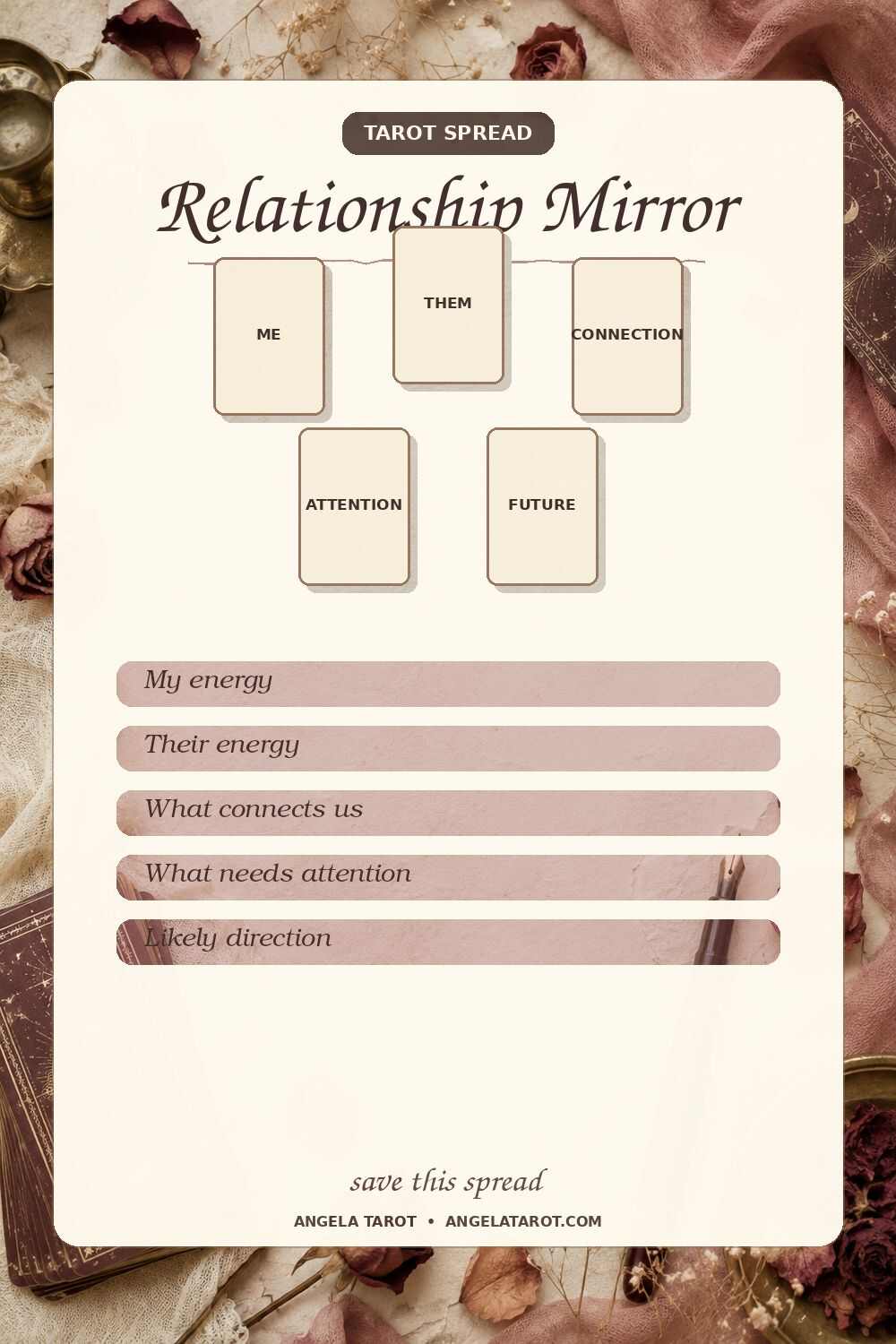
Relationship Mirror
Save this layout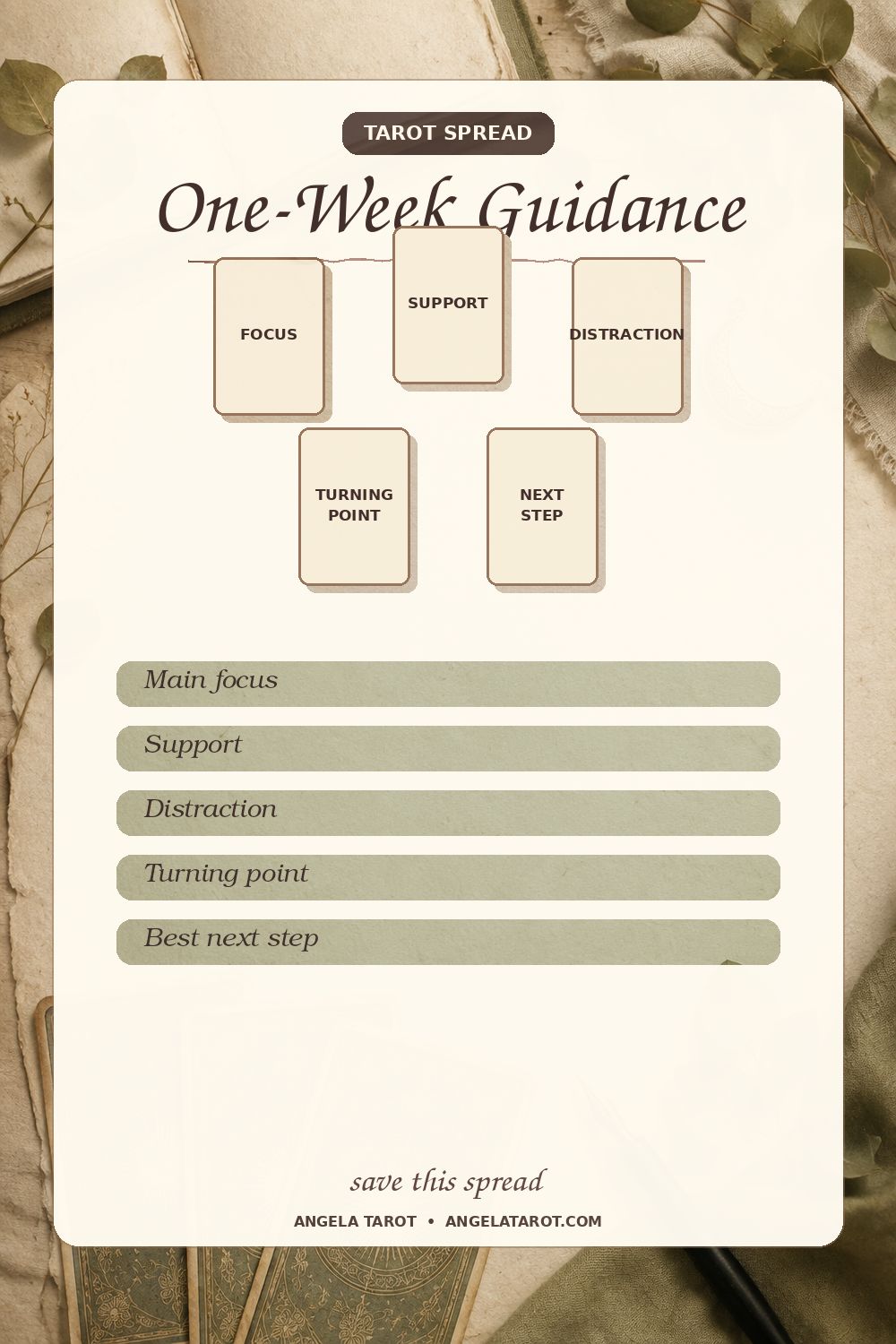
One-Week Guidance
Save this layout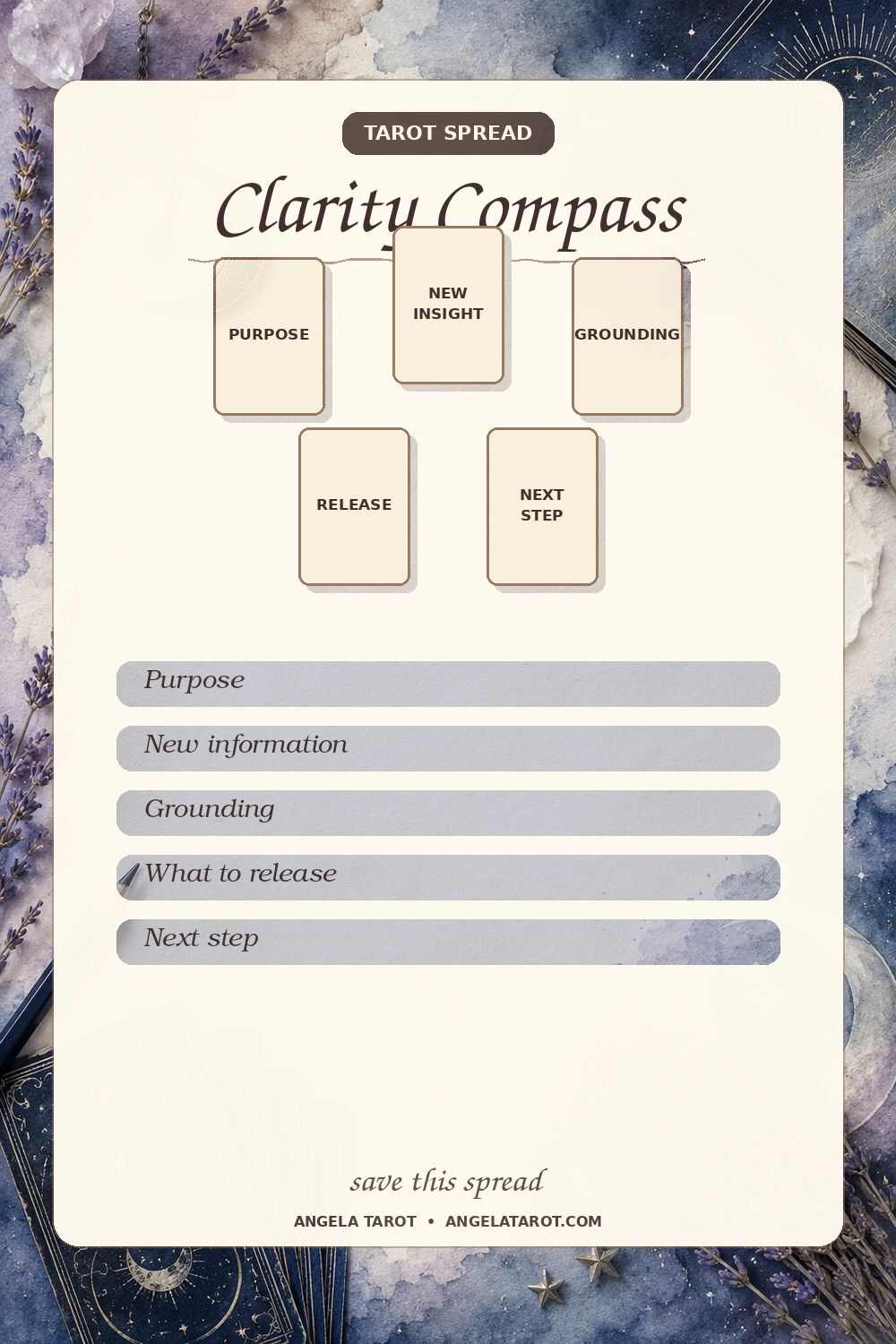
Clarity Compass
Save this layoutBring your own question into focus
A personal reading can connect the spread with the relationship, decision or future direction that matters most to you.
Explore personal readingsQuick answers
What is the easiest tarot spread for beginners?
A three-card Situation, Challenge, Advice spread is easy to remember and gives each card a clear job.
How many cards should I use in a tarot spread?
Use the fewest cards that can answer the question. Three to five cards are enough for most focused readings.
Can I create my own tarot spread?
Yes. Start with the question, divide it into distinct parts and write one position for each part before drawing.
Do tarot spreads predict the future?
They can describe the direction of a current pattern, but outcomes remain connected with choices, timing and changing circumstances.
Should I use a different spread for love and career?
Usually yes. A relationship spread should explore mutuality and communication, while a career spread should include skills, resources and practical choices.