
In this article
- What Is a Spiritual Awakening?
- Sign 1: Your Priorities Begin to Change
- Sign 2: You Want More Time Alone
- Sign 3: Old Patterns Become Easier to See
- Sign 4: Your Relationships Change
- Sign 5: You Become More Interested in Meaning
- Sign 6: You Feel Between Two Versions of Yourself
- The Stages of a Spiritual Awakening
- Tarot Cards Connected With Spiritual Awakening
- What to Do During a Spiritual Awakening
- A Simple Tarot Spread for Spiritual Awakening
- Final Thoughts
A spiritual awakening is often imagined as a peaceful moment of clarity.
Sometimes it is.
But sometimes it begins with confusion.
The things that used to motivate you suddenly feel less important.
Relationships change.
Old beliefs no longer make sense.
You begin asking bigger questions.
Who am I?
What actually matters to me?
What kind of life do I want to create?
For some people, this period feels exciting.
For others, it can feel disorienting.
And for many people, it is a mixture of both.
What Is a Spiritual Awakening?
A spiritual awakening is a broad term people use to describe a period of increased self-awareness, questioning, personal transformation, or connection with something larger than their usual identity.
There is no single correct version of it.
For one person, it may involve meditation and spiritual practices.
For another, it may begin after heartbreak, grief, travel, therapy, burnout, a major life transition, or simply growing older.
The experience is personal.
Sign 1: Your Priorities Begin to Change
Things that once seemed extremely important may lose some of their power.
Status.
Approval.
Certain friendships.
Career goals.
Material success.
This does not mean you suddenly stop caring about everyday life.
You may simply begin questioning why you care about certain things.
Sign 2: You Want More Time Alone
During periods of inner change, solitude can become appealing.
You may want less noise.
Less social media.
Fewer opinions.
More time to think.
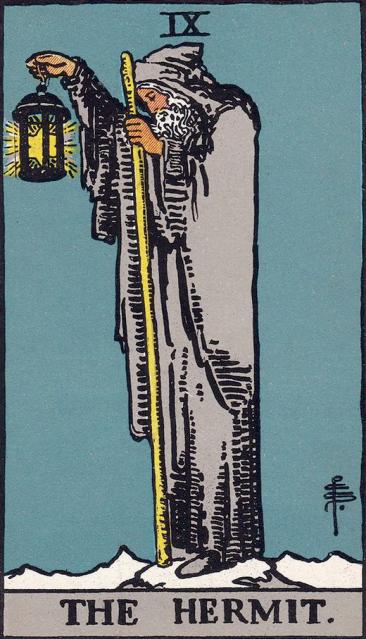
This is often represented beautifully by The Hermit in tarot.
The Hermit is not necessarily lonely.
He steps away from distraction to search for wisdom.
Sign 3: Old Patterns Become Easier to See
You may suddenly recognize patterns you have repeated for years.
The same type of relationship.
The same fear.
The same reaction.
The same self-sabotaging habit.
Awareness can be uncomfortable because once you see a pattern clearly, it becomes harder to pretend it is not there.
But awareness is also where choice begins.
Sign 4: Your Relationships Change
Personal growth can change relationships.
Some become stronger.
Some become more honest.
Some begin to feel distant.
This does not always mean someone is toxic or that you need to cut them out of your life.
Sometimes two people are simply changing in different directions.
Sign 5: You Become More Interested in Meaning
You may begin exploring spirituality, philosophy, psychology, tarot, astrology, meditation, mythology, religion, symbolism, or personal development.
You are no longer satisfied only with asking what happened.
You want to understand why it matters.
Sign 6: You Feel Between Two Versions of Yourself
One of the strangest parts of personal transformation is the middle.
The old version of you no longer feels completely right.
The new version has not fully formed yet.
This stage can feel uncertain.
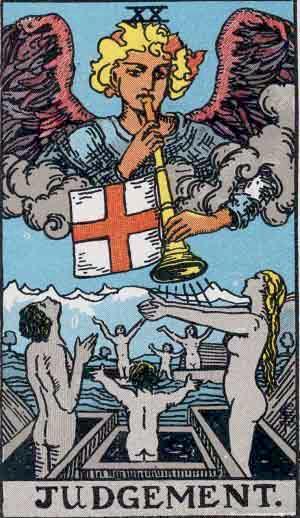
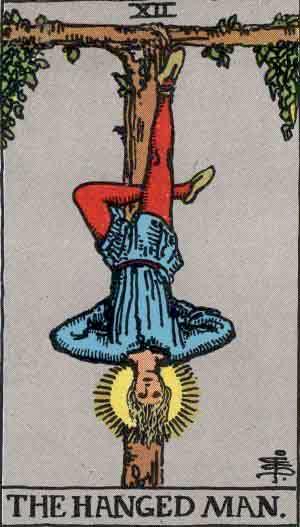
Tarot cards such as Death, The Hanged Man, and Judgement often reflect this kind of transition.
The Stages of a Spiritual Awakening
There is no universal sequence, but many people recognize a few common phases.
First comes disruption.
Something changes internally or externally.
Then comes questioning.
You begin looking at your beliefs and identity differently.
Then comes exploration.
You read, learn, experiment, and discover new ideas.
Then comes integration.
This is where spiritual insight has to meet everyday life.
It is easy to feel enlightened while journaling alone.
The real work is bringing that awareness into relationships, decisions, boundaries, money, work, and ordinary Tuesday mornings.
Tarot Cards Connected With Spiritual Awakening
Judgement is one of the strongest awakening cards in tarot.
It often represents answering a call, seeing your life differently, and realizing you cannot return completely to an old version of yourself.
The Tower represents sudden disruption and the collapse of structures that no longer feel stable.
Death represents transformation and endings.
The Hermit represents introspection and inner wisdom.
The Star represents renewal after difficulty.
The Fool represents stepping into a new chapter before you know exactly where it leads.
What to Do During a Spiritual Awakening
Journal regularly.
Spend time without constant stimulation.
Notice what you are outgrowing.
Be curious about your beliefs.
Explore spiritual practices without feeling that you have to accept every idea you encounter.
Stay connected to ordinary life.
Eat.
Sleep.
Work.
Call people you love.
Go outside.
Spiritual growth does not require escaping reality.
Ideally, it helps you engage with reality more consciously.
A Simple Tarot Spread for Spiritual Awakening
Pull five cards.
- What am I awakening to?
- What am I outgrowing?
- What lesson is emerging?
- What needs grounding?
- What energy supports my next chapter?
Write your interpretation before looking up every traditional meaning.
Your personal response to the imagery matters too.
Final Thoughts
A spiritual awakening does not turn you into a completely different person overnight.
Often it simply makes it harder to live unconsciously.
You notice more.
Question more.
Choose more deliberately.
And slowly, the life outside you begins to reflect the changes happening within you.
Explore the cards
Learn with Angela
Give your practice a little structure
Explore Learn to Read Tarot and the Manifest With Tarot journal for guided study, card practice and written reflection.
Explore the workbook and journal