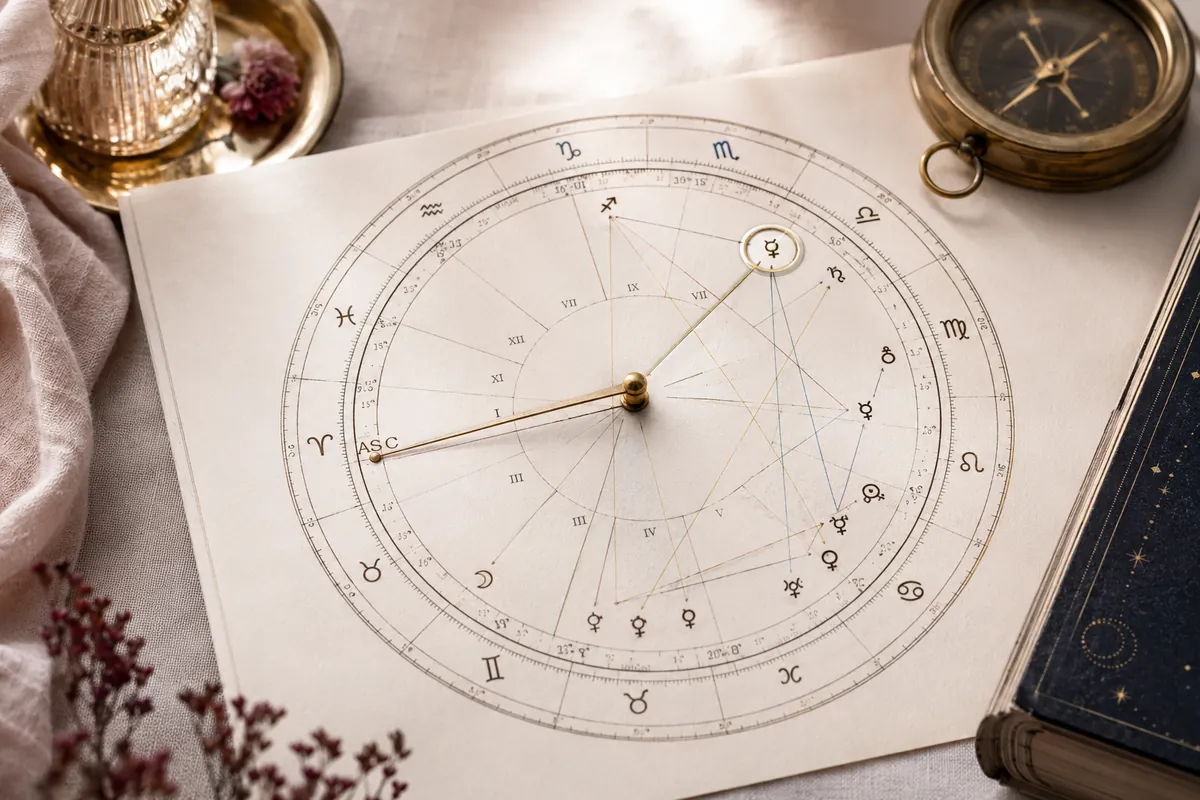
The chart ruler is the planet that rules the sign on the Ascendant. Because the Ascendant describes the way you enter experience and meet the world, its ruling planet becomes a central thread in the chart. Finding it is simple. Interpreting it requires sign, house and aspects.
Step one: find the Rising sign
Locate the Ascendant, often marked ASC, on the left side of the chart. The zodiac sign on that cusp is the Rising sign. An accurate birth time matters because the Ascendant moves through the zodiac over the course of a day.
If the birth time is unknown, do not guess the chart ruler. Work with placements that do not depend on houses until the time can be confirmed.
Step two: match the sign with its ruler
Aries: Mars. Taurus: Venus. Gemini: Mercury. Cancer: Moon.
Leo: Sun. Virgo: Mercury. Libra: Venus. Scorpio: Mars traditionally, with Pluto often used as a modern co-ruler.
Sagittarius: Jupiter. Capricorn: Saturn. Aquarius: Saturn traditionally, with Uranus often used as a modern co-ruler. Pisces: Jupiter traditionally, with Neptune often used as a modern co-ruler.
Traditional and modern rulers
Traditional rulership creates a complete system using the seven visible planets. Modern astrology added Uranus, Neptune and Pluto after their discovery. Many astrologers read both rulers for Scorpio, Aquarius and Pisces, while using the traditional ruler as the primary guide for house rulership.
Choose one system and stay consistent. When using both, compare whether their placements repeat the same theme.
Step three: find the ruler in the chart
Once you know the ruling planet, locate it by sign and house. The sign describes how the chart ruler operates. The house shows where its themes become active and where the person repeatedly seeks direction.
For example, Gemini Rising has Mercury as chart ruler. Mercury in Taurus in the twelfth house may approach life through careful thought, private reflection and a need to give form to what is difficult to articulate.
Chart ruler in the 1st through 4th houses
First house: identity and self-direction become central. Second house: values, skills and resources guide development. Third house: communication, learning and local exchange carry the path. Fourth house: home, family and inner foundations become defining.
Chart ruler in the 5th through 8th houses
Fifth house: creativity, play and personal expression guide the chart. Sixth house: craft, health and daily contribution become central. Seventh house: partnership and one-to-one exchange shape identity. Eighth house: trust, shared resources and transformation become recurring themes.
Chart ruler in the 9th through 12th houses
Ninth house: meaning, study, travel and worldview direct growth. Tenth house: vocation and public contribution become central. Eleventh house: community, networks and future goals carry the path. Twelfth house: private life, retreat, imagination and unseen processes shape development.
Read aspects to the chart ruler
A conjunction concentrates the ruler with another planet. A trine or sextile can show resources that support expression. A square or opposition can describe tension that becomes a major engine of growth. The closest aspects often feel especially visible.
Saturn aspecting the ruler may add responsibility and patience. Jupiter may widen opportunity and belief. Uranus can bring independence and change. Neptune can heighten imagination and require clear reality checks. Pluto can intensify transformation and questions of power.
Is the chart ruler strong or challenged?
Avoid reducing the chart ruler to strong or weak. Dignity, house placement and aspects describe how easily its functions are available, but a challenged ruler can become highly developed through conscious use. A supported ruler still requires choice and practice.
Ask what the planet is trying to do, where it acts and what helps it work with the rest of the chart.
A simple chart ruler synthesis
Use one sentence: My chart ruler is [planet] in [sign] in the [house], so I meet life through [planetary function], expressed with [sign style], especially in [house area]. Then add the closest major aspect.
Continue with the birth chart analysis guide, Sun, Moon and Rising signs and the twelve houses.
Astrology supports reflection and pattern recognition. It cannot guarantee events, relationship outcomes or one fixed future, and it does not replace medical, legal, financial or mental health guidance.
Pinterest birth chart library
Save 6 different notes
Each image contains a separate astrology reference worth returning to.
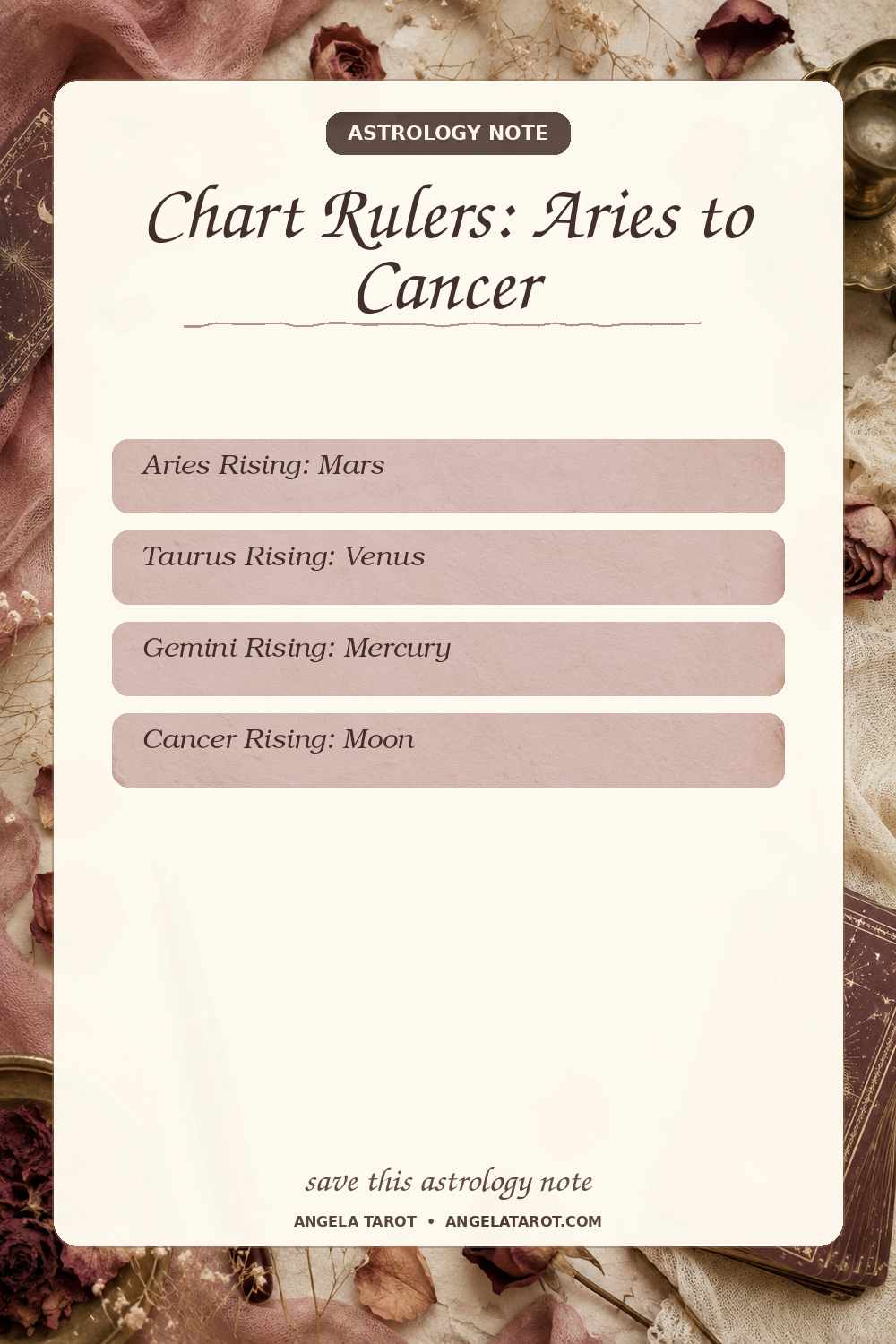
Chart Rulers: Aries to Cancer
Save this note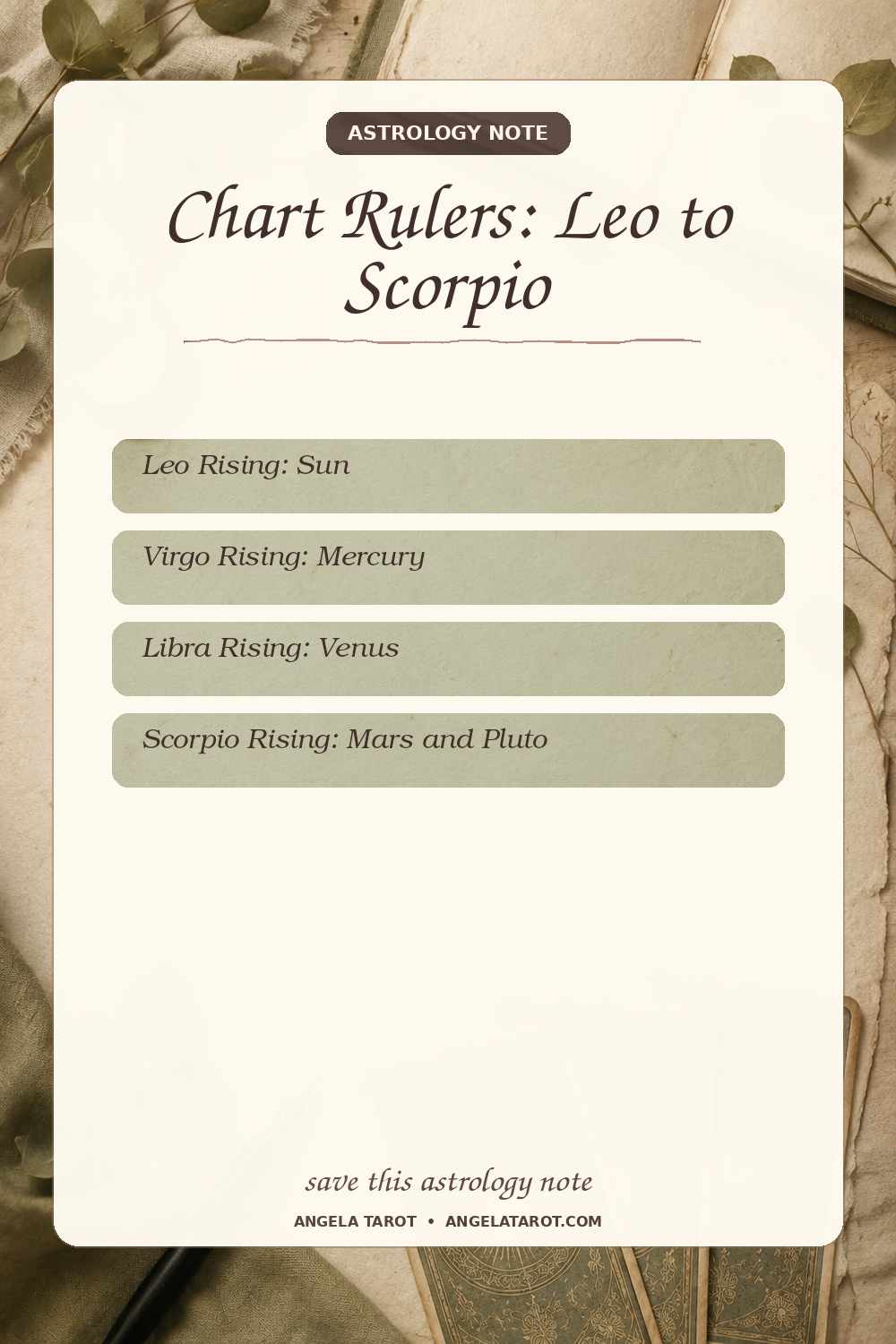
Chart Rulers: Leo to Scorpio
Save this note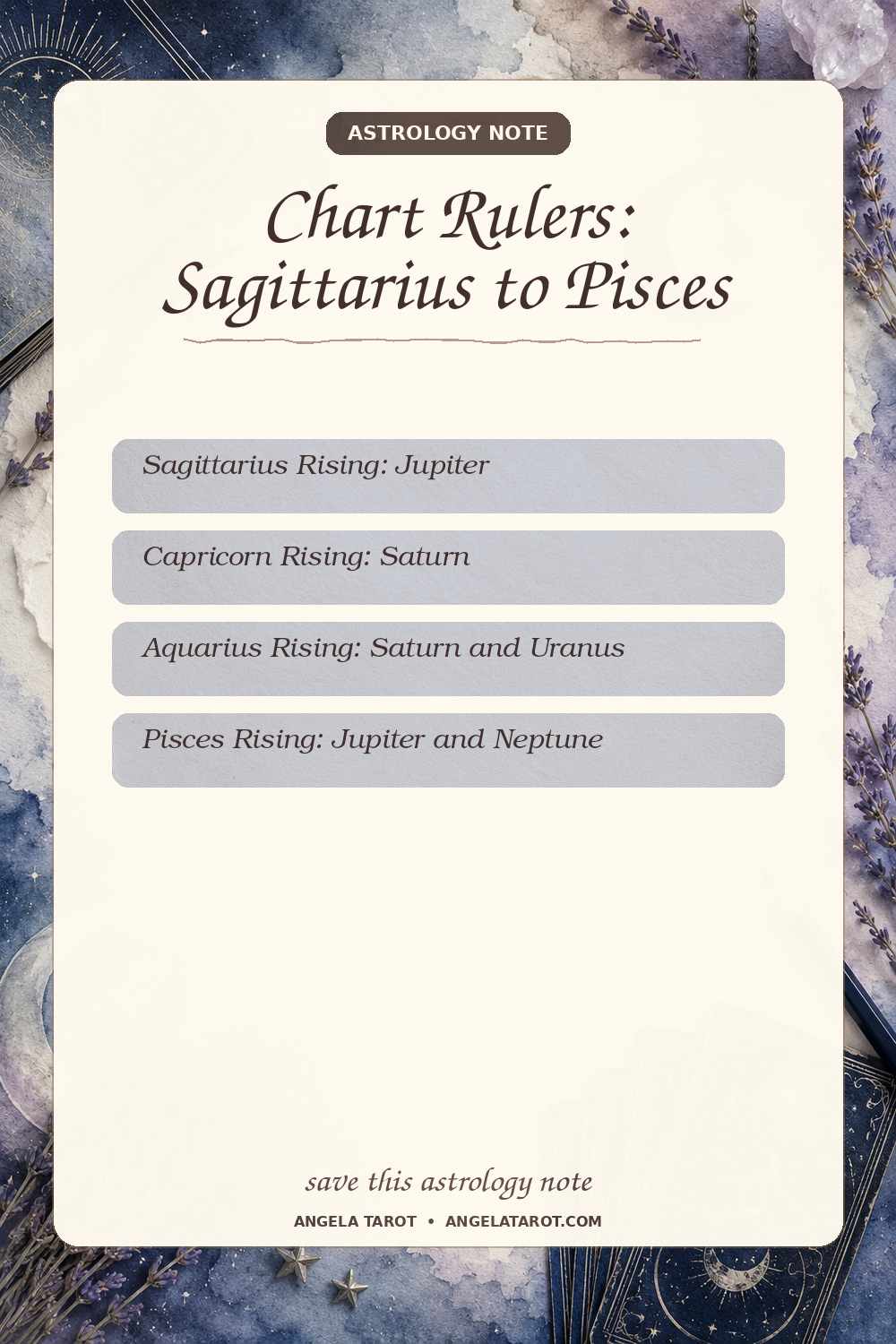
Chart Rulers: Sagittarius to Pisces
Save this note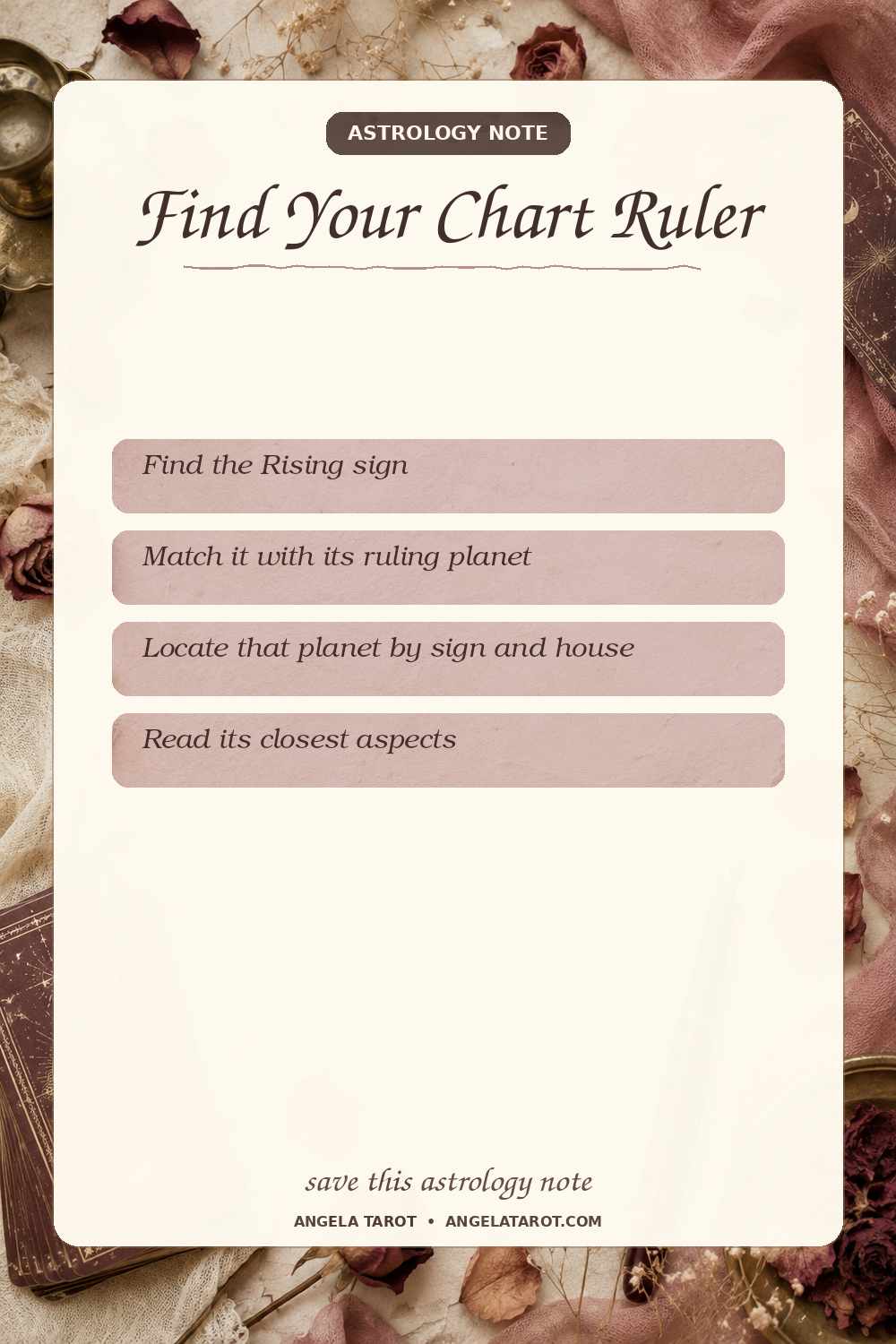
Find Your Chart Ruler
Save this note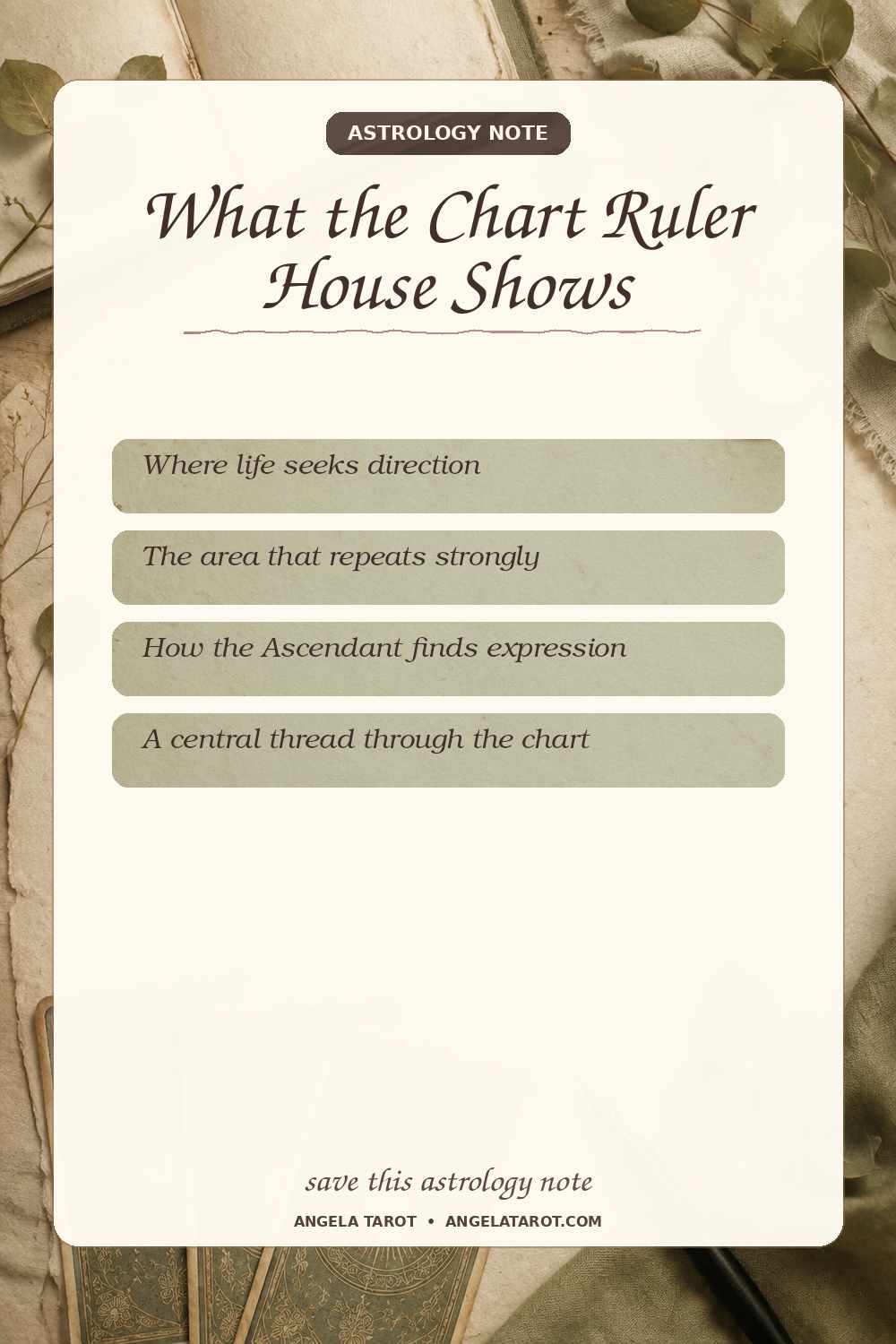
What the Chart Ruler House Shows
Save this note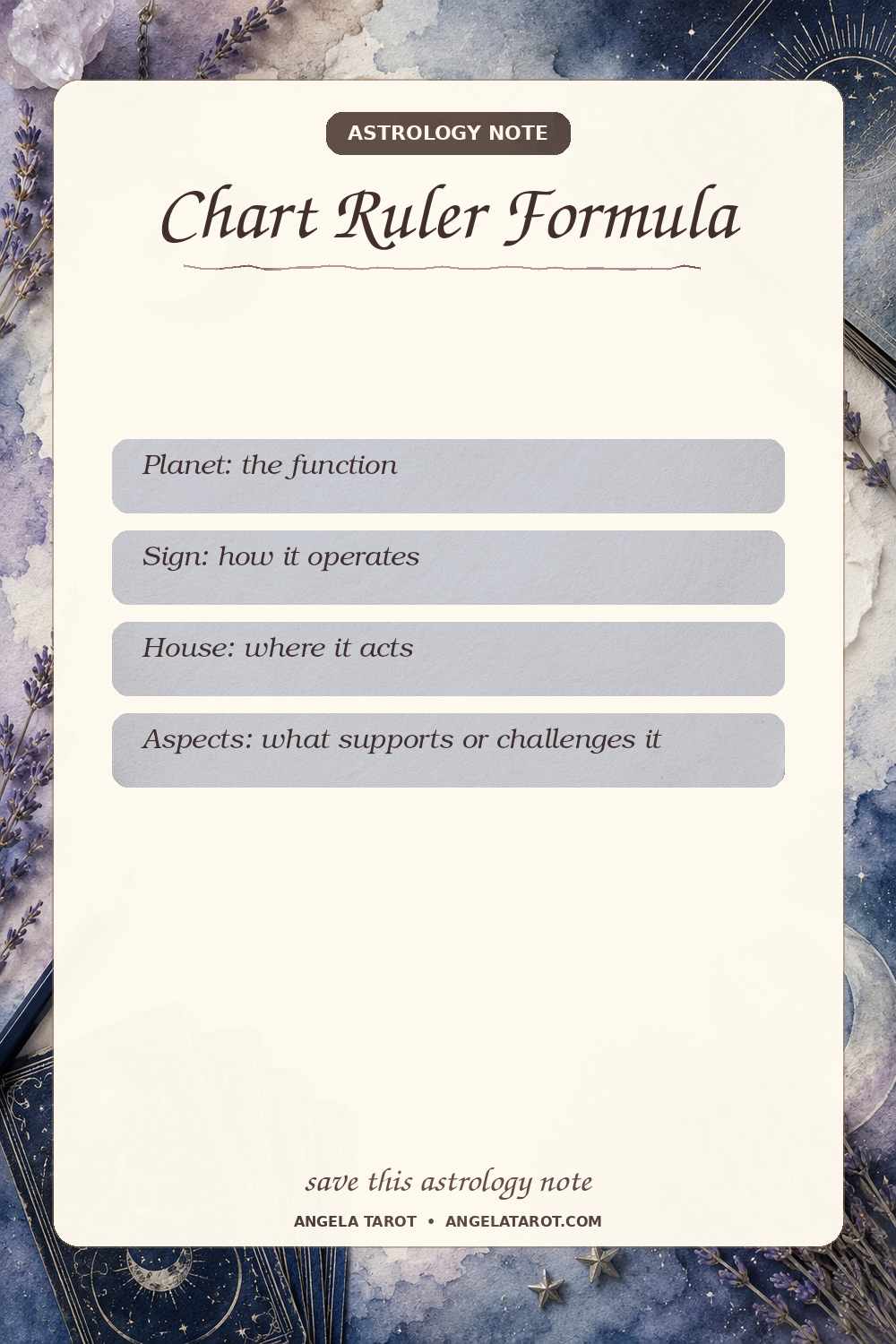
Chart Ruler Formula
Save this noteExplore your own birth chart
A personal analysis can connect the signs, houses and aspects that shape your individual chart.
Explore birth chart readingsQuick answers
What is a chart ruler in astrology?
It is the planet that rules the zodiac sign on the Ascendant and acts as a central guide through the birth chart.
How do I find my chart ruler?
Find your Rising sign, match it with its ruling planet, then locate that planet by sign and house in the natal chart.
What if my Rising sign has two rulers?
For Scorpio, Aquarius and Pisces, many astrologers compare the traditional and modern rulers while keeping one system consistent.
Can I find my chart ruler without a birth time?
Not reliably, because the Ascendant and houses depend on accurate birth time.